How to Create MSG File in Outlook?
 Written By: Sarthak Poswal
  Updated On October 08, 2026 Written By: Sarthak Poswal Updated On October 08, 2026
 Quick Answer: To save MSG file in Outlook, select the email, click File > Save as, and choose Outlook Message Format – Unicode (.msg) as the save as type. Or simply drag & drop the item to the desktop to create MSG files in Classic Outlook.
An MSG file extension is simply a format to save Outlook mailbox items such as email messages, reminders, contacts, calendars, tasks, to-do lists, and more. When you save these items to your local system, you create MSG files.
However, the functionality to save any mailbox item to MSG is only available in the Classic Outlook version. Outlook on the Web and the New Outlook users can only save emails as MSG. In this guide, we will discuss how to create MSG file in Outlook. But before that, let’s see a few advantages of saving files to MSG format.
The MSG file is native to Outlook and offers multiple benefits to Outlook users. A few reasons to save MSG file in Outlook are:
In this section, we will see the process of exporting data items to MSG from Classic Outlook, Outlook on the Web and New Outlook.
In Classic Outlook, you can use the “Save as” option to save MSG file or directly drag & drop a mailbox item to the desktop to save that item as an MSG. The steps to export MSG from Outlook are:
Step 1. Launch the Outlook on your Windows system and double-click on the email that you want to save. Now, the email will open in a new dialog window.
Step 2. Click on the File tab.
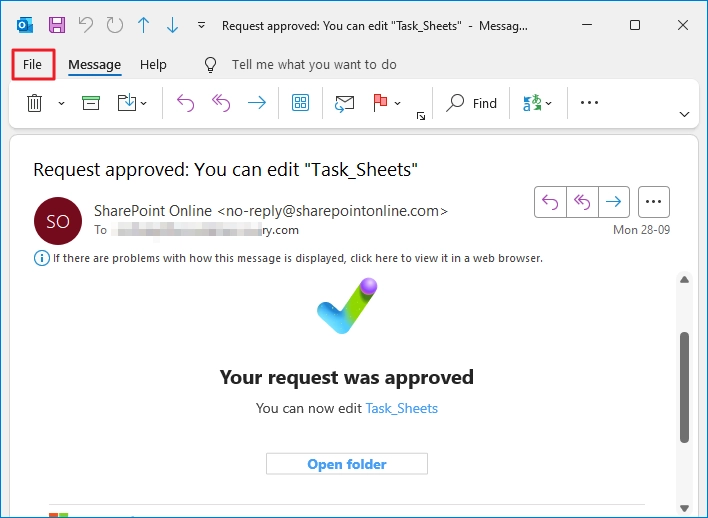
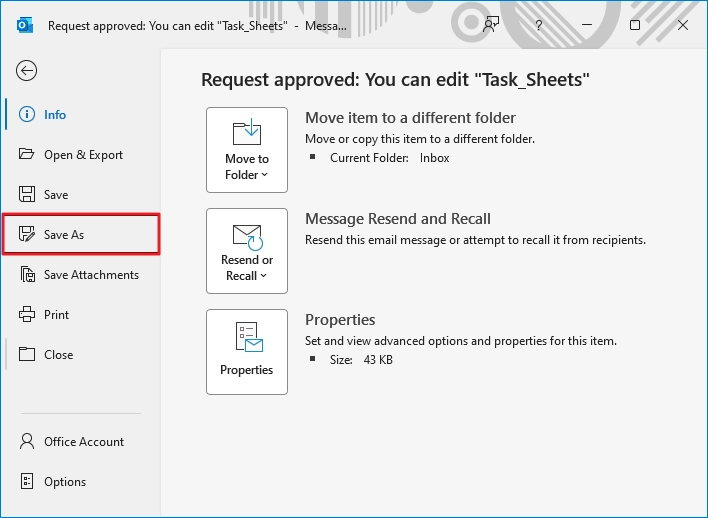
Step 3. Click on Save As from the left pane. It will open a new window with additional saving options.
Step 4. Provide a new name for the file or stick with the default name. From the menu of Save as type, select Outlook Message Format- Unicode and click on Save.
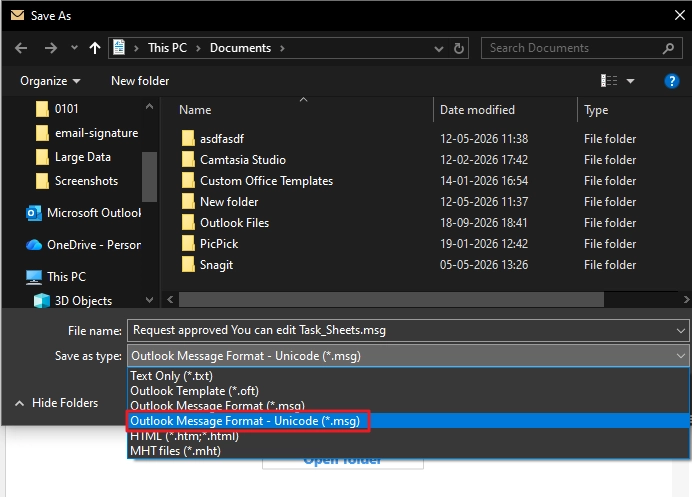
The above steps will work on all the versions of Classic Outlook, including Outlook 365, Outlook 2024, Outlook 2021, Outlook 2016, and earlier editions. In addition to the above steps, you can also drag the email to any folder or to your desktop to save that email as MSG.
If you are using the web version of Outlook (Outlook.com) through, use the followings steps to save MSG file:
Step 1: Go to Outlook.com and select the email that you want to save.
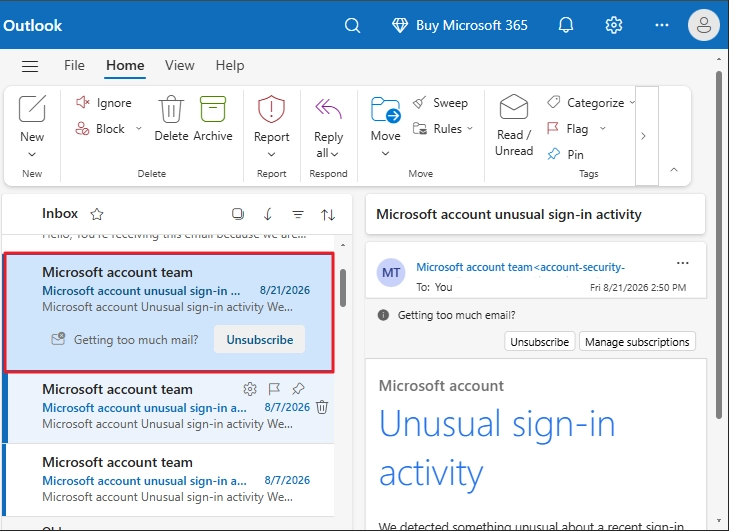
Step 2: Click File > Download > Download as MSG.
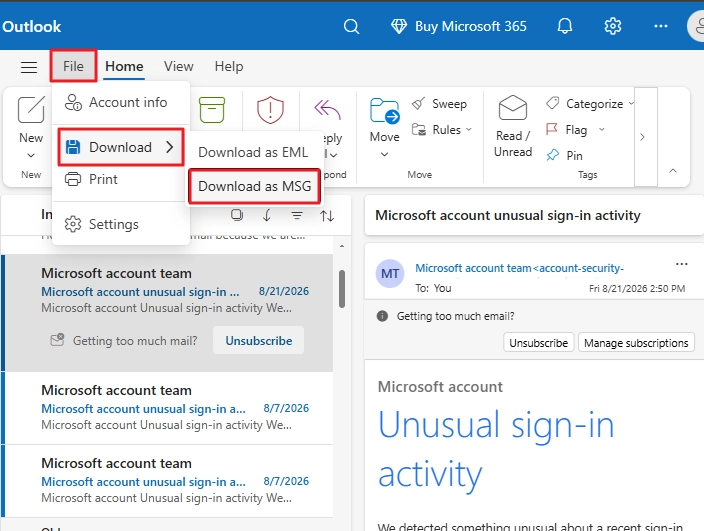
The selected email will be saved at the default download location configured in your browser, which in most cases, is the system’s “Download” folder.
The steps for saving MSG files in New Outlook are mostly similar to the steps we used with Outlook on the Web. The only difference is the button names and options. To save MSG file in New Outlook, follow these steps:
Step 1: Open New Outlook and choose the email you want to save as MSG.
Step 2: Click File > Save as > Save as MSG.
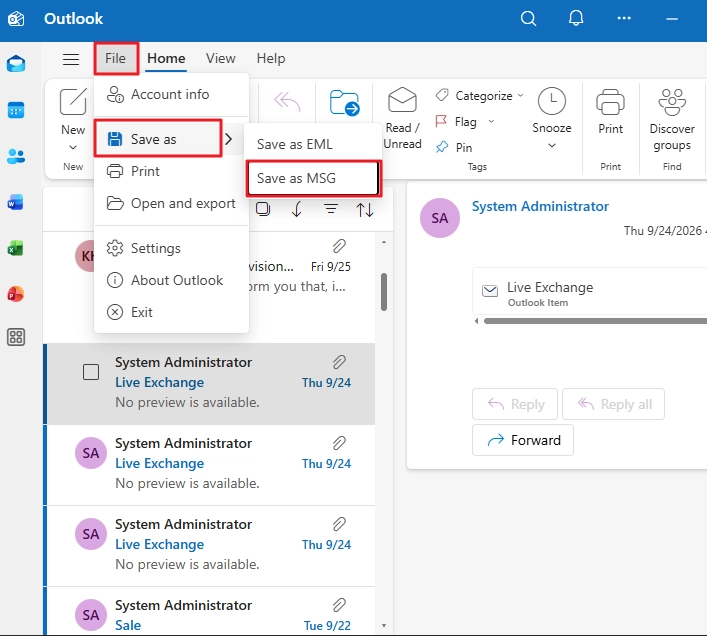
Step 3: Choose where to save the MSG file, provide a name for it, and click Save.
If you have multiple items or emails to be saved in MSG files, you can either save each individually (like we did above) or select all the items and drag them all to a folder on your system.
The latter approach is faster but is only possible with the Classic Outlook. The steps to save multiple emails to MSG in Outlook in one go are:
Step 1: Open Classic Outlook and select all the emails you want to save.
Step 2: Drag and drop all of them outside the Outlook.
Step 3: Outlook will create MSG files for all the emails.
Note: The option to save bulk emails to MSG in a single operation is not present in the New Outlook and the Outlook on the Web version. For these two, you have to manually select and save every email. Or, if possible, temporarily switch to Classic Outlook to save MSG files.
The manual methods can save MSG file only if the emails or mailbox items are accessible. In case the data you want to export lies in the PST (added in Outlook) and you fail to access the PST due to errors like “PST is not an Outlook data file” or “errors have been detected”.
To create MSG, you have to first repair the PST file and then follow the methods we discussed above. To fix PST, start by using the ScanPST.exe tool, and if that does not work, use a dedicated PST repair tool, like Kernel for Outlook PST Repair.
In this blog, we have discussed how you can create MSG files by exporting emails and other data items from Outlook. If possible, prefer the Classic Outlook to save MSG files, as it allows bulk exporting of emails with simple drag and drop method.
However, if you cannot access the emails due to a PST error, use Kernel for PST Repair to fix it. The tool can help resolve various common Outlook errors and also allows you to save mailbox items from PST to MSG without Outlook.
Ans: Yes. All versions of Outlook, including Classic, Web and the New Outlook, allow saving emails as MSG files. However, the steps may vary as per the Outlook version.
Ans: No. Outlook does not allow exporting a complete folder to MSG in one go. For this, you have to use a professional email converter tool.
Ans: You must be using the New Outlook, which by default saves emails as EML when using the drag-and-drop method. To save MSG file in New Outlook, select the email, click File> Save as> Save as MSG.
Ans: To save bulk MSG files, you must use Classic Outlook. In Classic Outlook, you can drag and drop multiple files simultaneously and save them all in a separate MSG file.