How to Change Meeting Organizer in Outlook?
 Written By: Sarthak Poswal
  Updated On September 24, 2026 Written By: Sarthak Poswal Updated On September 24, 2026
 Quick Answer: To change meeting organizer in Outlook, you must use New Outlook or Outlook on the Web (OWA). Currently, this function is not available in Microsoft classic Outlook.
With a simple right-click, you can begin the process of changing the meeting organizer in Outlook. No need to delete and recreate meetings just to get a new organizer for it. This year, Microsoft has finally launched the feature that allows users to easily modify the organizer for a single Outlook meeting instance or for a series of meetings.
In this guide, I will share everything with you, from the step-by-step process of changing the organizer to the limitations and common issues. Additionally, we will also discuss how to recover lost or inaccessible meetings from Outlook using an OST repair tool.
Microsoft has rolled out the service for changing the organizer with a few limitations, such as:
For a meeting that is scheduled for the future, you can change the organizer with a few simple steps.
Outlook will send an email invitation to the person whom you want to make the new organizer of the meeting. Until that person accepts the invite, the current organizer remains unchanged.
A person can either approve the request to become the new meeting organizer in Outlook from the email or from the meeting if they were an attendee.
To change meeting organizer for a recurring meeting, follow the steps given below:
An invitation will be sent. Ask the person whom you want to make the new organizer to accept the invite.
Note: When you change meeting organizer in Outlook for a recurring series, the change is applied only to the upcoming meetings. All the meetings set for future dates will become visible to the new organizer's calendar. However, the meetings that are already completed will only be visible in the calendar of the previous organizer.
If Outlook on the Web and the New Outlook are not available, you can also use the classic Outlook. However, in this method, you have to delete the meetings from the current organizer's Outlook and create them again in the calendar of the new Outlook. Follow these steps to change meeting organizer Outlook for a single meeting instance or a series using classic Outlook:
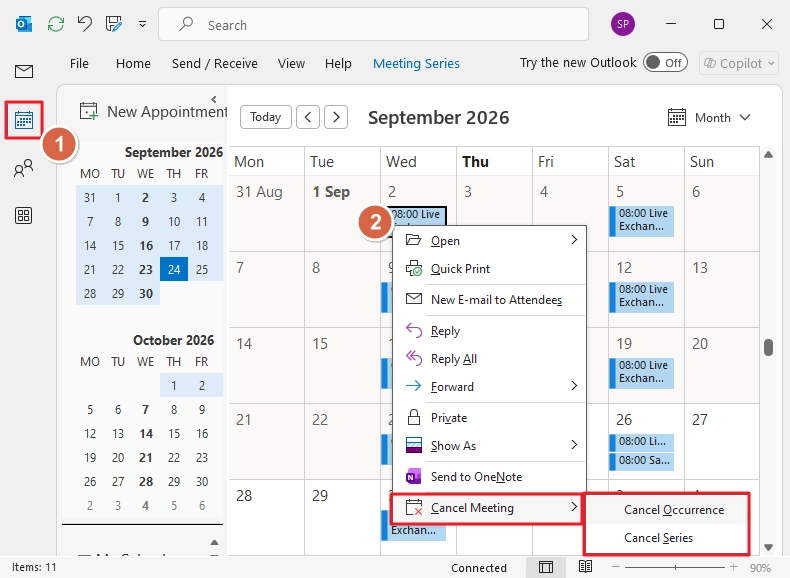
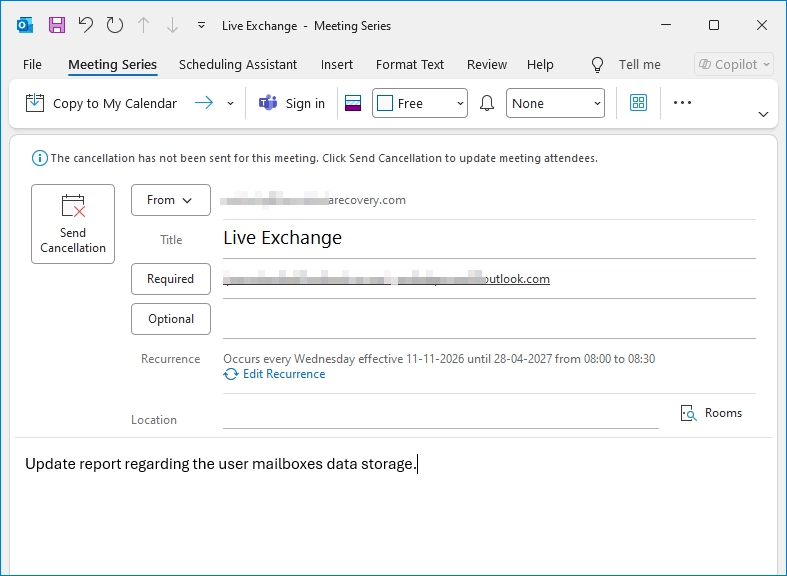
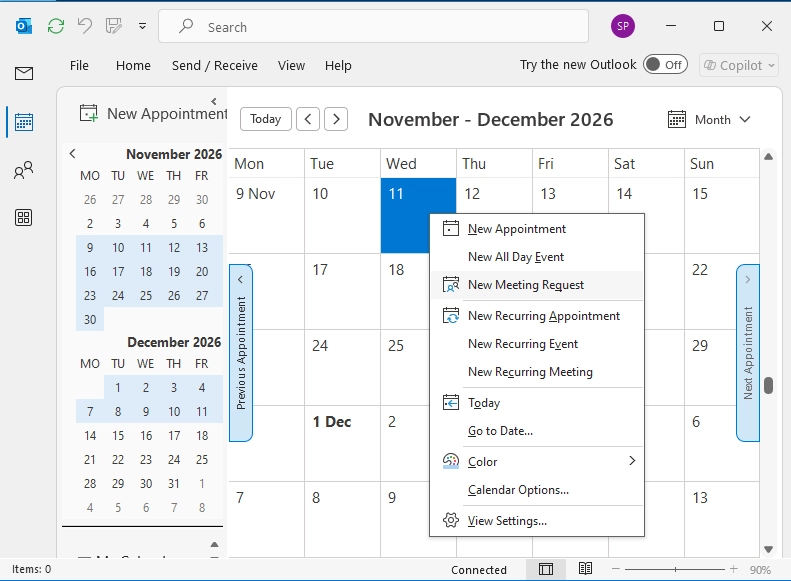
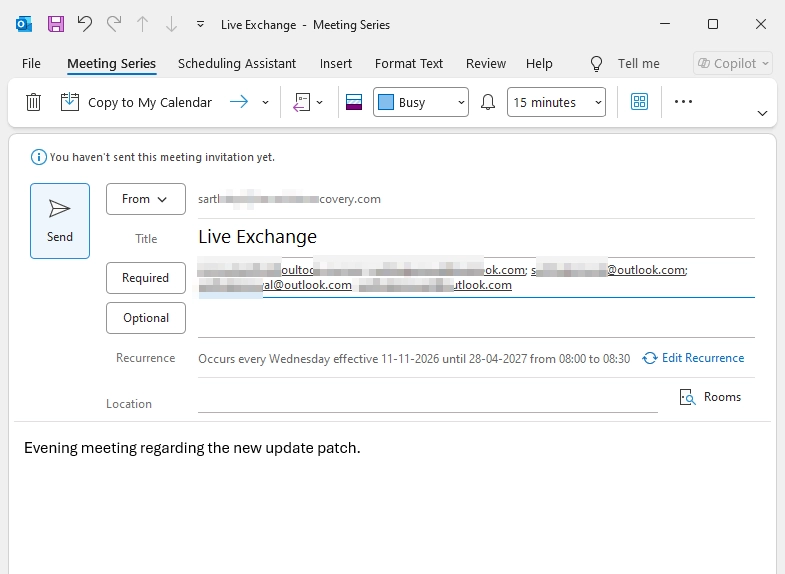
The above steps also work for changing organizer for a meeting series. One thing to note is that using the classic Outlook involves more steps than using the New Outlook and Outlook on the Web. Therefore, whenever possible, use the other two versions of Outlook. Also, be careful when deleting meetings, and do not accidentally delete other calendar items.
The impact depends on whether the attendees are in the same Exchange Online organization or an external/on-premises server.
Same Exchange Online Organization: The changes will be updated automatically. No need to respond to the invitations again.
External or On-Premises Exchange Attendees: They receive a message/email about cancelling the previous meetings. After that, the attendees will receive a new invitation to accept the meeting under the new organizer.
As I said above, when you change meeting organizer in Outlook, only the new, upcoming meetings will be moved to the new organizer. If you want the new organizer to have access to old, completed, or missed meetings as well, then you have two options.
Note: Make sure to use filters to limit the exports only to meetings. Otherwise, all the items from the calendar will be exported to PST, including events, reminders, online meetings, and more.
Sometimes, Outlook fails to show calendar entries due to corruption. In such a case, you will not be able to open a meeting and change meeting organizer in Outlook. To fix corruption and regain access to data items, Microsoft recommends deleting and rebuilding the OST file. However, deleting the OST file may lead to loss of data items that were not synchronized with the email server.
Another option to fix a corrupted OST file without the risk of data loss is to use a professional OST repair tool like the Kernel OST File Repair Tool. This tool allows you to recover all the mailbox data, including emails, calendar items, contacts, etc., from an inaccessible orphaned OST file. After recovery, you can extract the meetings and save them to either an offline PST or directly import them to an Office 365 account.
When you try to change meeting organizer Outlook, you may face the following issues:
| Issue | Solution |
|---|---|
| No option to change organizer | Feature is disabled, or you are not using the New Outlook or Outlook on the Web |
| Cannot change meeting organizer for an online meeting in New Outlook or OWA | Currently, you can only change the organizer for non-online meetings. For online meetings, the new organizer has to manually create them in his/her Outlook. |
| Cannot open the OneDrive link | The new organizer does not get access to attachments and the OneDrive link automatically. The previous organizer must grant them access. |
| Accidentally declined the request to become the new organizer | You have to ask the current organizer to send a fresh request. |
| Completed meetings are not visible in the calendar of the new organizer | This is expected. After you change meeting organizer in Outlook, only the new meetings that have not started yet will be transferred. Old and completed meetings stay in the previous organizer's calendar. |
| Cannot find the new organizer | Make sure the user who will be the new organizer exists in your organization and has a school or work account. |
| Meetings are not visible in the new organizer's calendar. | Verify whether the person who will be the new organizer has accepted the invitation. If they have, check back after some time. |
Following the methods we discussed in this guide, you will be able to change meeting organizer in Outlook. If you are using the New Outlook or Outlook on the Web, the process is short and quick. Classic Outlook users should also use New Outlook to manage the meeting organizer to save time.
However, if you cannot access a meeting or any other mailbox item due to corruption, use the Kernel for OST File Repair tool. After recovery, the tool allows you to preview and select what you want to save.
Ans: A user may need to change meeting organizer in Outlook due to:
Ans: Yes, you can change the organizer for a meeting without cancelling it. For this, you have to use the New Outlook or Outlook on the Web. This feature is currently not supported in any version of the classic Outlook.
Ans: The simplest way to transfer old meeting data into the mailbox of the new organizer is to use a PST file. The current organizer can export the meetings from the mailbox to a PST file, and then the new organizer can import the PST into their Outlook. After the import, all the meeting entries saved in the PST file will be visible in the new organizer Outlook.