How to Import PST File to Outlook?
 Written By: Sarthak Poswal
  Updated On September 22, 2026 Written By: Sarthak Poswal Updated On September 22, 2026
 Quick Answer: You can import PST to Outlook using Outlook’s built-in import feature. This feature is available in all versions of classic Outlook, including Outlook 365, 2024, 2021, 2019, 2016, 2013, 2010, and 2007.
A PST file is an Outlook data file that stores all mailbox items, including email messages, contacts, calendars, notes, meetings, etc. This file is primarily used to export, back up, archive mailboxes, and to move Outlook data between different accounts.
Users can import PST file into Outlook whenever they need and access the data stored in it. The import process can be executed using Outlook's built-in Import/Export feature. However, the process of importing PST can vary from version to version in Outlook. This guide contains step-by-step processes to import PST file into different versions of Outlook, including 2024, 2021, 2019 and earlier versions.
Importing PST into Outlook serves multiple purposes based on user requirements. The most common reasons to import Outlook PST are:
Some users often get confused between opening a PST file and importing a PST file into Outlook. Let us understand the difference between the two processes with this table:
| Import PST to Outlook | Open PST File in Outlook |
|---|---|
| Copies the data from the PST to the target mailbox | Add the PST as a separate file in Outlook; does not copy any data. |
| Mostly preferred when restoring lost data or migrating data to Office 365 using Outlook. | Primary purpose is to use Outlook to only view the emails, attachments, and other data items from the PST file. |
| Importing large PST files requires more time than simply opening them in Outlook. | Time required to open a PST file is less than importing it and also has a smaller number of steps. |
If your main objective is only to view the data items, you can simply open the PST file using the steps in the next section.
For those who need to move or migrate PST data, they can go directly to the import section.
Follow these simple steps to open PST file in Outlook with ease:
Step 1. Open Outlook and tap on File.
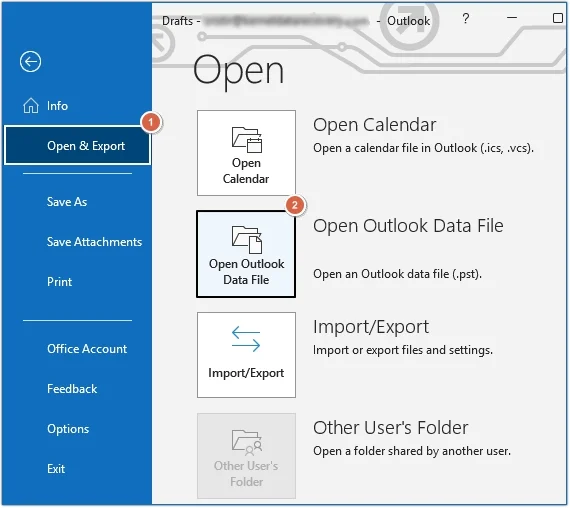
Step 2. Click Open & Export > Open Outlook Data File.
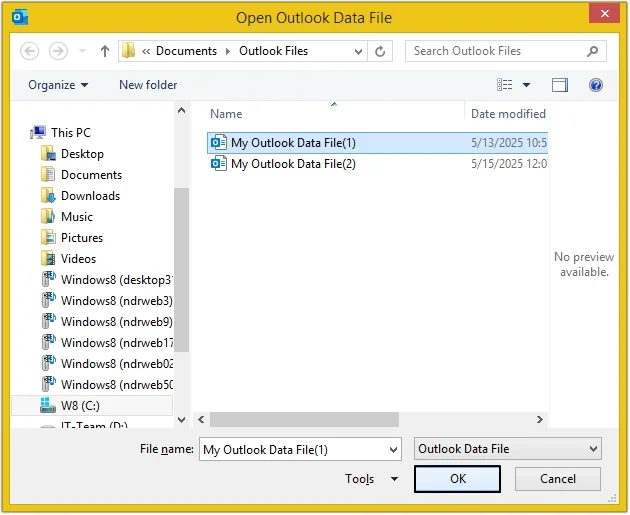
Step 3.Select the PST to open, then click OK.
Outlook provides an Import/Export utility to help you import PST file into Microsoft Outlook. Here’s how to use this feature in Outlook:
Points to Know Before Starting the Import
For Outlook version 2013 and later, the steps to import PST file are almost similar. There may be a slight variation in the user interface, but the flow of the process remains the same. Follow these steps to import PST file to Outlook.
Step 1. Open Microsoft Outlook and go to the File tab.
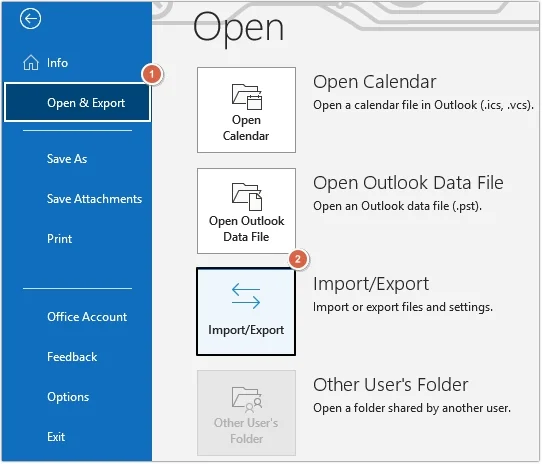
Step 2. Select Open & Export and then click on Import/Export option.
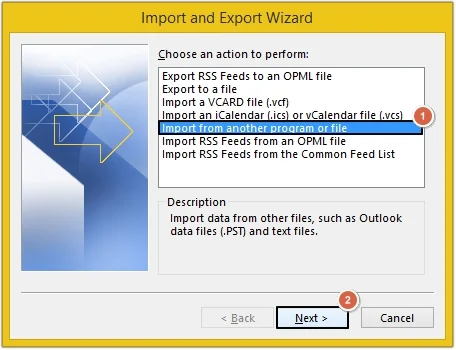
Step 3. In Import and Export Wizard, select Import from another program or file option and click Next.
Step 4. In Import a File wizard, select Outlook Data File (.pst) and click Next.
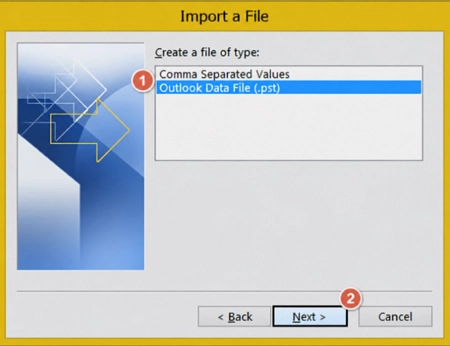
Step 5. Click Browse.
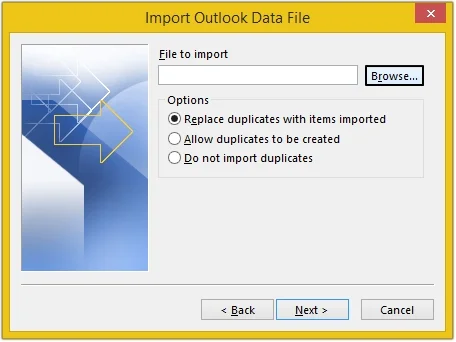
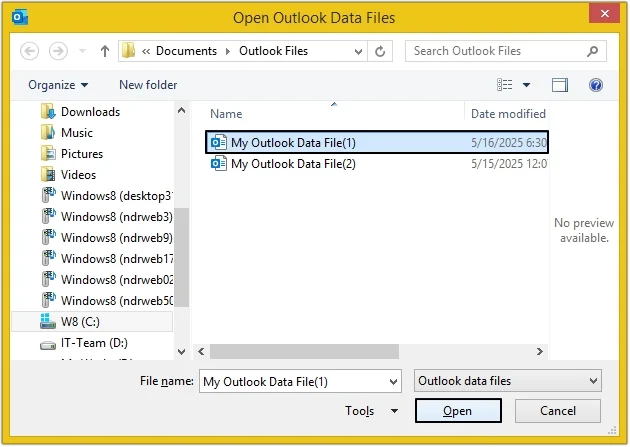
Step 6. Select the PST file and click Open.
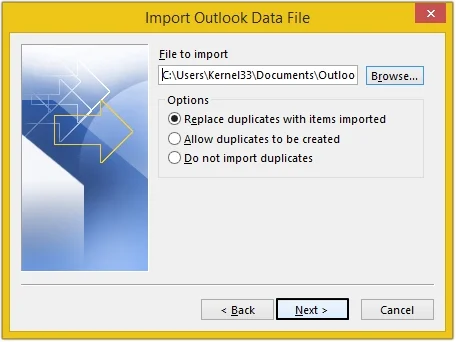
Step 7. In the Import Outlook Data File wizard, select from given options accordingly:
After selecting the appropriate option, click Next.
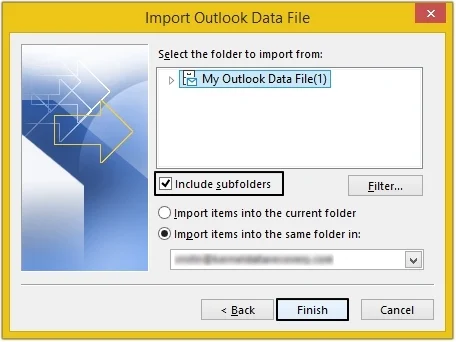
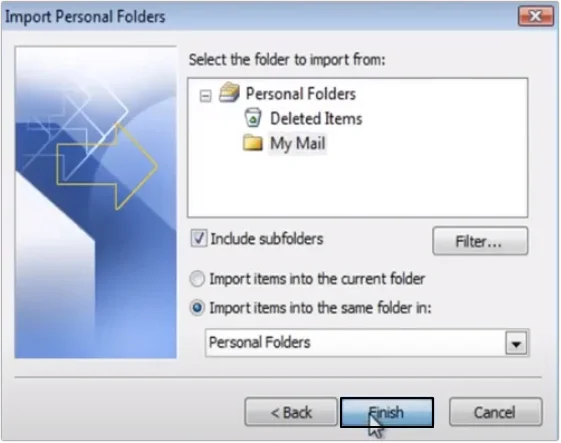
Step 8. Select the folder from which you want to import and click Finish. Make sure to check Include subfolders checkbox.
The procedure to import PST file into Outlook 2010 is as follows:
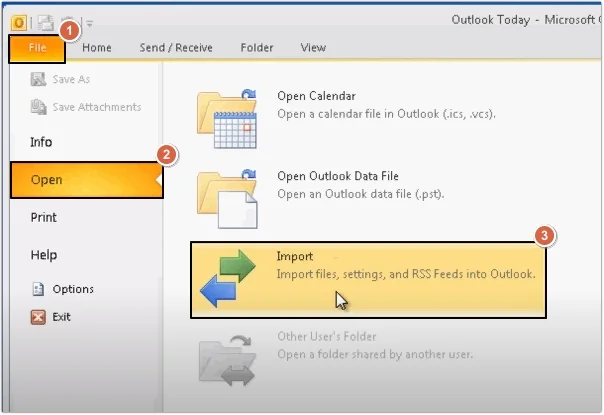
Step 1. Open Outlook 2010 and click on File > Open > Import.
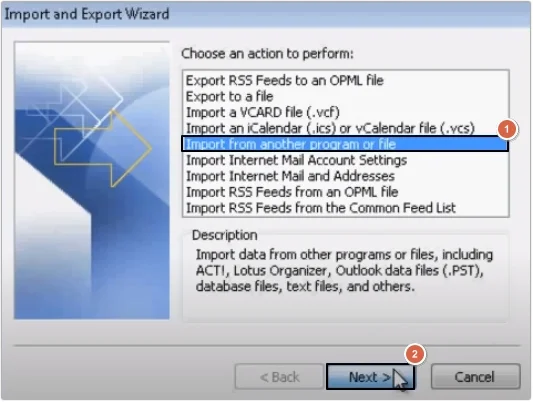
Step 2.Choose Import from another program or file and click Next.
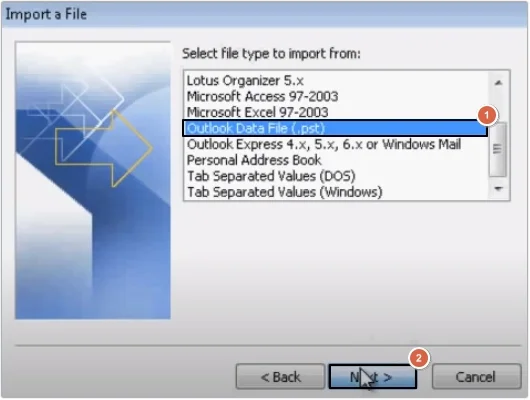
Step 3. Scroll down and select Outlook Data File (.pst) and tap on Next.
Step 4. Click on Browse to add PST file and then click Next.
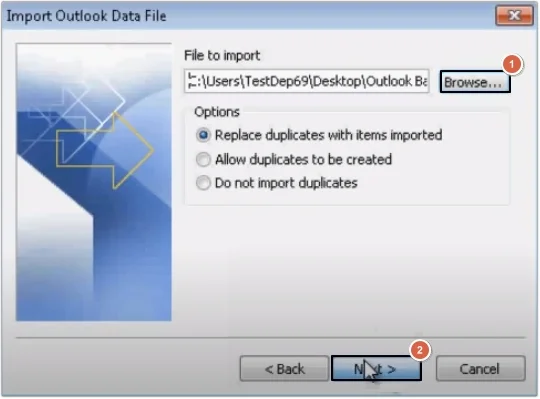
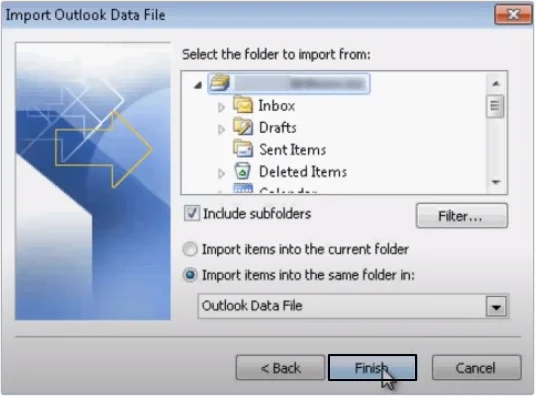
Step 5. Now, Click on Finish button to start the process.
Here is the simple step-by-step process to import PST file in Microsoft Outlook 2007:
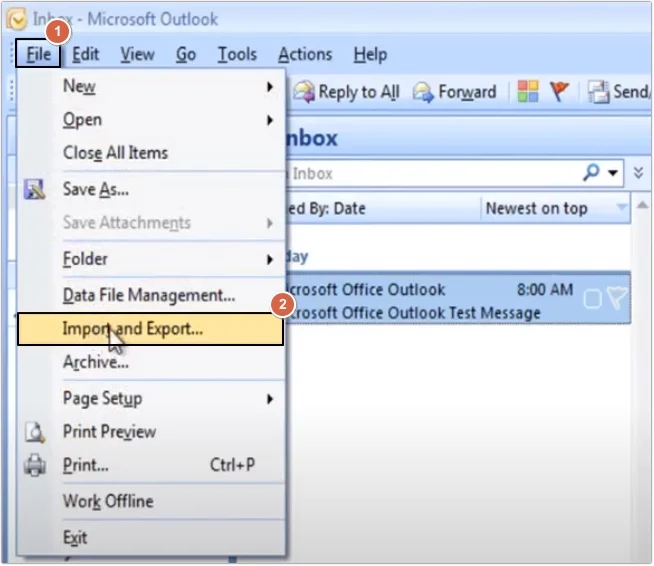
Step 1. Launch Outlook 2007 and click on File > Import and Export.
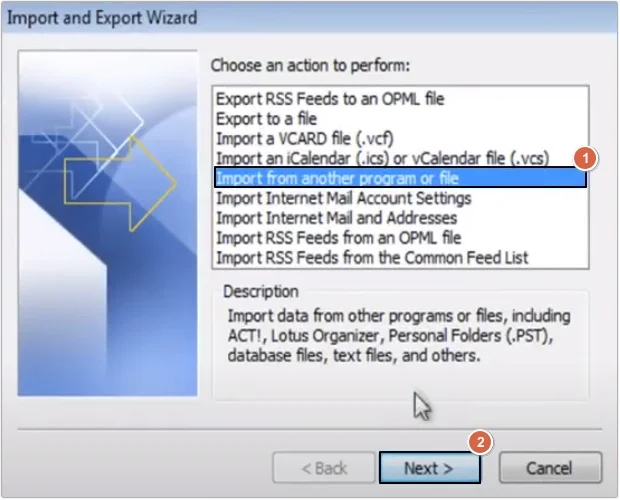
Step 2. Tap on Import from another program or file option and click Next.
Step 3. Now, select Personal Folder File (.pst) and click Next.
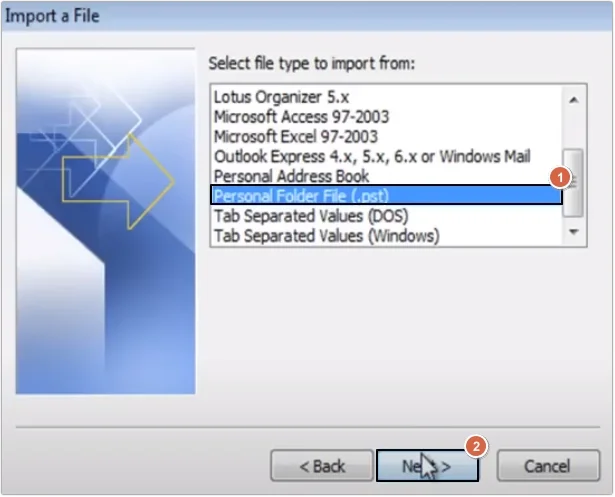
Step 4. Click the Browse button to add PST file.
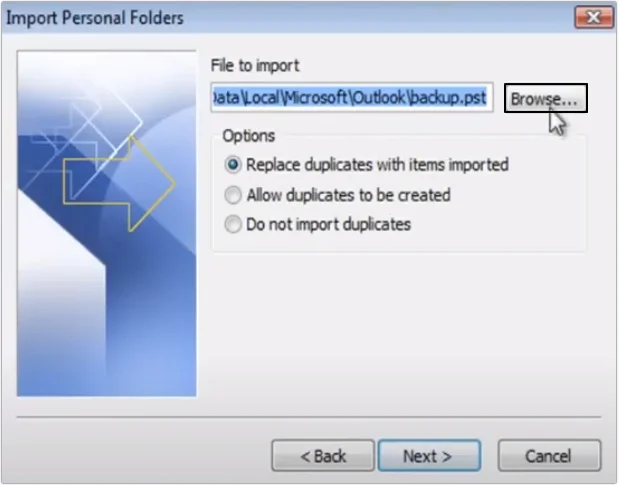
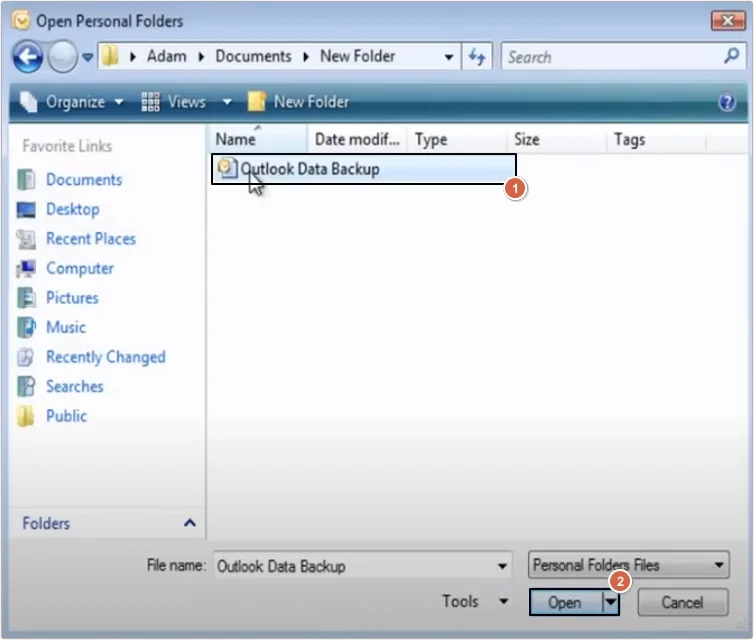
Step 5. Select the PST file and click Open.
Step 6. Click Next.
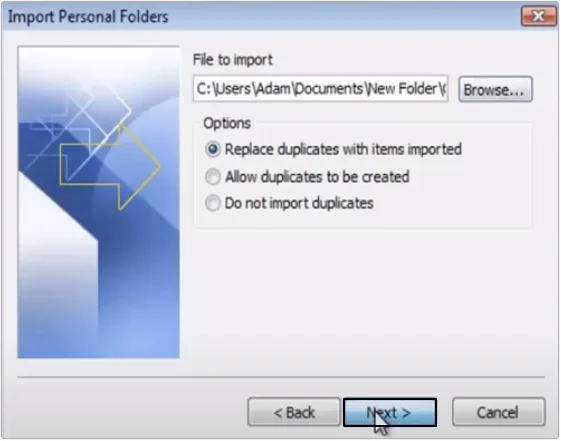
Step 7. Click on Finish button.
When you import PST file to Outlook, there are chances that the process may fail or get stuck in between. Common errors that you may see during the import are:
Even if you follow the PST importing steps correctly and resolve the common errors, the data transfer process may still fail. This could happen if the source PST file was heavily corrupted. If you face such an issue, try using Scanpst to fix corruption in the PST file.
However, the Scanpst tool may fail to repair a severely corrupted PST file. Also, the tool may delete corrupted data blocks along with any data item associated with that block. If Scanpst fails to repair the PST, you can use a professional Outlook PST repair tool.
The Kernel for Outlook PST Repair allows you to repair PST files that the Scanpst tool cannot fix. You can add and repair multiple corrupted PST files together. After repairing, the tool will display all the recovered data items, like emails (with attachments), contacts, calendar entries, etc., in the original folder structure. After recovery, save the data to a new healthy PST file and import this new PST into Outlook.
I hope by now you have understood the steps to import PST file into Outlook. We have covered the import process for all classic Outlook versions. Even if you want to import PST to Office 365, you can use the steps given above after adding the target Office 365 account in Outlook.
In case you get an error during import, use the troubleshooting tips we discussed above. For corrupt PST files, use Scanpst tool, and if that fails, use the Kernel for Outlook PST Repair.
A. Yes. To open PST file in Outlook, click File > Open & Export > Open Outlook Data File. Then open the PST file.
A. You have three methods to import a PST file to an Office 365 user mailbox:
A. No, the original source PST file remains intact and is not deleted when you import it into Outlook.
A. Yes, the Outlook’s in-built Import/Export utility preserves the PST file structure, including folders and sub-folders.