Simple Methods to Convert EML to MSG File Format
 Written By: Sarthak Poswal
 Updated On October 23, 2026 Written By: Sarthak Poswal Updated On October 23, 2026
Summary: To convert EML to MSG, you can use New Outlook, Classic Outlook, and a dedicated EML to MSG converter tool. However, the dedicated tool makes the EML to MSG conversion and saving process more direct and easier than anything else, even Outlook.
EML file is a standard email format that is compatible with different email clients. Often, due to specific use cases like switching to Outlook email client, the user needs to convert EML to MSG format. However, both EML and MSG are used to store a single email file, but MSG offers more advantages when we are talking about Outlook, email archiving, and searching.
In this guide, we will see how to convert EML files to MSG format using New Outlook, Classic Outlook, and a dedicated tool. Let's get started by learning the reasons for conversion first!
There are several reasons to convert EML files to MSG format. Some of the major reasons are listed below:
There are three approaches to converting EML files to MSG format. Each one has advantages over the others. Understand each method and choose the one that suits you well:
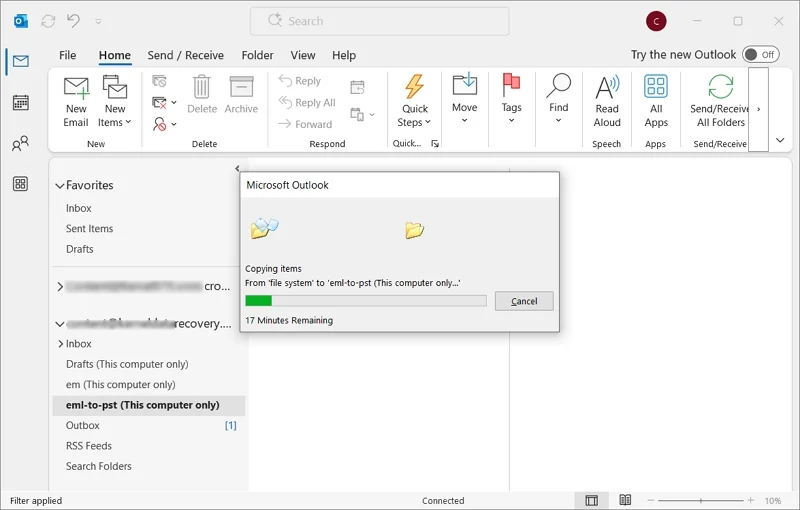
If you are using the New Outlook, you can convert EML to MSG effectively. However, you’ll need to import the EML file into Outlook first; then you can save EML file to MSG one by one. Here are the steps to follow:
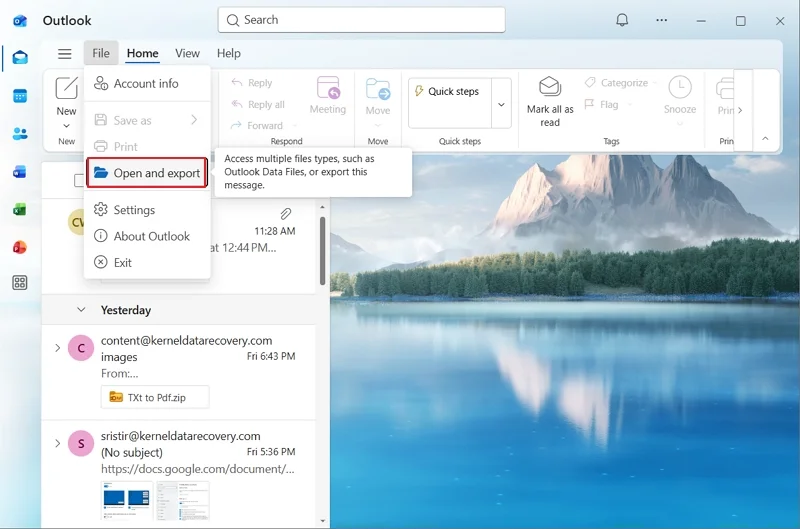
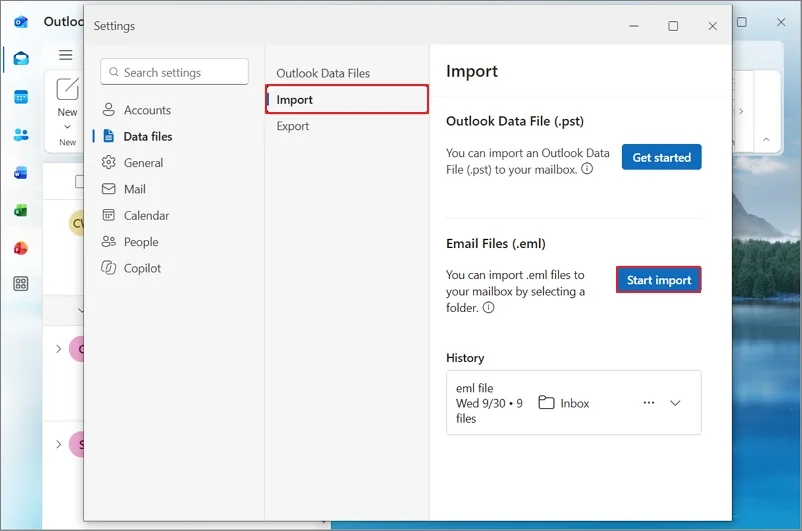
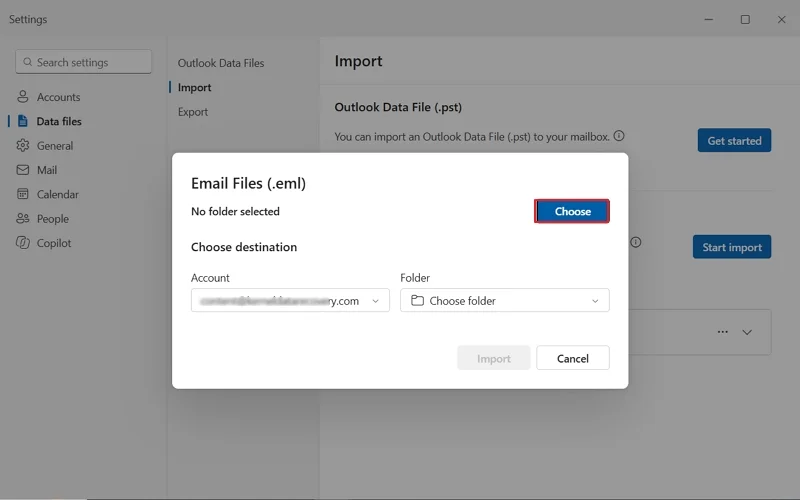
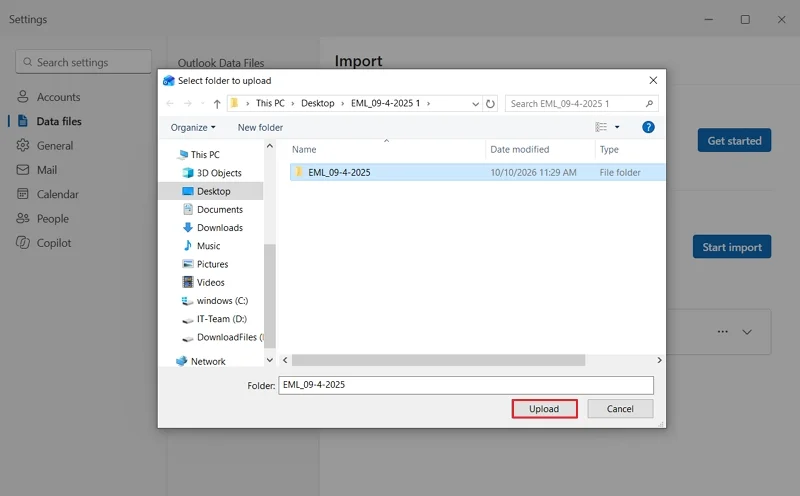
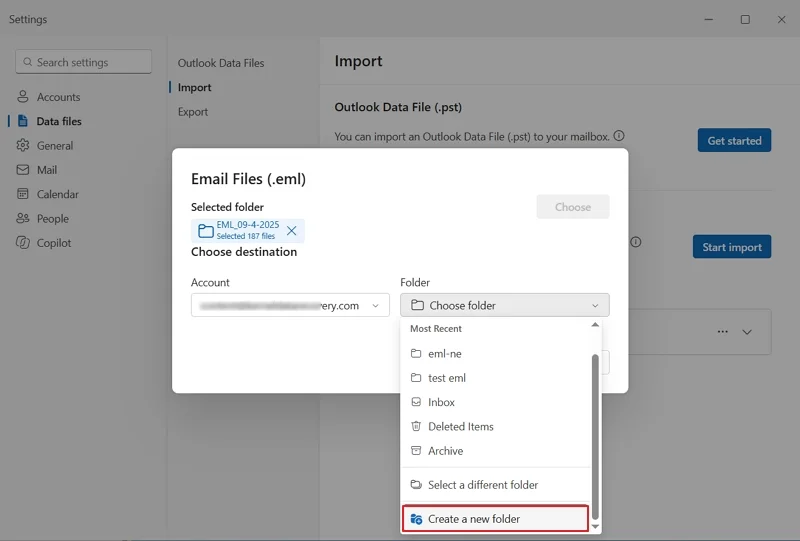
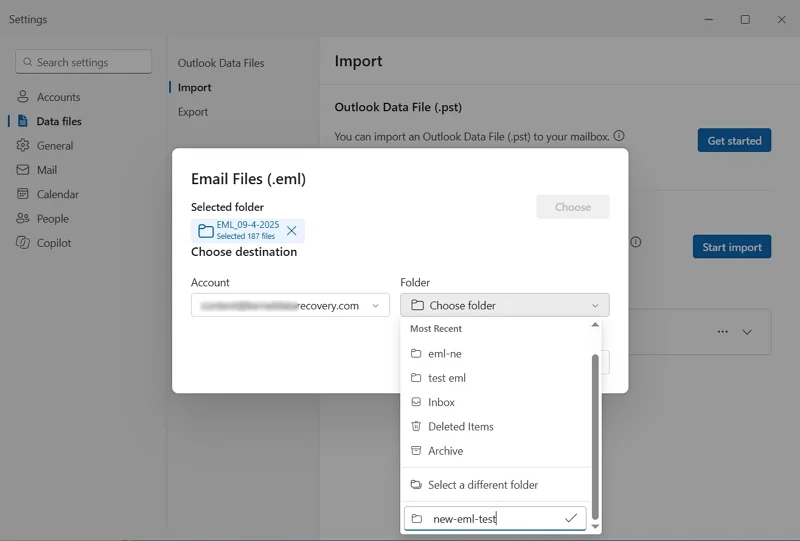
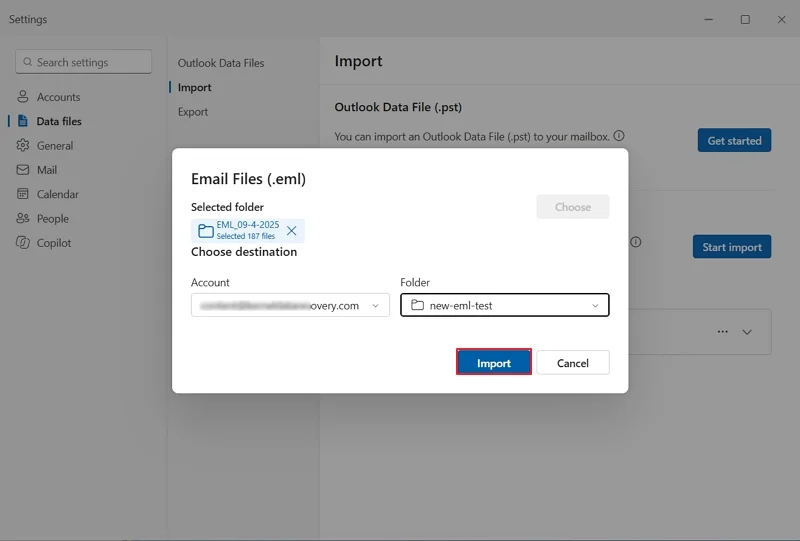
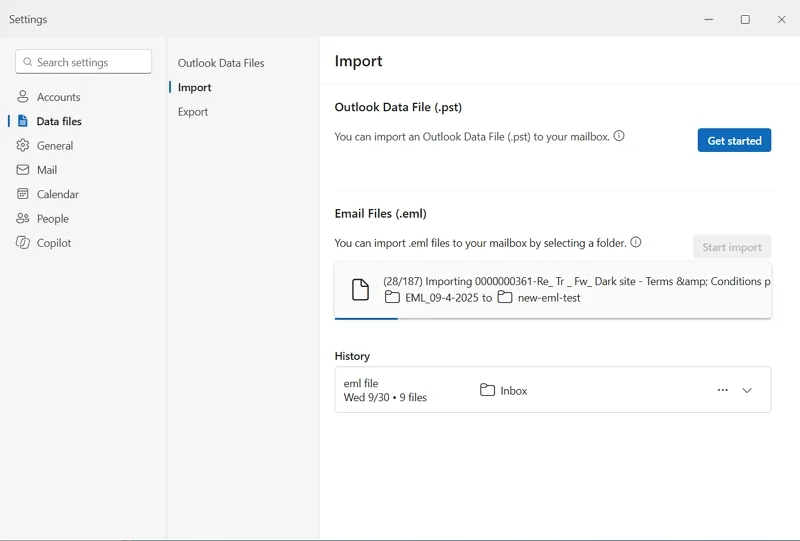
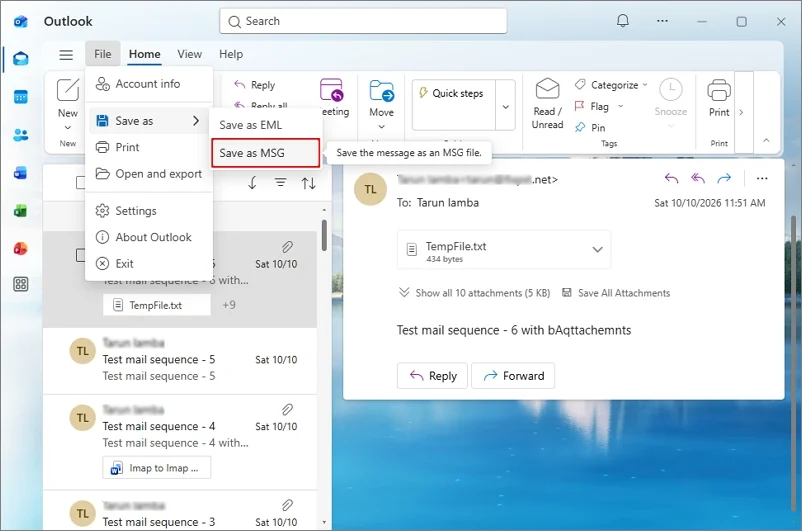
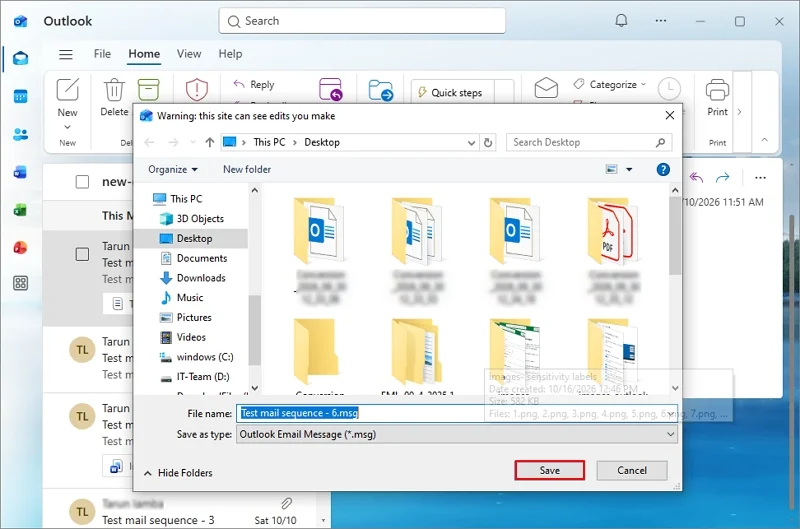
Note: The above methods allow you to import bulk EML files to New Outlook. You can also add an EML file to New Outlook via the copy (CTRL+C)-paste (CTRL+P) or drag-and-drop technique. For converting a few EML files to MSG, the copy-paste technique would be quicker. However, you can save emails to MSG one by one.
If you’re using Classic Outlook, you can also convert EML to PST. However, for each EML file, you need to repeat the saving process. Here are the steps to convert EML files to MSG:
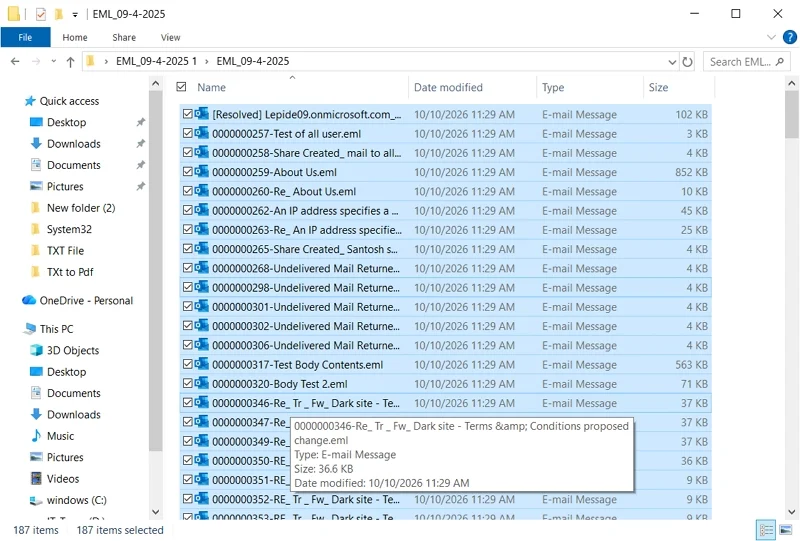
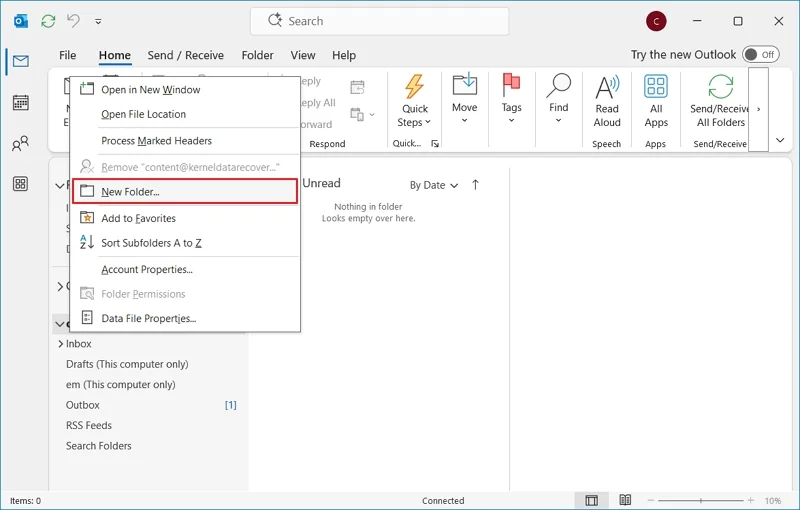
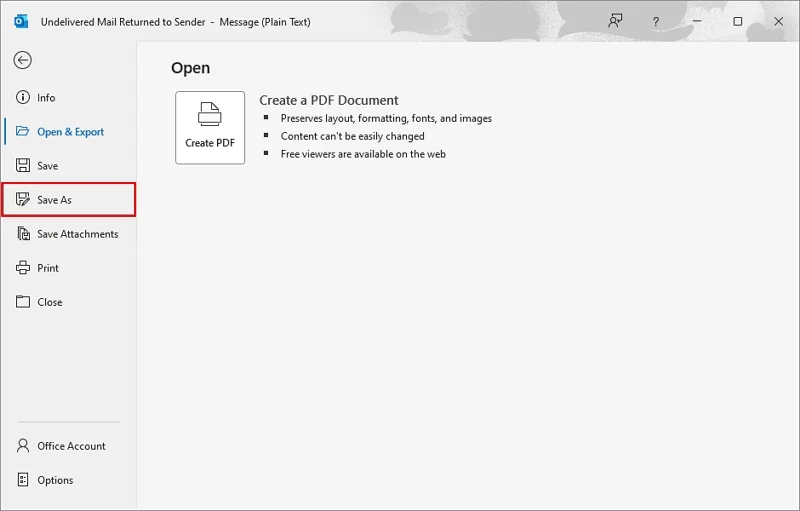
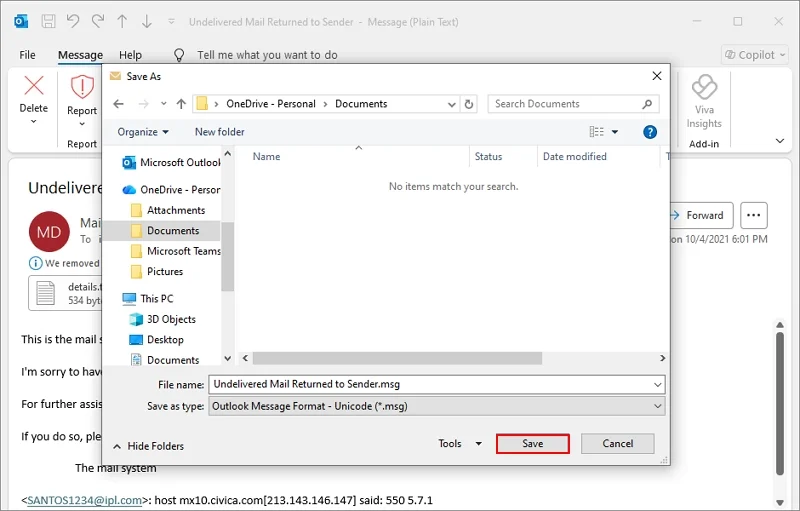
Your EML file will be saved in MSG format. You can now open it directly via Outlook.
Note: The biggest drawback of using Outlook to convert EML to MSG format is that you can only convert a single email at a time. If you are converting a few EML files to MSG, you can use the manual method. But for bulk email conversion, say 1000+ emails, manually converting each one will be tedious and unrealistic. A better way to perform large-scale EML file conversion is to use an EML converter tool that supports saving EML files to MSG.
While manual methods require repetitive saving tasks for each EML, with a dedicated converter, all your EML files, even thousands or more, can be converted into MSG in a few clicks. It can reduce your EML to MSG saving hassle. Moreover, the chance of missing out on any EML file is reduced.
Kernel EML to PST Converter also converts EML files into MSG files with all data and metadata intact. The working process of the software is simple. Download and install the tool, then follow the steps below:
Step 1: Launch the tool. The home screen of the tool will appear on your screen.

Step 2: From the left navigation pane, open EML file location and select the EML folder. The tool will list all the EML files.

Note: To find your EML file automatically within the system, tap on the Search button and select a drive.

Step 3: Select folders containing EML files from the left pane and preview EML files. After that, click the Save

Step 4: Now apply the Conversion Rule to filter your data based on From, To, Date, and Subject, and then click Next.

Note: To get only the emails with attachments, check the Attachment check box at the bottom.
Step 5: To convert EML files to MSG, select the Save in MSG option. Then, click Browse and specify the location to save the converted email files. Finally, click Save.

Note: To keep the original source folder hierarchy in the destination while saving, make sure to check the “Save in Folder Hierarchy” checkbox.
Step 6: The tool starts the EML to MSG conversion.

Step 7: After the successful conversion, you will get a confirmation message along with a link to the saving location.

This way, you can perform multiple EML to MSG file conversions with the tool without any difficulties.
Converting an EML file to MSG is a necessity for individuals who mostly use Outlook. Now you know both manual and automated methods to convert EML to MSG. Make sure to back up emails before trying any conversion method. For converting a few emails, prefer either Outlook New or Classic, but for bulk email conversion with no manual hassle and unnecessary time consumption, go with a dedicated conversion tool. In addition to MSG, you can also use the tool to convert EML to PST for importing EML files into Outlook directly.
A. No, the email metadata remains the same after conversion. You can use the manual method or the professional tool without worrying about any changes in email data.
A. For a large-scale EML file conversion, the fastest method is to use an EML converter tool that supports EML to MSG conversion.
A. Professional tools are designed to maintain the integrity of each attachment during conversion. They can easily handle all types of attachment files, be it images, audio, video, etc.
A: Drawbacks of converting EML to MSG via Outlook (New or Classic) are:
A: With an EML converter, you can add multiple large EML files at once and directly convert the bulk EML to MSG in no time. It requires only a few clicks.