Read time: 8 minutes
Planning to sell your old computer soon? Have you securely deleted all the stored data from the hard disk? You might surely know how to remove files and folders from a Windows 10 and 11 PC, but do you know how to permanently delete files on Windows 11 and 10?
Permanent deletion of files from Windows PC is a myth unless you take measures to delete the data permanently. Sometimes, the data is still recoverable using some practices or third-party recovery tools, even after removing it with ‘Shift + Delete’.
You surely don’t want your confidential data, including photos, account or transaction passwords, bank details, etc., to get into the hands of anyone who could misuse it. Therefore, it is important to follow the appropriate procedures to erase the entire data, assuring it is gone forever.
Why Secure File Deletion is Essential for Data Privacy?
Read out the following pointers to learn what happens if you don’t delete files permanently on Windows PC (10 and 11):
Avoid data breaches
Secure deletion supports risk mitigation to avoid identity theft and prevention of financial data against fraud. It helps to escape data breaches, which otherwise might misinterpret and misuse the information.
Device security
Before disposing off, donating, or selling your computer to another user, secure deletion of files from Windows 11 PC checks that others do not access the data (company or individual).
Prevent recovery of residual data
Emptying recycle bin after data deletion doesn’t assure permanent removal, rather it’s there until new data is overwritten on that space. Securely deleting Windows 11 files will make the files permanently inaccessible on your PC.
Follow compliances
As per some regulatory compliances, it is crucial to securely delete personally identifiable data of users that is not needed anymore. It helps to assure the user’s data security. Moreover, helps to build reparation and trust among the potential customers.
Keep storage clutter-free
Hidden files, when accumulated, can cause a mess. This often results in havoc on the organization of files and folders within your system.
Manage storage
Files that are deleted are inaccessible, but they still continue to occupy space on your device storage. This can cause technical complications and slow down the performance.
How to permanently delete files on Windows 11 and 10: Technical Insights
This section explains how to securely delete files on windows 11 to delete files on Windows 10/11 securely. The first method involves using the in-built tool Cipher offered by Microsoft for the successful deletion of data. A second method is an automated tool specially designed for file deletion.
Use keyboard shortcuts
Windows 11 comes with a few shortcut keys that allow you to dodge Recycle Bin, which means a file is permanently deleted rather than going into the bin. To delete the files, go to the folder where the desired files are stored, select them, and use Shift and Delete keys together. Select Yes on the confirmation pop-up to delete the files.
However, this method doesn’t overwrite the data, which means there are still some chances of data recovery using professional tools.
Use Cipher for Data Deletion
If you’re unwilling to invest in any third-party tool to delete files on Windows 10, then using Cipher securely is the best option for you. Cipher is not like other software applications; it can be used with Windows Command Prompt only.
Note: Before using the Cipher method, make sure you remove the files from your system’s Recycle Bin and other areas.
- After deleting the files from your system, launch the Windows command prompt from the Start menu.
- In the command prompt, type the following command:
- Running this command will overwrite all the data from your C drive that has been deallocated, which means it will delete the data permanently (the data that has been removed earlier).
The above method describes the process of deleting the files from the entire C drive, which could be a lengthy process. So, if you want to remove something from a specific location, then type the exact address of that location in Windows CMD like
Delete data using Recurse command in PowerShell
Just like command prompt, you can use Windows PowerShell (command line) to delete files permanently from Windows PC using the “recurse” command. Open PowerShell on your PC and run the following command:
This will erase your data securely from the system.
Erasing data securely from Windows 11, 10 using disk management
Windows 10 and 11 PC comes with disk management utility with which users can manage their storage devices and drive partitions. To erase data, open Command Prompt and follow the steps:
- Type diskmgmt.msc in the cmd and click Enter.
- Locate and select your storage drive from all at the bottom.
- Right-click and select Format.
- Next, click Yes to continue.
- In the wizard, input the Volume Label and File system.
- Deselect “Perform a quick format” and click OK.
Using command prompt to delete files on Windows 11, 10
With some commands executed on the Command Prompt, you can delete files permanently from Windows 11 or 10:
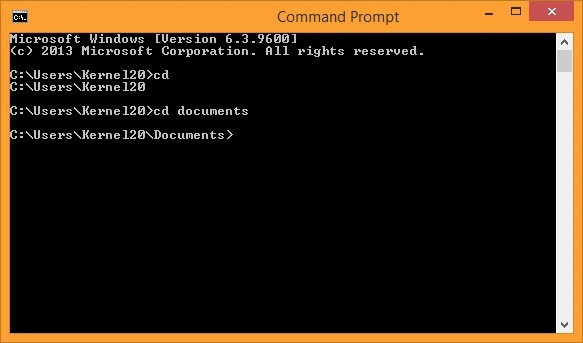
- Use Windows (win key) + R key to launch the command prompt (cmd).
- Run “cd dir“ command to navigate through the browser and locate the desired files.
Note: dir in the above command refers to the directory you want to enter into for selecting the files.
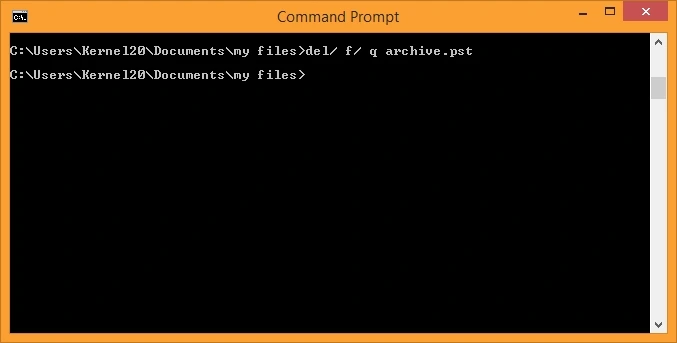
- Use the command ‘del /f /q “filename”’ to force the permanent deletion of the files.
Kernel File Shredder: Best Software to Securely Delete Files on Windows
The above methods will help you delete files in Windows 11 if used properly. However, professionals always recommend having an advanced File Shredder tool that users can rely on to delete data beyond recovery permanently.
Kernel File Shredder is an advanced utility specially designed to help users securely delete files on Windows 11, 10 systems. It is integrated with advanced file shredding algorithms to execute file shredding. Besides, it comes with a simple user interface, making it easy to use even for non-technical users. Moreover, the software also lets you wipe a hard drive without deleting Windows, shred System files, recycle bin files, etc.
Best Features of the File Shredder Tool:
- Ensures complete removal of data without any trace.
- Performs shredding as per the user requirement.
- Multiple shredding algorithms are available on a single console.
- Easy to install and use.
- Even non-technical users can perform shredding.
- Works on Windows 11, 10, and all other versions.
Comparing Windows Built-in Tool with Professional Software
| Differences | Cipher | Kernel File Shredder |
|---|---|---|
| User-interface | Involves a built-in command-line interface | User friendly and intuitive GUI |
| Functionality | Use /w command to overwrite empty space after files deletion | Use different file deletion algorithms to shred files, folders, etc. |
| Suitable for | Permanently deleting traces of deleted files | With easy drag-and-drop, provide granular control on permanent file deletion |
| Technical expertise | Requires running correct commands | Allow all technical and non-technical users an ease to access file shredding |
| Cost | Free | Free Trial and licensed |
| Time required | Time-consuming, especially for drives with huge data volumes | Allows quick and efficient process in all scenarios |
Conclusion
Secure deletion of files on Windows 11 and 10 is crucial for everyone. When you’re selling your old PC or laptop to buy a new one, you won’t want to give your critical data to any other person. Use the article to learn how to delete files on windows 10 permanently with the help of an in-built utility or an automated solution. Download the free trial version of the File Shredder tool to permanently delete files from your Windows 11 PC.
Frequently Asked Questions
A. Once you delete some files permanently, the files do not go anywhere; rather system forgets the information about these files. The file path is removed from the index, making the space available for overwriting data.
A. Follow the given tips to make the most of your secure data deletion from the system:
1. Make sure to backup important data before you execute the irrevocable deletion.
2. First, delete files from the drive, empty Recycle Bin, and then use erasure methods.
3. Use file shredding tool to wipe off sensitive data with zero hassles.
4. Delete all copies of the data stored within the system to avoid recovery.


![Does Formatting a Hard Drive Delete All Data? [Explained]](https://www.nucleustechnologies.com/blog/wp-content/uploads/2022/06/900x416-8-16.jpg)