Read time: 8 minutes
Formatting is an effective way to delete files from the drive. But is it really effective? Even though it does remove the file index and the file system structure, your data can still be recovered with professional help. There’s a high chance your sensitive information can get into the wrong hands if not disposed of properly.
Scroll down to learn whether formatting a disk erases data permanently or if there’s a better alternative. We also look at the types of formatting techniques to delete data permanently from PC and whether data recovery is possible or not.
What is Hard Drive formatting and is it really necessary?
Formatting a hard drive removes all data, allowing the file system to provide free space to store new data. However, it does not immediately erase the data from the storage; it just removes the access to it until new data is saved in its place.
So why do users format their hard drives?
- Setting up a new hard disk or SD card.
- Removing system errors or virus/malware from your drive.
- Selling/donating your device to someone else.
- Resetting or upgrading an Operating system.
Essentially, it’s done when you need to reset the file system structure and prepare the drive for reuse. The formatting process removes the old file structure to build a new one so users can move the new data to the location. Let’s understand what actually happens during disk formatting and see where all the data goes.
What happens when you format a hard drive?
When you format your hard drive, a series of actions takes place behind the scenes that make data inaccessible. What exactly happens when you format a hard drive? Here’s what actually happens:
- Bad sectors are identified, and viruses/malware are removed from the drive.
- Formatting a hard drive frees up space and boosts the performance of the computer.
- The file system structure resets to a new one, like NTFS, EXT2,3,4, etc., after the formatting process is completed.
- Data is not removed, but the file index of the old data is erased completely, removing the markers that identify where the data is stored.
Quick insight: Formatting a disk does not permanently delete data; it just makes it inaccessible.
Quick Format vs Full Format vs Wiping: What should you choose?
Choosing between quick format, full format, and wiping depends on your requirements. This comparison table highlights the core differences between the two.
| Comparison | Quick Format | Full format | Wiping |
|---|---|---|---|
| What is it? | Quick process to erase file system structure, without erasing the data completely. | Overwrites the disk sectors and builds new file system structure to store data. | Uses specialized software to wipe data completely. |
| Checking for errors | Does not check for errors. | Checks and identifies bad sectors in drive for recovery. | Does check for the errors most of the time. |
| Time needed | Takes a few seconds to complete. | Takes a long time to complete, especially for large drives. | Very much time consuming, depending on the size of the drive. |
| Chances of data recovery | High chances of data recovery. | Low chances of data recovery. | Data recovery is impossible. |
| Data security | Very low | High | Very high |
| When to use? | When you need to quickly reuse a hard drive. | When you need to fix system errors or to completely clean the drive for reuse. | When you need to sell, dispose of, or donate a drive containing sensitive data. |
Now let’s move on to the steps to erase data from the hard drive permanently.
Steps to format your hard drive
So, you want to know how to format a hard disk. Here are some easy steps through which you can easily do it.
- Open File Explorer through the “Windows + E key.”
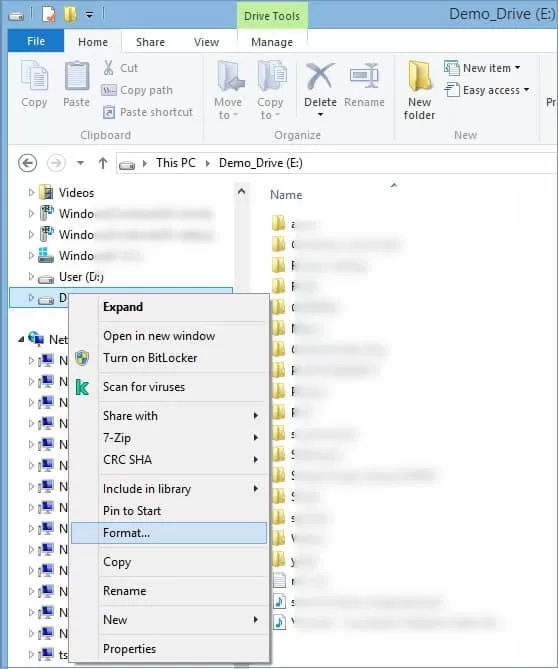
- Select “Format” after right-clicking on the target hard drive partition.
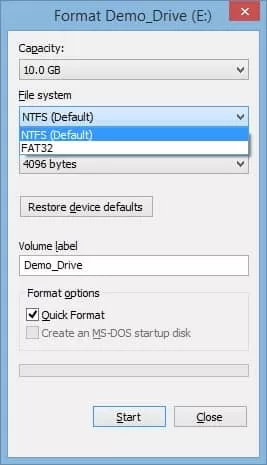
- On the format window, set NTFS as the file system for the hard drive. Now check “Quick Format” and tap “Start.”
- Click the “Finish” once formatting is complete.
If you want to format the whole disk of your computer, then you need to repeat this process on all the partitions of your hard drive. Note that it’s impossible to directly format the C drive with the above-discussed steps as Windows doesn’t permit you to do it.
Format through disk management
You can also format a hard drive through disk management on Windows. Let’s look at the detailed steps to format a hard drive.
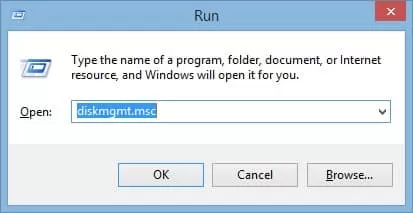
- Open the Run Window through the “Windows + R” key.
- Type “diskmgmt.msc” and click “OK”.
- If it’s a new hard drive, first initialize it. If not, Right-click on the target partition and select “Format”.
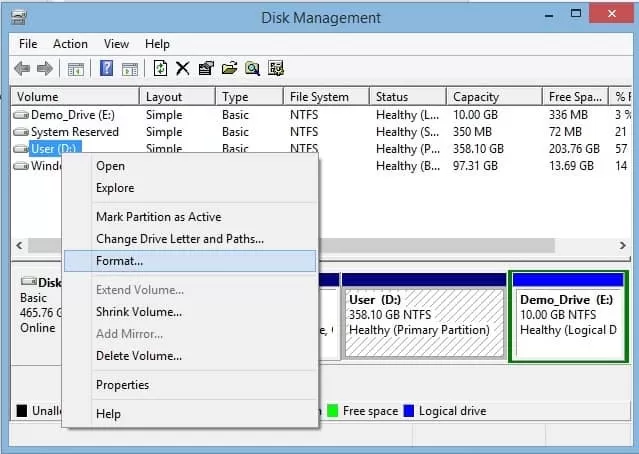
- Adjust the volume label (name the drive), file system (NTFS or exFAT), and allocation unit size (default) for the partition; otherwise, it will operate based on the default settings. Now click on “Perform a Quick Format” and click “OK”.
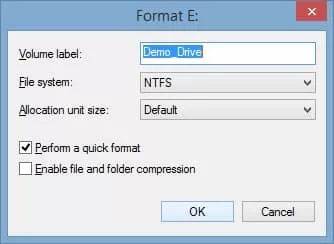
- A pop-up Windows occur which wants your confirmation to continue formatting. Click “OK” to finish the formatting.
Format through diskpart
You can also format a hard drive through DiskPart. To do it, follow these steps:
- Open the Run Window through the “Windows + R” key.
- Type “diskpart” and click “OK.”
- Now type a series of commands in diskpart and press “Enter” after typing each command
Following are the series of commands:
| list disk | Show connected disks with status, size, & partition |
| select disk N | (Here, N is the drive you want to format) |
| list partition | Shows all partitions on the selected disk |
| select partition N | (Here, N is the partition you want to format |
| format fs = ntfs quick | Formats partition |
Is data recovery possible? Here’s how to erase data permanently
When you format a hard disk, your computer’s operating system removes all file references from the existing file systems. Your deleted files remain in the system until new data overwrites them. This means there is still the chanced for you to recover your data through a data recovery tool like Kernel Windows Data Recovery even after formatting a disk. This procedure differs from a permanent erasure in which new files overwrite deleted ones.
Deleting data permanently: How to make the data unrecoverable
However, if permanent deletion is your goal, you must wipe your data clean with a specialized tool like Kernel File Shredder. This tool is a one-stop solution to permanently erase data from a disk. It uses 11 types of shredding algorithms to ensure the permanent removal of files. You can’t recover these files once deleted. Look at some advanced features of this tool.
- Uses advanced file shredding algorithm to remove data beyond recovery.
- Offers automatic shredding and scheduler.
- Various file shredding options to shred Recycle Bin, System Files, Useless Files, and more.
- Even non-technical users can easily shred the data.
- Provide better privacy protection to prevent unauthorized access to your data.
- Save shredding history.
Once the process is done, data becomes irrecoverable by all means, be it professional tools or expert recommended methods.
Conclusion: Is your data actually gone forever?
I hope this blog is helpful for you, and you get the answer to your query. Formatting and data shredding are two different things. Formatting never helps you erase data permanently. It still has chances of recovery using an efficient data recovery tool. Avoid the hiccups of data shredding and delete files permanently from your Windows recycle bin using Kernel File Shredder. The tool is designed with advanced shredding algorithms and features to overwrite the deleted files with new data immediately.
Frequently Asked Questions
A. Yes it does. A full format of hard drive checks and identifies bad sectors in a hard drive and removes the viruses promptly.
A. No it’s not. You must wipe the device clean of the old information before selling it. Otherwise, your data can get leaked.
A. No, these are two different processes. Full formatting involves restructuring the file system and overwriting disk sectors. Disk wiping is done with the help of a professional tool like Kernel File Shredder.