Read time: 8 minutes
User Query: “Today I was digging in my drive to find an old memorable video. But when I played it on Windows Media Player, it prompted. We can’t open Talus.mp4. This may be because the file is unsupported, the file extension is incorrect, or the file is corrupt, with the error code 0xc00d36c4. Is the problem with the video player or the video itself? How do I fix it?”
You’ll surely get the error code 0xc00d36c4 when you try to play a video with an unsupported file format, incorrect extension, or corruption issue in Windows Media Player. The problem may lie in either the media player and video file.
Be it a commercial video or personal memories, you want them to be playable rather than unreachable. So, let’s explore the reasons as well as how to fix 0xc00d36c4 error in Windows 11.
Main Culprits Behind Error Code 0xc00d36c4
Below ones can be the real reasons for error code 0xc00d36c4:
- Corrupted or missing codecs
- Misconfigured media library
- Corrupted Windows media player cache
- Inadequate file permission
- Unsupported video file extension
- Outdated system display driver
- Corrupted or damaged video file
- Get the latest Windows as well as the updated version of Windows Media Player.
- Restart your system and media player too, and then try to play the video file.
- Switch to another video player like VLC, KMPlayer, etc., to play your file.
- Download and install the necessary video codec pack, such as HEVC.
- Update the system display driver if outdated.
Methods to Fix Video Error 0xc00d36c4
We’ve compiled a few top solutions along with their steps so that you can easily fix media player error code 0xc00d36c4. Take a look at them and carry out as per the instructions given.
Method 1: Reset Windows Media Player Library
As the media player library plays an important role, corrupted library files can cause playback issues and various errors. So, reset the Windows Media Player library for resolution by following the steps given below:
- In Windows Media Player, press Ctrl + M to open the menu.
- Select Tools, then go to Advanced and select Restore Media Library.
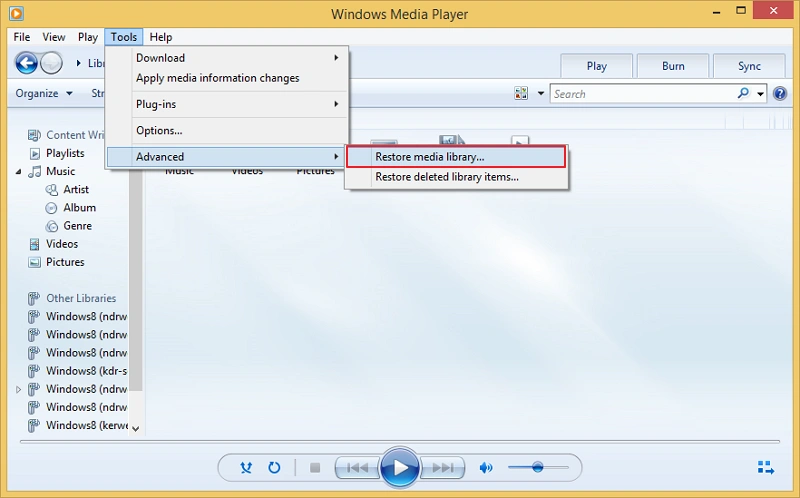
- Select Yes if you don’t need your media library. After that, try to play videos.
Method 2: Clear Windows Media Player Cache
Usually, outdated or damaged media player cache files lead to video playback errors, along with error code 0xc00d36c4. So, clear them from the application using the steps below:
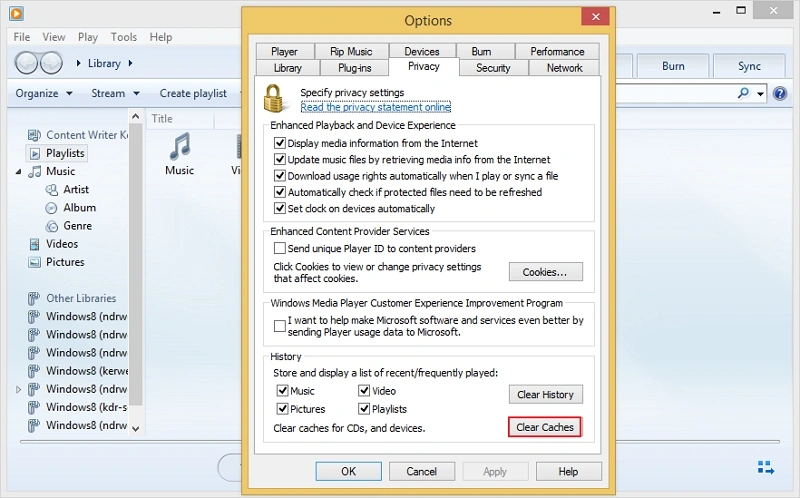
- In Windows Media Player, press Ctrl + M to access the menu.
- Select Tools, then go to Options, then tap on Privacy.
- Under History, select Clear Cache and hit OK.
Method 3: Reinstall USB Controllers from System
External devices connected, such as USB, to the system can also be troublesome sometimes. Reinstall each USB Controller one by one. However, they will be automatically installed once you open the media player. Follow these steps to do the same:
- Press the Windows + X keys together and select Device Manager.
- Expand the Universal Serial Bus controllers, select each USB device one by one, right-click, and tap on Uninstall.
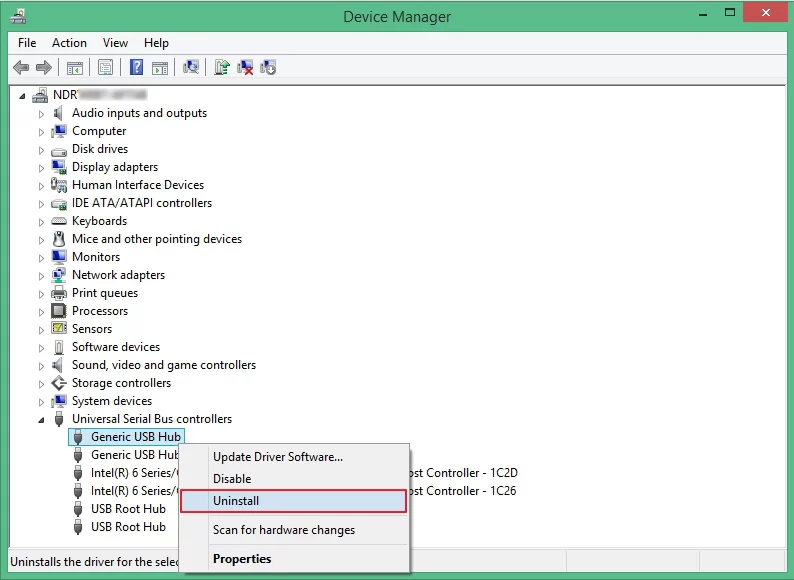
Restart your system, which will create fresh USB controllers when you start again, then play the MP4 video file again.
Method 4: Download and Install the Missing Codecs
If you are using an incompatible media player, you will definitely get this error code 0xc00d36c4, or Windows Media Player encountered a problem pop-up while playing the file. Media Player supports MP4 containers, but playback may fail if the required video codec (such as HEVC/H.265) isn’t installed.
So, get the required codec packs from the authentic source or the native brand site and install them on your computer to fix it. After that, you can play MP4 files or any other video format smoothly.
Method 5: Transfer Video Files to Your Local System
We often see that playing MP4 files through external drives may result in error 0xcc00d36c4. So, move or copy those video files to a convenient directory on your local drives. Just copy (Ctrl + C) the video files from external drives and paste (Ctrl + V) them in a convenient location on your system. After this, play your video file.
Method 6: Convert the File Format
If the Windows Media Player does not support the existing file format, re-encode the video file via VLC Media Player to some other format that is compatible with it. You can also convert the MP4 video format to WMV for smooth playback in Windows Media Player.
Video File Corruption: Real Reasons and Fixes
Still, if your video file fails to open, freezes during playback, flickers, displays duration 0:00, has improper visuals, audio-video sync problems, etc., then most probably there is corruption. To fix it now for free, use the VLC Media Player. Here are the steps:
- Select your corrupted video file and rename file format to .avi.
- Open VLC, go to Tools, then Preferences.
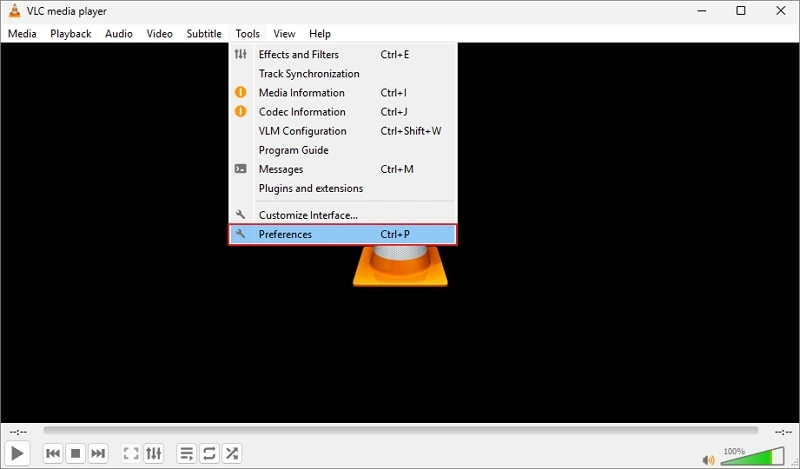
- Go to Input / Codecs, click Browse, and then add your recently renamed (.avi) video file.
- From Damaged or incomplete AVI file, select Always fix. Click Save.
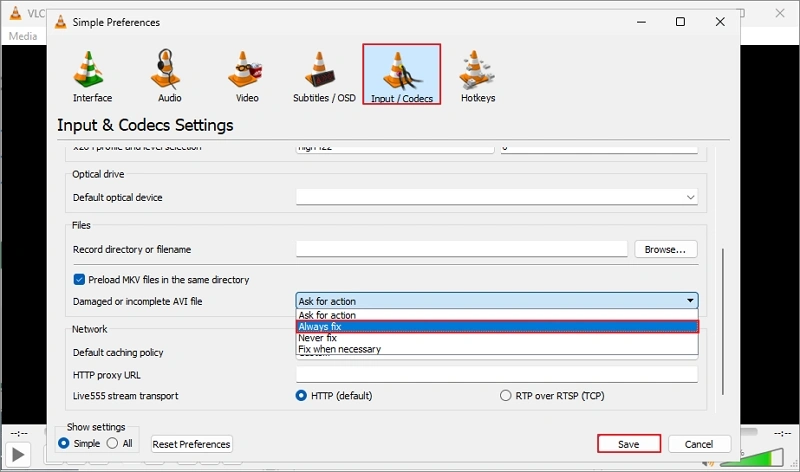
After that, try to play the repair file. But the video repair process via VLC may get stuck or fail, large video files may suffer, and quality may be lost.
What Lies Beyond Manual Approaches to Fix Video File Issues
When manual workarounds feel messy or don’t work, switch to an automated solution. Get a video repair software and fix all video file-related issues with quality loss. Kernel Video Repair works for all levels of video file corruption; even repair extra-large video files with no job failure. Here is how to repair a video file corruption:
Step 1: Get the Kernel Video Repair tool on your computer. Launch it and click the Add (+) button.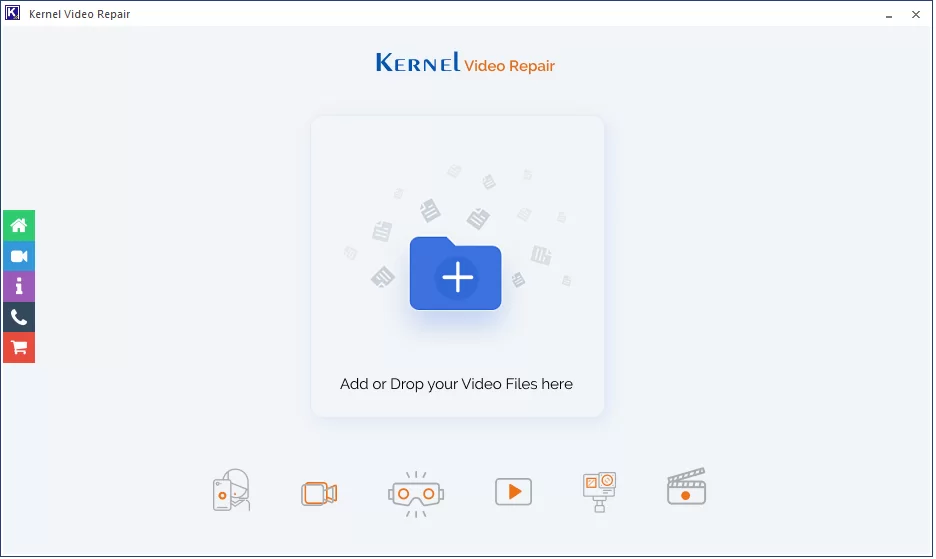
Step 2: Click Open after selecting the corrupted video files.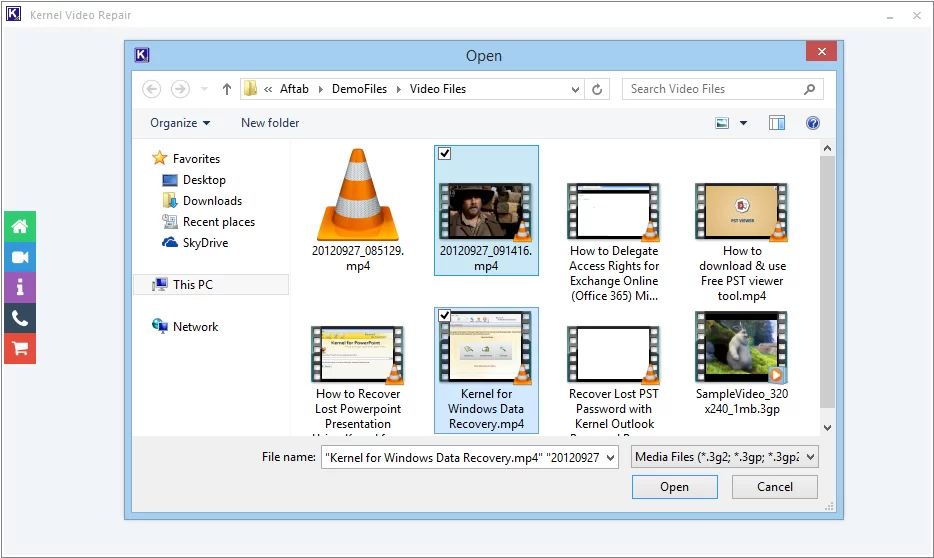
Step 3: Video files will be listed. Add a reference healthy file respective to each corrupted video if asked. Click Repair Files.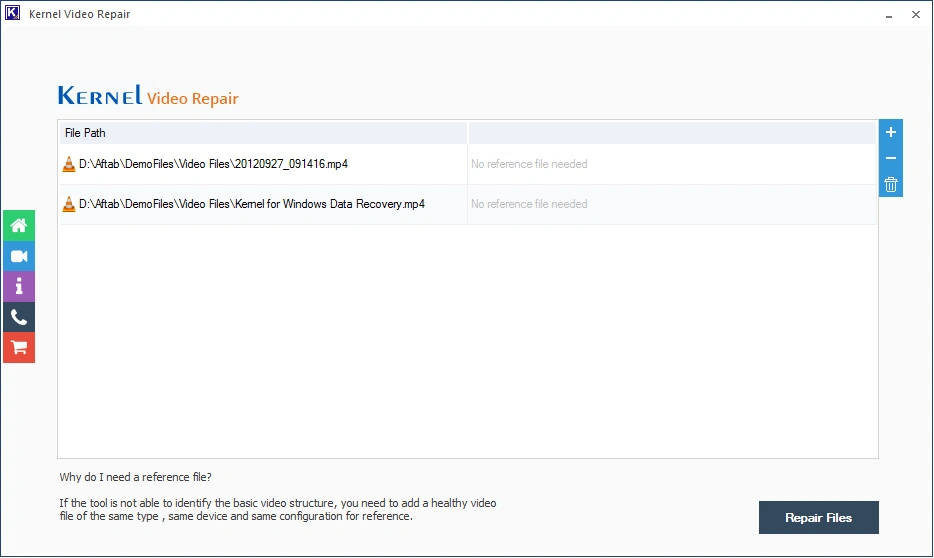
Step 4: Now, select the saving folder for the videos and click OK.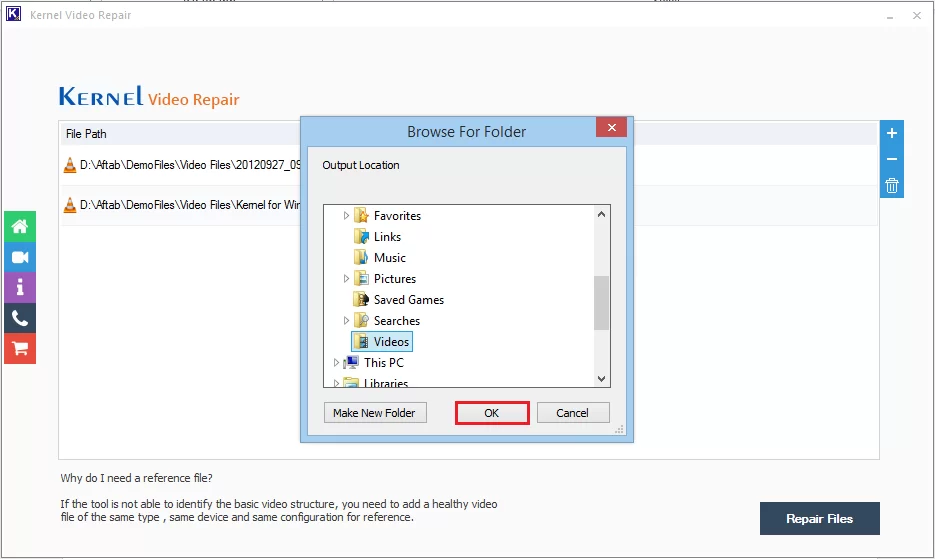
Step 5: The repair process will start. Wait till the status turns to Success. Click Close at the end of the process.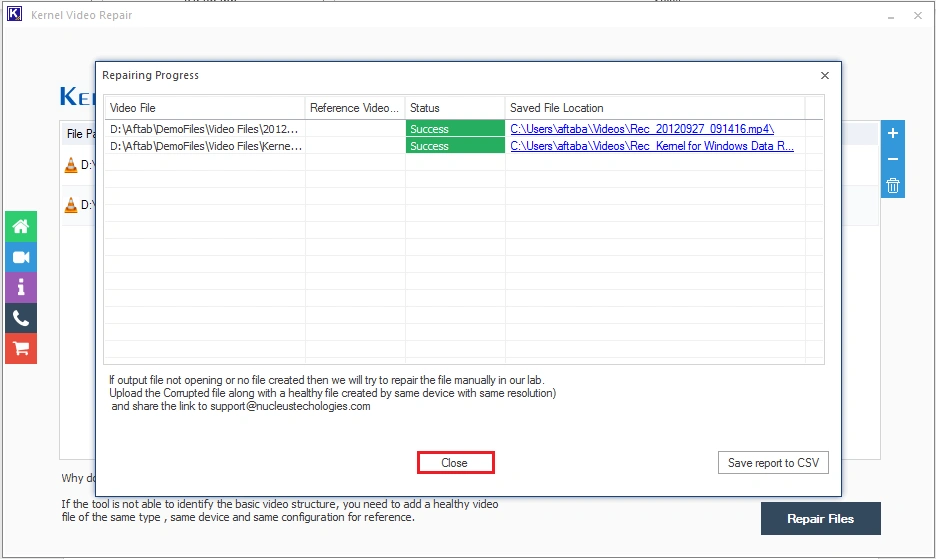
Concluding Words
0xc00d36c4 is a common error faced by Windows Media Player users, especially when trying to play MP4 files. It can be solved with a few methods. To begin with, try to play the video with some other compatible media player. If that doesn’t work, then convert the format of the file. Along with it, make sure to keep the drivers updated and install the missing codecs. If you are still not able to fix the issue, try the Kernel Video Repair tool, which is an ideal solution for all your video issues.