

- Basic Free Teams Account: You can export the entire chat and file history of your account by either copy pasting the chats to a new document or saving the chats as a PDF file.
- Professional Work Account: You can ask your admin to download 1:1 chats, channel messages, meeting chats, or group chats with the help of Microsoft Teams’ Export Tool.
It’s possible to save a few individual messages in Microsoft Teams for quick reference purpose but saving an entire Teams conversation with timestamps and all intact requires a completely different approach. There are different ways to save chat history in Teams depending on if you want to save a few messages, create a legal record with timestamps and other metadata saved, or backup important conversations. In this article, we’ll talk about the different components of Teams chat history, reasons to save Teams chat history, and the most effective ways to do so.
What are the Different Components of a Teams Chat?
A Microsoft Teams chat contains several different components, such as:
- Text messages.
- Timestamps of the messages in the conversation.
- Sender’s information like name, profile picture and other identifiers.
- Read receipts and thread conversations in channels.
- Attachments sent and received like documents, photos, videos, etc.
- Hyperlinks of websites, documents, media files, etc.
- Emojis and stickers sent during conversation.
- Mentions of specific users in the conversation.
- Message formatting used in conversation like bold/italic texts, lists, highlighted, or underlined texts.
- Conversation details like edited or deleted messages, total participants, chat type, etc.
Why is it Necessary to Save Teams Chat History?
Multiple scenarios exist when a user needs to save Microsoft Teams chat history. Here, we mention some reasons that motivate you to back up Microsoft Teams chat history.
- To back up your Teams chat history on your local drive.
- Need to use Teams chat attachments for any essential work.
- Remotely share Teams chat history with another user.
- Preserve Teams chat history for legal and compliance purposes.
- Saving chat history because of migration or employee offboarding.
- Save important conversations and prevent them from being deleted due to Microsoft Teams’ retention policy.
Manual Solutions to Save Microsoft Teams Chat History
Numerous manual solutions allow you to save chat history in teams. Here, we will discuss about them to export Microsoft Teams chat history in just a few steps.
Method 1. Copy and Paste Microsoft Teams Chat
Copy-paste is a well-known method that allows you to copy specific Microsoft Teams user’s chats and then paste them into any notepad editor to save them in an abc.txt format. Here are the steps for this method:
- Open a Teams chat that you want to save.
- Select and copy all the messages that you want to preserve.
- Paste them in document editor file like a Word document.
- Either save the data as it is or add required formatting and then save it at the location of your choice.
Method 2. Save Teams Chat History as a PDF File
You can easily save Microsoft Teams chat history in PDF using Print option. Open any Microsoft Teams Chat history and press Ctrl + P together to print that chat. After that, select Save as PDF or Export to PDF and save it to your local drive. The PDF file will contain the content that you’ve copied into the document. It includes text messages, senders’ details, timestamps, links, images, etc. However, it may not include attachments, GIFs, message reactions, reply threads, or other data.
Method 3. Save Chat History in Teams Using Microsoft Teams’ Export Tool
There’s also a way to export chat history on Microsoft Teams using a built-in export tool. You can place an export request of a copy of your Teams data by following the given steps:
- Sign into your Microsoft Teams account and go to Data Export
- Choose whether you want to export your Teams chat history or all the media you’ve received. You can also choose the options to export chat history and media together.
- Click on the Submit request option and return to the Export page periodically to see if the data is ready to export or not.
- Once the export is ready, download your Teams data and extract it on your system to the data.
Things to Consider When Saving Teams Chat History Manually
Microsoft didn’t provide any inbuilt facility to save Teams chat history. Since users have attempted manual solutions, they haven’t gotten satisfactory results. Also, there are various limitations associated with manual methods, such as:
- Manual methods may not preserve all Microsoft Teams components such as attachments, GIFs, links, etc. and may affect chat formatting and reply threads.
- Large chats aren’t feasible to export manually by either copy pasting or saving as a PDF file.
- You cannot save the entire Microsoft Teams chat history using manual approaches.
- Users cannot import and utilize these Microsoft Teams chats anywhere for work.
How Can You Save Microsoft Teams Chats Differently?
You can also get help from a reliable Microsoft Teams Backup software that allows you to back up the entire Microsoft Teams Chat in the local or network drive of the system. Kernel Microsoft Teams Backup tool allows users to save their Microsoft Teams Chat history on the local or network drive of the system. You can easily save Microsoft Teams Chat with its components, such as content, images, emojis, gifs, attachments, hyperlinks, and many more, in the original hierarchy. The software saves posts conversations in HTML format and the other attachments in raw format.
Steps to Save Microsoft Teams Chat History
The software comes with an interactive interface to ensure quick and hassle-free Teams backup process. Here’s how to do so:
Step 1. Download and install the Microsoft Teams Backup software.
Step 2. Launch the software to execute the process.
Step 3. On the software’s home screen Source section, left click on Microsoft Teams > Add Teams.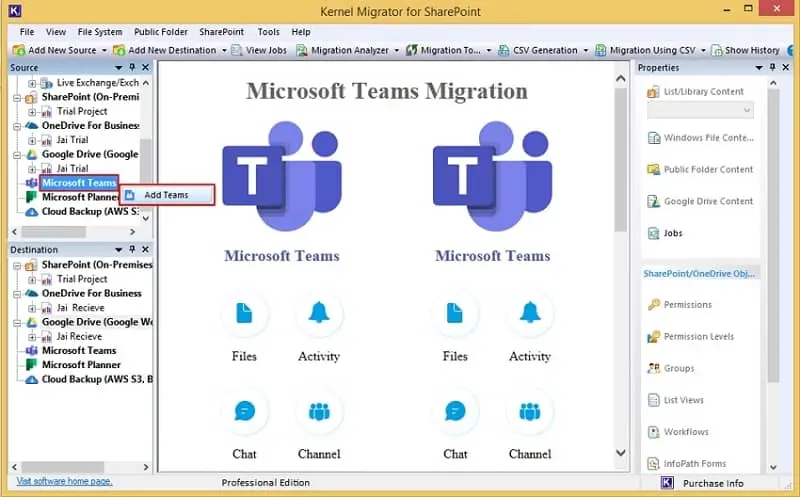
Step 4. In Add Teams window, enter Project Name, and select Basic or Modern Authentication for login accordingly. After that, click Next to map your Microsoft Teams account with the software.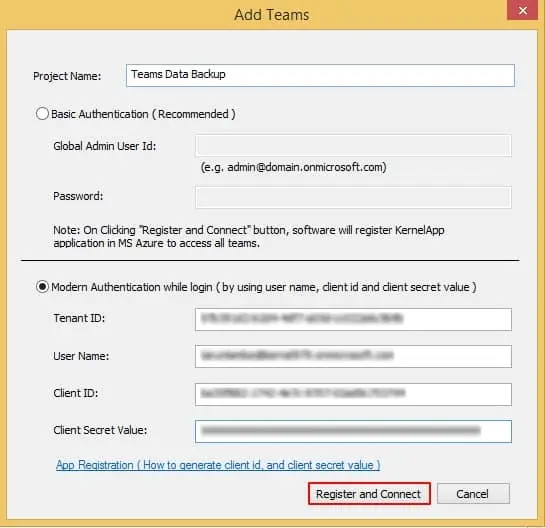
Step 5. Left click on Microsoft Teams and click on Backup.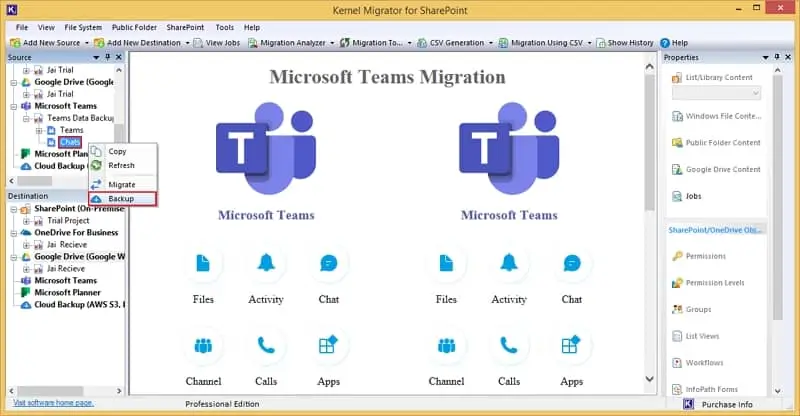
Step 6. In Microsoft Teams window, select specific Teams and click Next.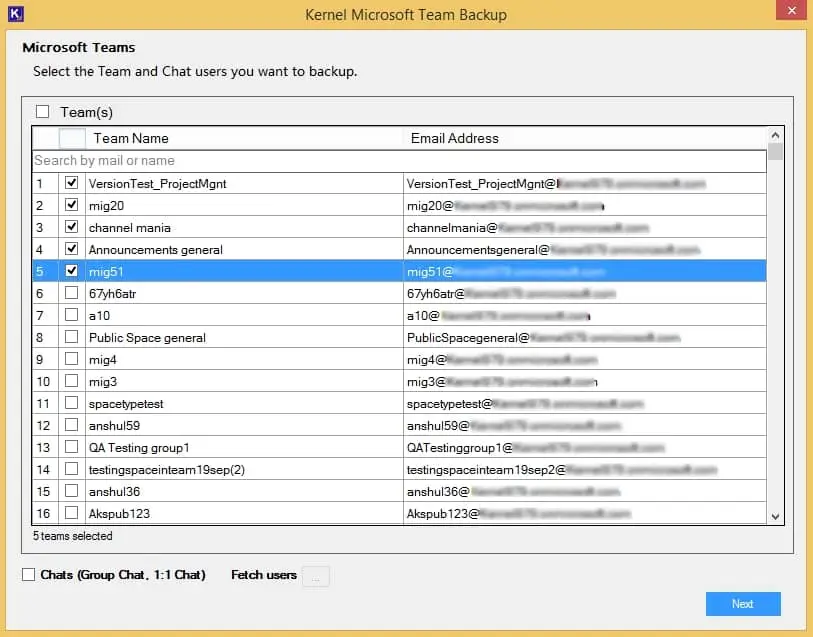
Step 7. The software will start fetching channels from the Microsoft Teams account.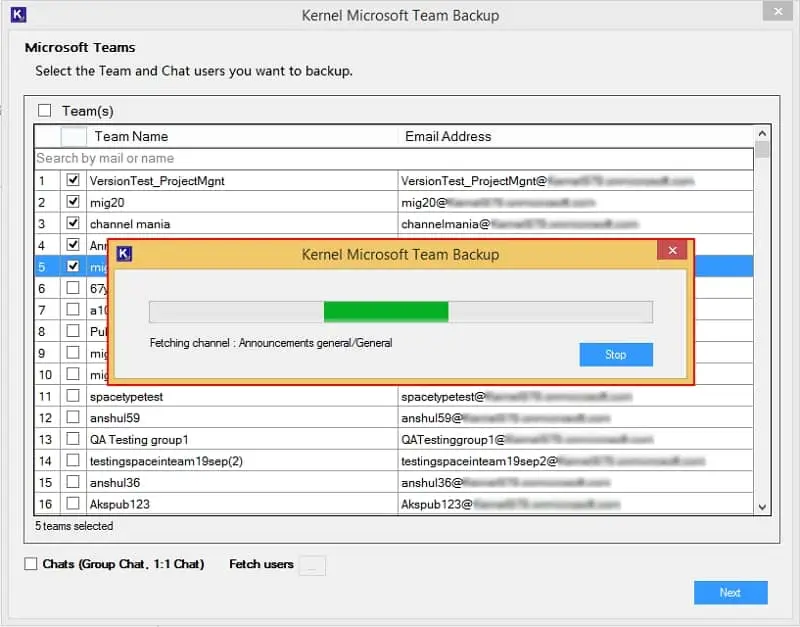
Step 8. In Select Teams and Chat Users window, select Teams and click Next.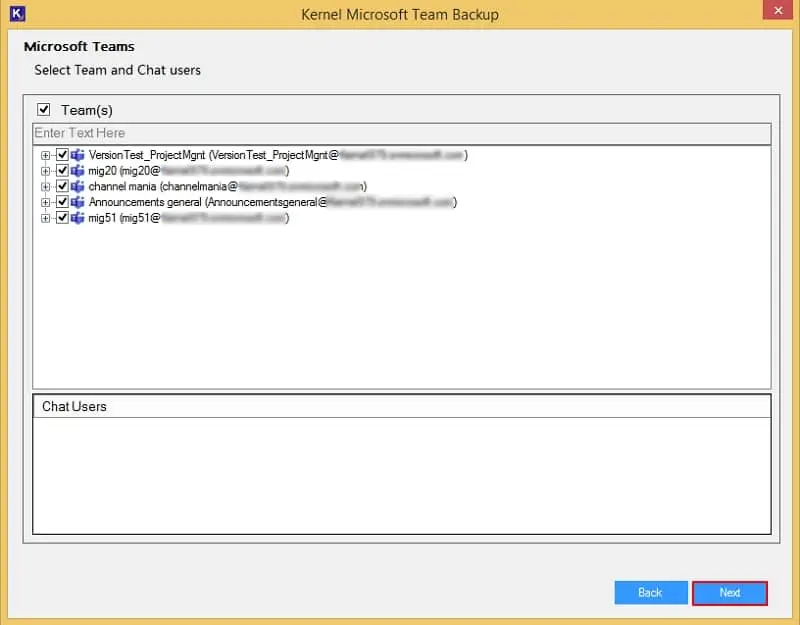
Step 9. Apply Date Filter and check Creation Date to backup data from specific date range. Check Exclude Left Chats to skip left chats backup. In Destination option, click Browse.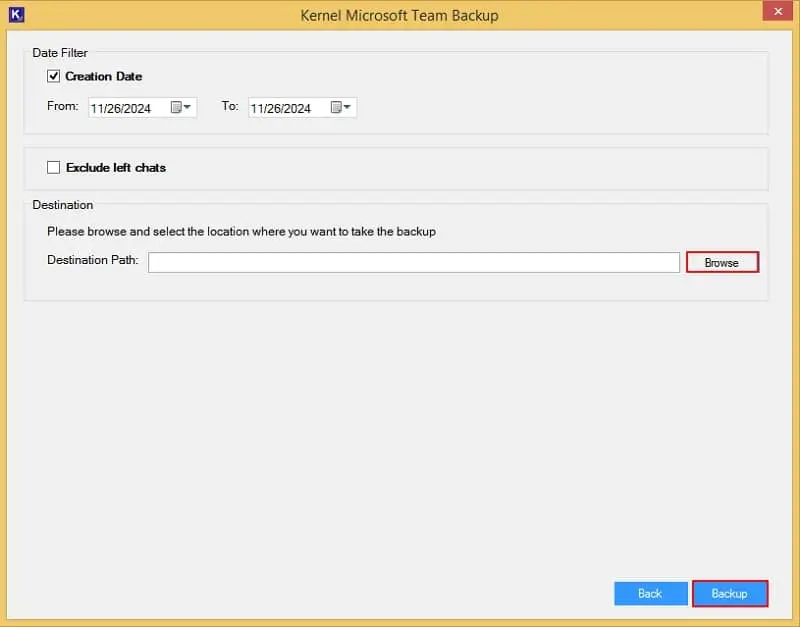
Step 10. In the Browse For Folder section, select a specific drive to save backed-up files and click Next. Also, you can click on Make New Folder to create a new folder and save data.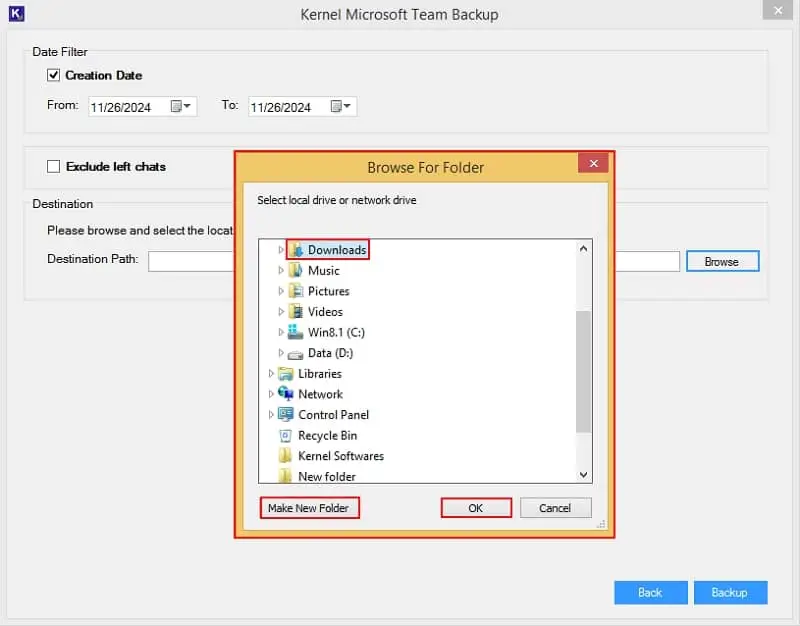
Step 11. Again, in the following window, click Backup option.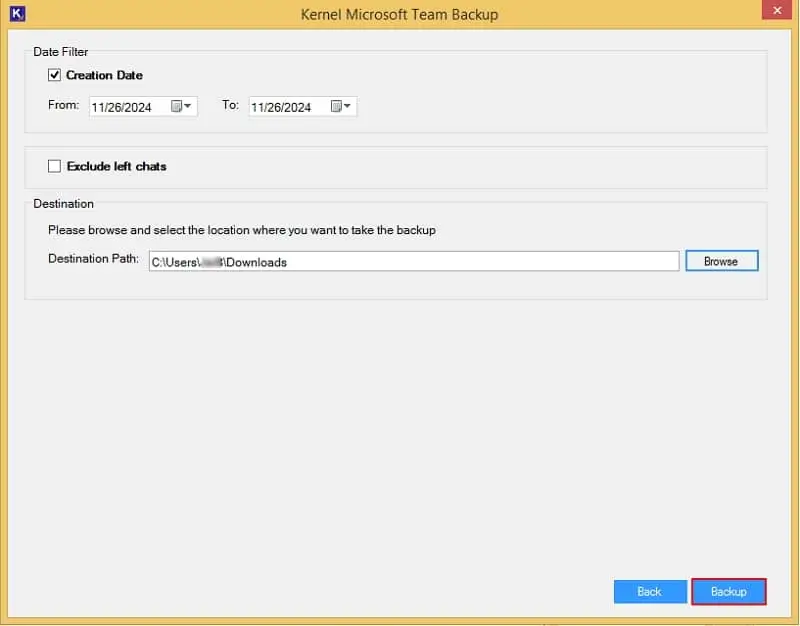
Step 12. The software will start the backup process and show Taking Backup message.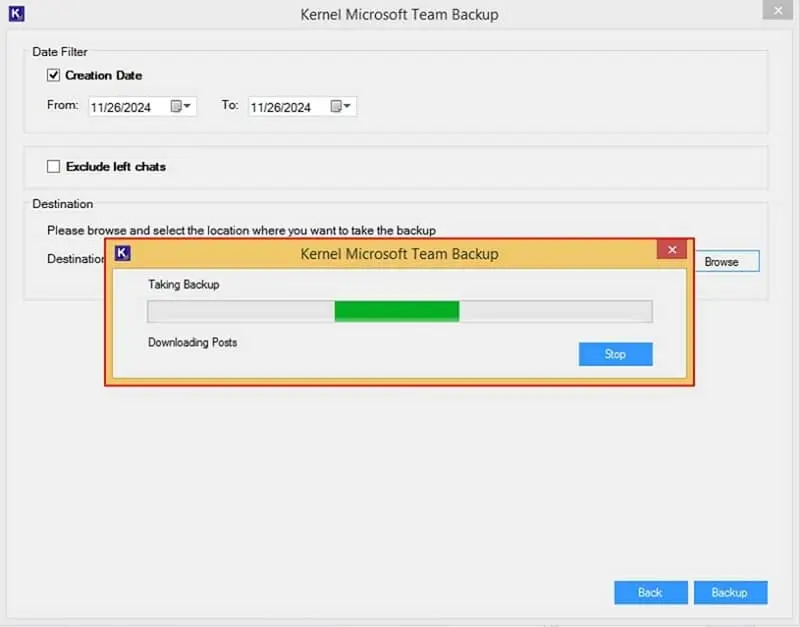
Step 13. Once the software MS Teams save chat history quickly and shows a “Backup is completed” message. Click OK to end the backup process.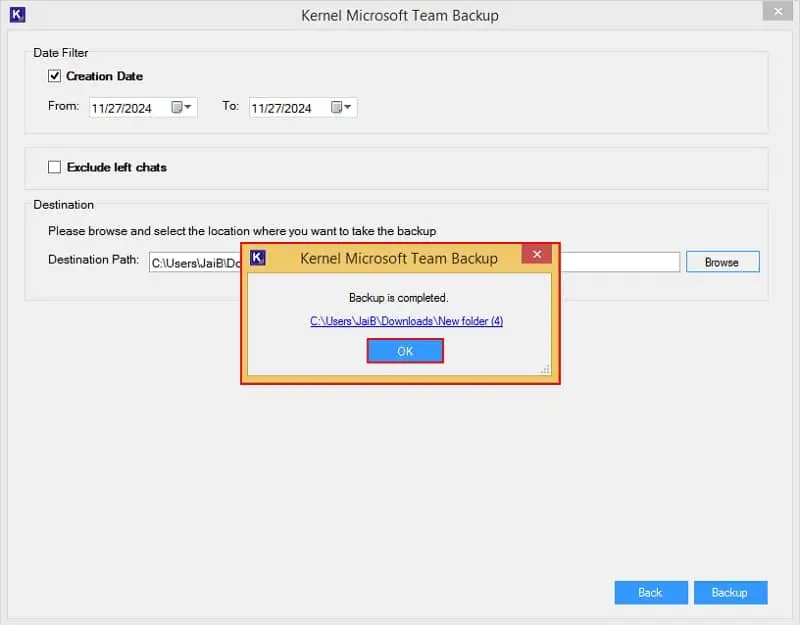
Conclusion
Microsoft Teams chat history consists of several important conversations and that’s why many users want to backup their Microsoft Teams chat history for future use. This article covered the reasons and reliable solutions on how to save Teams chat history. Different methods are available for different scenarios if you want to save a few messages or save an entire conversation with all the information intact. Choose the method that best suits your needs and follow the steps carefully to save your Teams chat history for future reference.
People Also Ask
Q. Does Microsoft Teams save chat history automatically? A. Yes, Microsoft Teams saves chat history in the cloud automatically. While 1:1 chats are stored in hidden folders of Exchange, channel conversations are saved in associated group mailboxes.
Q. Is it possible to restore an exported Teams chat back into Microsoft Teams? A. No, you cannot restore an exported Teams chat back into your Microsoft Teams account because they’re exported in either JSON or HTML format and there’s no method to export them back into Teams.
Q. How to save Microsoft Teams chat history in PDF? A. You can save Teams chat history in PDF format by clicking on Ctrl + P on your keyboard and then selecting Save as PDF option.
A. Yes, Microsoft Teams saves chat history in the cloud automatically. While 1:1 chats are stored in hidden folders of Exchange, channel conversations are saved in associated group mailboxes.
A. No, you cannot restore an exported Teams chat back into your Microsoft Teams account because they’re exported in either JSON or HTML format and there’s no method to export them back into Teams.
A. You can save Teams chat history in PDF format by clicking on Ctrl + P on your keyboard and then selecting Save as PDF option.