Read time: 8 minutes
Being a personal information manager, Microsoft Outlook is one of the most preferred email clients for Mac users too. However, like any application, it can sometimes stop working unexpectedly. When Outlook is not working on Mac, you might get problems like:
- Outlook crashes on startup or won’t open
- Frequently freezes or becomes unresponsive
- Outlook for Mac stops syncing with Exchange server
- Outlook repeatedly asks for your password
But with simple steps and troubleshooting, you can fix the Outlook is not working on Mac issue effectively. So, move forward with us to get the common reasons behind why Outlook stops working on Mac and effective resolutions.
Common Reasons Why Outlook is Not Working on Mac
When Outlook is not working on Mac, several factors are responsible. Some of them are here:
- Outlook or macOS version is outdated
- Network connection, bandwidth and latency issues.
- Insufficient Mac storage
- Corrupted Outlook profile
- Damaged Outlook cache data
- Incorrect email account settings
- Corrupted Outlook OLM file
If you know the specific underlying cause for Outlook is not working on macOS, you can easily choose the appropriate solution.
Effective Solutions to Fix Outlook Not Working on Mac
Here are a few proven solutions that can help to fix Outlook is not working on Mac and restore smooth working. Go through each one by one and see what works for you:
Method 1: Restart Outlook and Your Mac
Temporary software glitches, background processes, or memory conflicts often create problems and with this, Outlook fails to respond correctly. So, before you try any other troubleshooting approach, close Outlook completely.
Press Option + Command +Esc and select Microsoft Outlook, then click Force Quit when Outlook is frozen. After that, restart your Mac, then open Outlook again. Outlook may launch normally.
Method 2: Check Your Internet Connection
Due to internet disconnectivity or weak bandwidth and latency, Outlook stops working properly. So, connect your device through Wi-Fi or Ethernet, and make sure that any VPN or firewall software that may create problems is turned off. Double check by loading other websites or perform a speed check.
Method 3: Update Mac Outlook to the Latest Version
Compatibility issues are quite common when Outlook in not working on macOS. The Outlook version must be up to date in order to solve compatibility issues, especially when you upgrade macOS. To update Outlook for Mac, follow the steps below:
- Open Outlook on Mac, go to Help, then tap on Check for Updates.
- Install available updates if any and then restart Outlook.
Method 4: Validate Outlook Account Settings
To fix Outlook is not working on Mac issue, check for incorrect account settings, such as email address, passwords, incoming and outgoing servers, authentication methods, & Exchange or Microsoft 365 account configuration.
Still, if Outlook repeatedly asks for your password or fails to sync, then remove and configure the account in Outlook for Mac again.
Method 5: Delete Outlook Cache Data
Corrupted cache files can lead to slow performance along with many other sync problems in Outlook for Mac. Clear cache data to fix Outlook not working on macOS. Follow the steps below:
- Close Outlook application first, then open Finder and press Cmd + Shift + G.
- Type ~/Library/Caches, then press Enter.
- Locate and right-click on the folder named com.microsoft.Outlook and select Move to Trash.
Restart Outlook. It will rebuild the cache file; Outlook may work normally.
Method 6: Create New Profile in Outlook for Mac
Outlook profiles can become corrupted, and if you create a new Outlook profile, the issue of Outlook is not working might be fixed. Here are the steps to do so:
- Close Microsoft Outlook, go to Finder, and then the Applications folder.
- Find Microsoft Outlook, right-click on it, then tap on Show Package Contents.
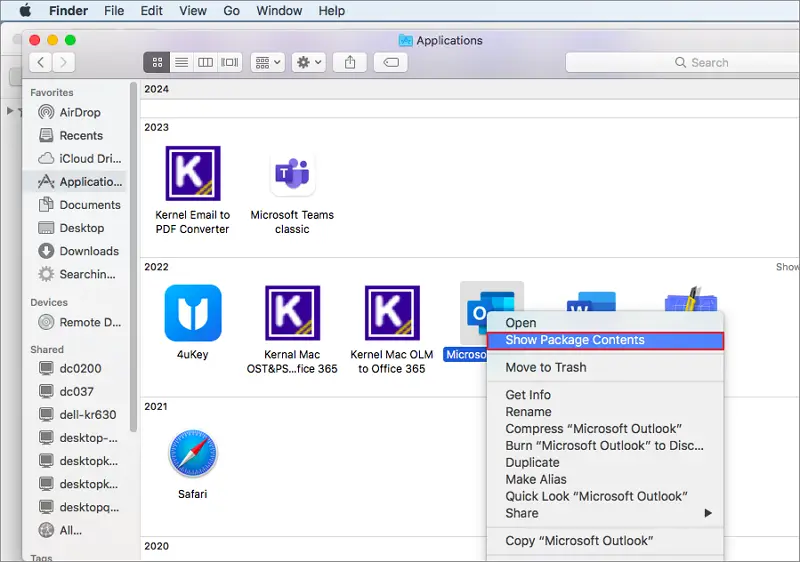
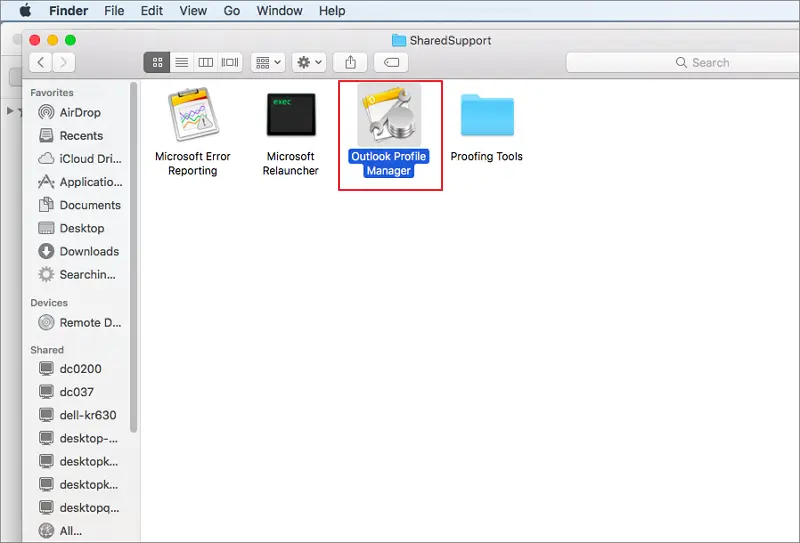
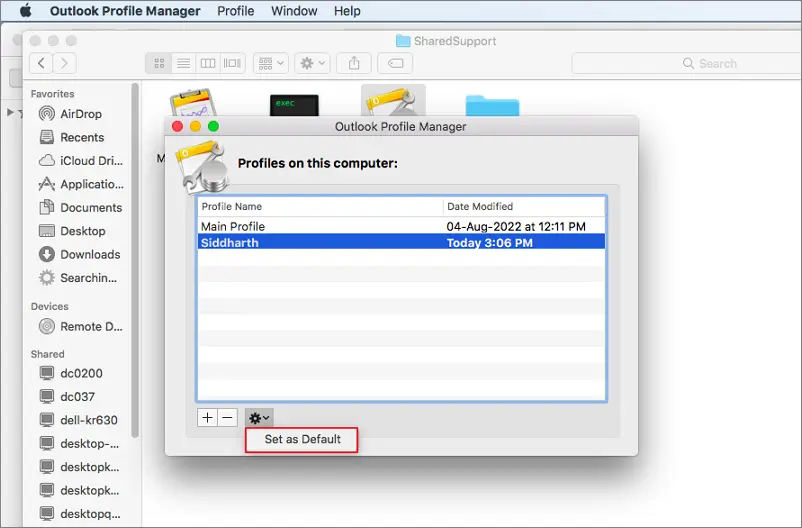
- Move to Contents >> SharedSupport, and then double-click on Outlook Profile Manager.
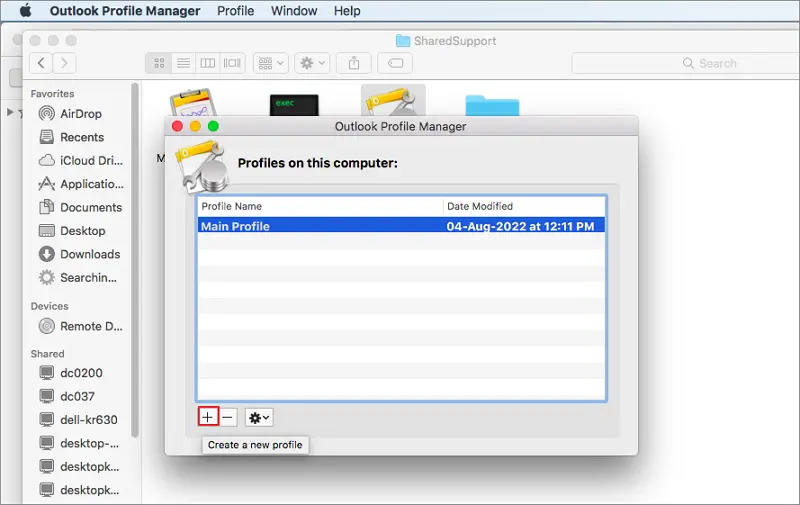
- Click the + (Add) button and enter a name for the new profile.
- Select the new profile and click Set as Default.
- Open Outlook using the newly created profile and set up an email account.
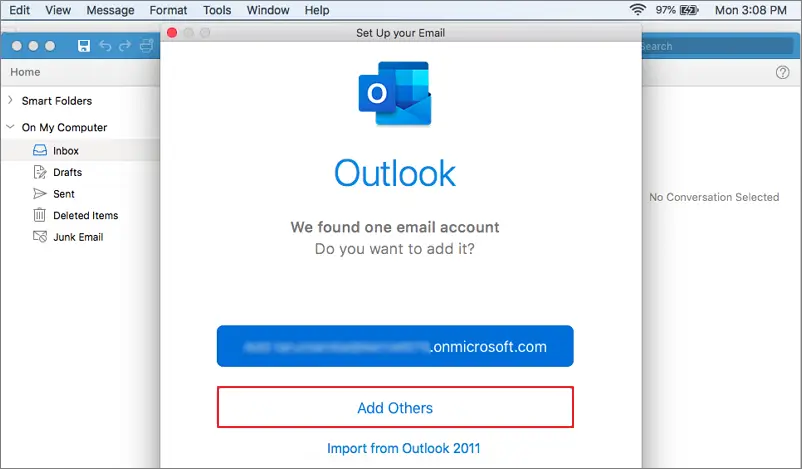
- Provide account details like your email address, account credentials, and complete verification steps if prompted.
Outlook will automatically connect to the mail server and synchronize mailbox data. Open Outlook & check for Outlook functionalities.
Method 7: Disable Problematic Add-ins
Outlook stops working after installing an add-in or when conflicting add-ins are installed. Disable them with immediate effect. Here are the steps to follow:
- Open Outlook on Mac, then go to Preferences and tap on General under Personal Settings.
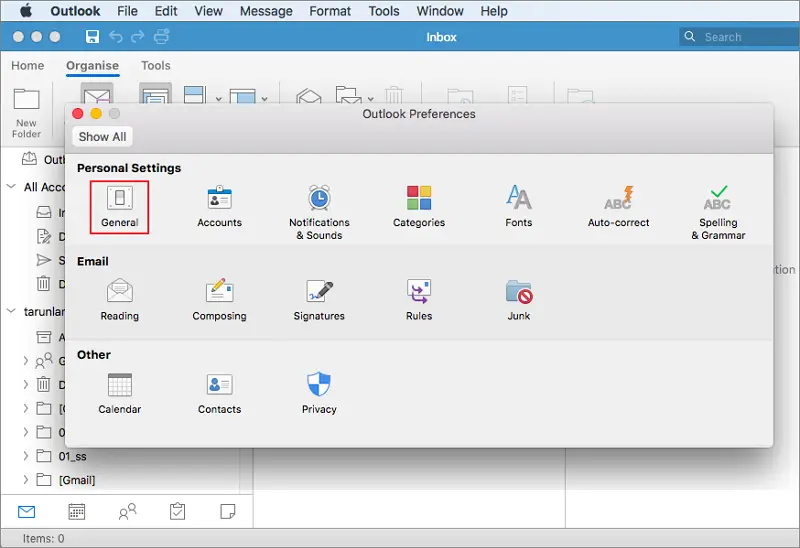
- Click Manage Add-ins. Your installed add-ins will be displayed.
- Locate the faulty add-in, uncheck its box to disable it.
Method 8: Free Up Storage on Your Mac
Outlook needs reasonable free disk space to perform efficiently, store temporary files, synchronize mailbox data, install updates, etc. So, don’t let your Mac run low on storage to prevent Outlook from not working.
Hence, if you find some performance issues or Outlook stops working, delete unnecessary files and downloads, empty the Trash, remove unused applications, and move large files to external storage or cloud storage. Once done, restart your Mac and open Outlook again.
Method 9: Rebuild Spotlight Index
If Outlook search isn’t working or fails to retain recent emails, the problem may be related to macOS Spotlight indexing rather than Outlook itself. So, close the Outlook and then follow the steps below:
- Click the Apple menu and select System Settings or System Preferences.
- Click Siri & Spotlight, then tap on Spotlight Privacy.
- Drag your Macintosh HD (startup disk) from the Finder. You can also add it manually to the list via the (+) button.
- Click OK to confirm and wait for a few seconds.
- Select your Macintosh HD from the privacy list and click the (-) minus button to remove it, and close the System Settings.
Spotlight will now begin re-indexing your entire system. Wait for it to complete, and after that open Outlook. But be prepared with the steps to escape the unexpected results.
Method 10: Repair Corrupted OLM Files
Lastly, if Outlook continues to crash or fails to import an OLM file, the Outlook data file itself may be corrupted or damaged. Common signs of OLM corruption are as follows:
- Outlook crashes during import
- Import fails repeatedly
- Missing folders
- Missing new emails
- Outlook freezes while accessing archived data
- Attachments won’t open
First, find out the OLM file location and then import them into a new Outlook profile to counter the repair process.
If the import still fails or a few specific folders are missed or emails are lost, the OLM file is likely severely damaged and requires repair. Since there are few viable solutions to fix OLM files, users can also try OLM to PST Converter software when facing severe corruption issues. This might help in repairing and recovering OLM mailbox data.
Conclusion
The right conversion method depends on the number of emails, mailbox size, and conversion requirements. If you need to convert only a few OLM emails to PDF, Outlook’s Print > Save as PDF option can be used as a direct method. However, for large mailboxes containing multiple folders and a high volume of emails, the conversion process may require a different approach to handle data efficiently while considering factors such as folder hierarchy, metadata, and mailbox structure.
Frequently Asked Questions
A. Alongside updating macOS, update your Outlook too. If it is still not working, after that you can restart Mac and check Microsoft compatibility and server outage status.
A. There are few possible reasons such as unstable internet connection, incorrect account settings, corrupted cache files, authentication problems, or Microsoft 365 service interruptions. These are some of the primary causes for sync issues.
A. If you are having frequent import failures, mailbox items missing after import, unexpected Outlook crashes, and inaccessible mailbox folders are some common signs of OLM file corruption.
A. No, you will not lose your emails. Emails stored on Exchange Server or Microsoft 365 remain on the mail server. However, do backup locally stored OLM files before reinstalling Outlook.