Read time: 10 minutes
Microsoft Outlook is essential for managing emails, contacts, calendars, and tasks, but sometimes even routine actions can hit a roadblock. For example, Sarah, our HR professional, was trying to access the company’s shared folder to download payroll emails. Instead of opening, she saw the error:
“Cannot expand the folder. Microsoft Outlook cannot access the specified folder.”
This error is common in Outlook 2010 or later versions to the extent that thousands of users have complained about facing it. It usually occurs when an Outlook user attempts to expand the shared folder, public folder, address book, or another secondary mailbox from the interface.
Before we discuss methods to resolve Microsoft Outlook cannot expand the folder issue, let’s see why users get this error.
Why are you getting the “Cannot expand the folder in Outlook” error?
The following reasons can be the root cause of the issue:
- Exchange cached mode is enabled.
- Interference of third-party add-ins.
- Corrupt or damaged Outlook profile.
- Outlook data file corruption.
- Microsoft Office application issue.
- Folder visible permission is not set.
- Issue with network connectivity.
After this, let’s move towards the effortless solution to solve the “Cannot expand the folder Outlook” error easily.
Note: Before trying these methods, make sure to back up the OST file. You can export OST to PST with Outlook’s export function or use an OST converter tool for bulk conversion.
Solutions to fix “Outlook cannot expand the folder” error
This section will provide methods to troubleshoot the Outlook cannot expand the folder in Outlook issue appropriately. Follow the below-described resolutions carefully.
Solution 1. Make the folder “Visible”
First, make sure that there are more subfolders than the limit. Earlier, the limit was 5000, but later, Microsoft increased the folder limit. Now, 5000 items per calendar folder and 100000 items per folder are allowed. Then check if the permission for the .ost folder view is assigned or not.
Step 1. Open Outlook, right-click on the troubling folder, and click on the Properties option.
Step 2. Now, move to the Permissions tab and make sure that “Folder Visible” permission is assigned.
Step 3. If not, click on the Edit option and assign the same. Click OK to save the settings.
Step 4. Now, check whether your problem is resolved.
Solution 2. Disable the cached mode
Cached Exchange Mode saves a copy of the mailbox to the user’s computer. It provides you with the facility to access all the data. But when the cached mode is on, it may cause trouble in expanding the respective folder due to synchronization issues. Therefore, it is suggested to disable the cached Exchange mode in Outlook in such a situation.
Solution 3. Disable Microsoft Outlook add-ins
Take the example of my friend Michael, an accountant, who noticed the error appeared every Monday when he tried to check the “Invoices” folder. After disabling his CRM add-in, Outlook worked perfectly. Step by step, he re-enabled add-ins to identify the culprit: a legacy calendar plugin that was no longer supported. You can also try disabling the Outlook add-ins using the following procedure and then attempt to expand the problematic account folder.
Step 1. Open Outlook and tap on the File > Info > Options.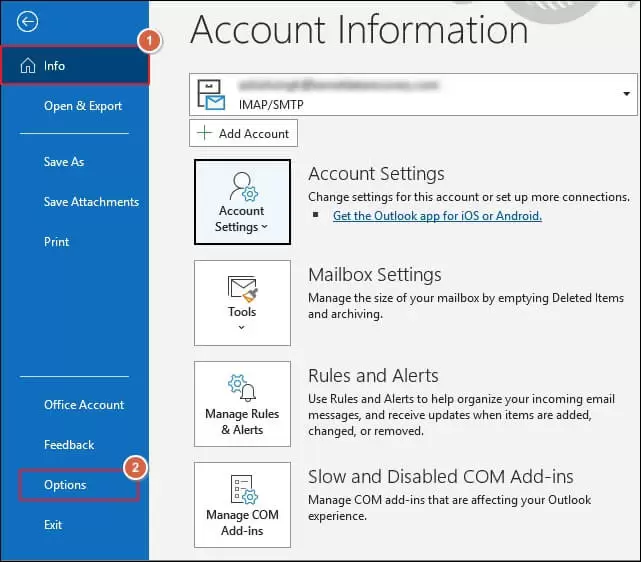
Step 2. Click on Add-ins. Then, from the Manage section, choose COM Add-ins and click Go. 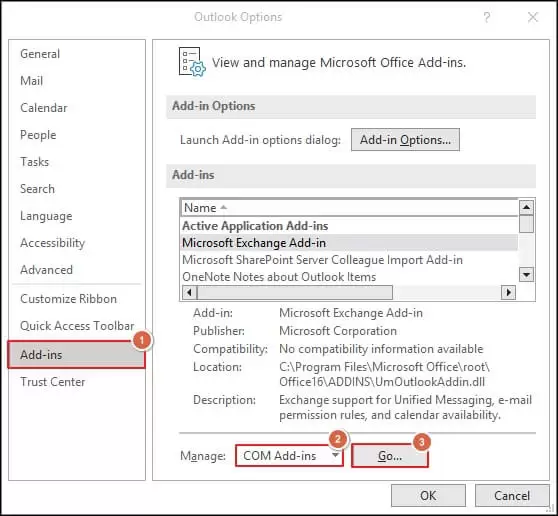
Step 3. Now uncheck the Add-ins and click on OK.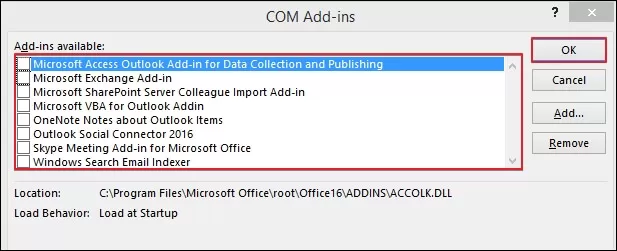
Restart the Microsoft Outlook application and then try to expand the folder again to check whether the issue of Microsoft Outlook cannot expand the folder is resolved or not.
Note: If you can view the folders, find the faulty add-in (by enabling the Add-ins one by one) and remove it.
Solution 4. Repair the Outlook application
Due to some bugs, errors, or other issues, the application might get corrupted. You can repair your Microsoft Office application suite. But before you begin with it, make sure you have a strong network speed to perform the repair. Follow the procedure below to repair the Outlook application.
Step 1. Go to the Control Panel and click on the Programs and Features option.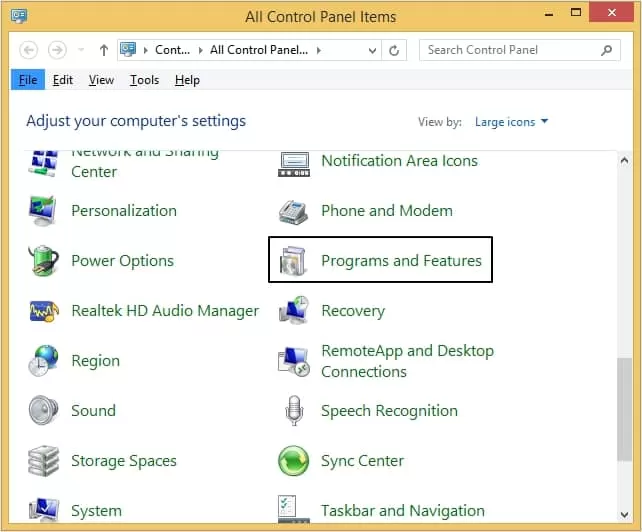
Step 2. Right-click on Microsoft 365 Apps for enterprise and select the Change option from the drop-down list.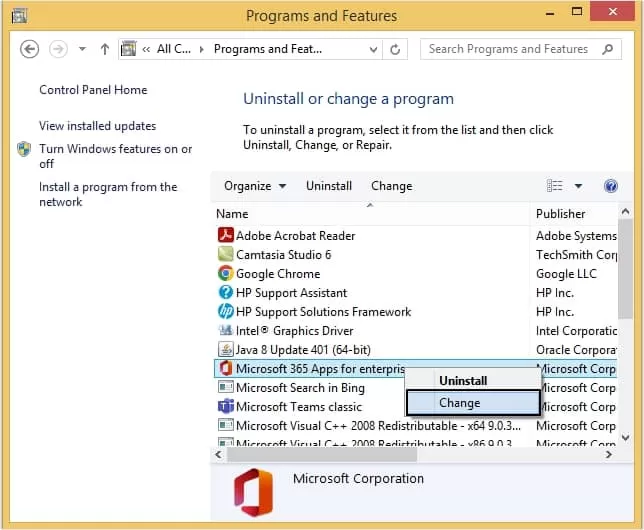
Note: Depending on the Office version, the application name could be different.
Step 3. Select Quick Repair and click on Repair option.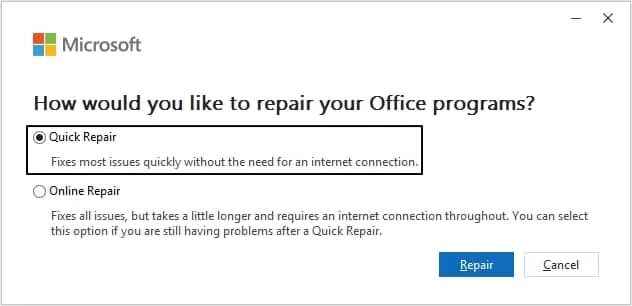
Step 4. Follow the next instructions to perform the repair.
Step 5. Once the repair is completed, try accessing the folder from the Outlook application.
Solution 5. Create a new Outlook profile
A corrupt Outlook profile is another major cause of the Microsoft Outlook cannot expand the folder in Outlook issue. To fix this error, you must look to create a new Outlook profile and set it as the default one. It will give you a clean and bug-free start. Access Outlook and check for the prevalence of the error.
Solution 6. Using the Microsoft Support & Recovery Assistant (MSRA) tool
To resolve “Outlook cannot expand the folder” error in Microsoft Office applications, you need to download & install the Microsoft Support & Recovery Assistant (MSRA) tool on the affected system.
Step 1. Upon successful installation, launch the MSRA tool and accept the license agreement by clicking on the “I agree” button.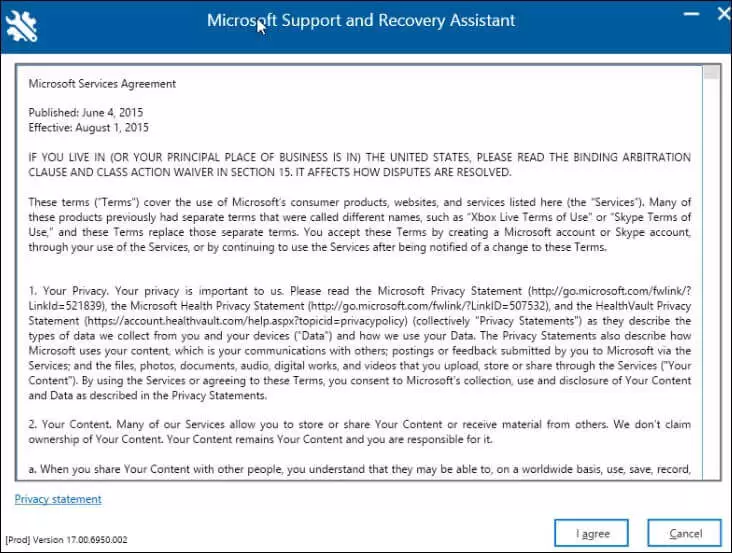
Step 2. In the MSRA tool window, locate the “Outlook” option & select it, & then click on the “Next” button to proceed.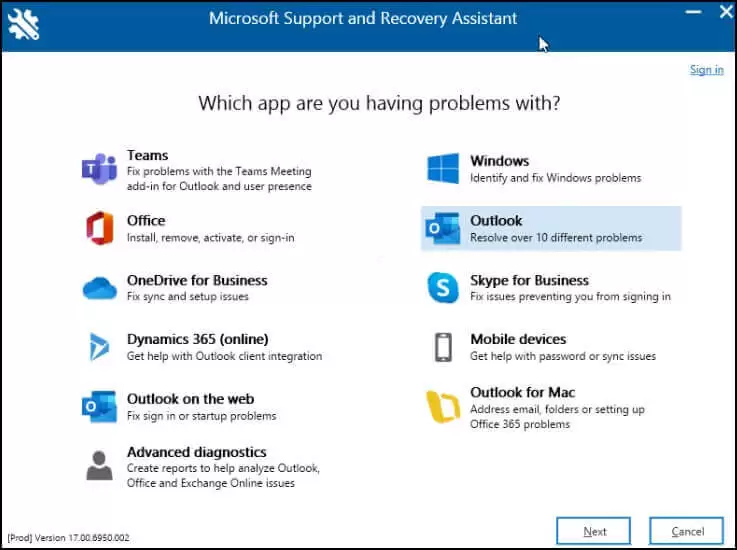
Step 3. Now, select the “Outlook won’t start or other problems” option & tap on the “Next” button again.
Step 4. When prompted, confirm that you are experiencing the issue with Outlook by selecting “Yes,” & then click on the “Next” option.
Step 5. Furthermore, follow the instructions on the MSRA wizard to diagnose & resolve the “Outlook cannot open set of folders” issue.
Solution 7. Repair the Outlook database file
Another reason that users have reported for the folder expansion issue in Outlook is a corrupt .ost file. To remove corruption, you can recreate the OST file associated with your configured Exchange Server account. To do this:
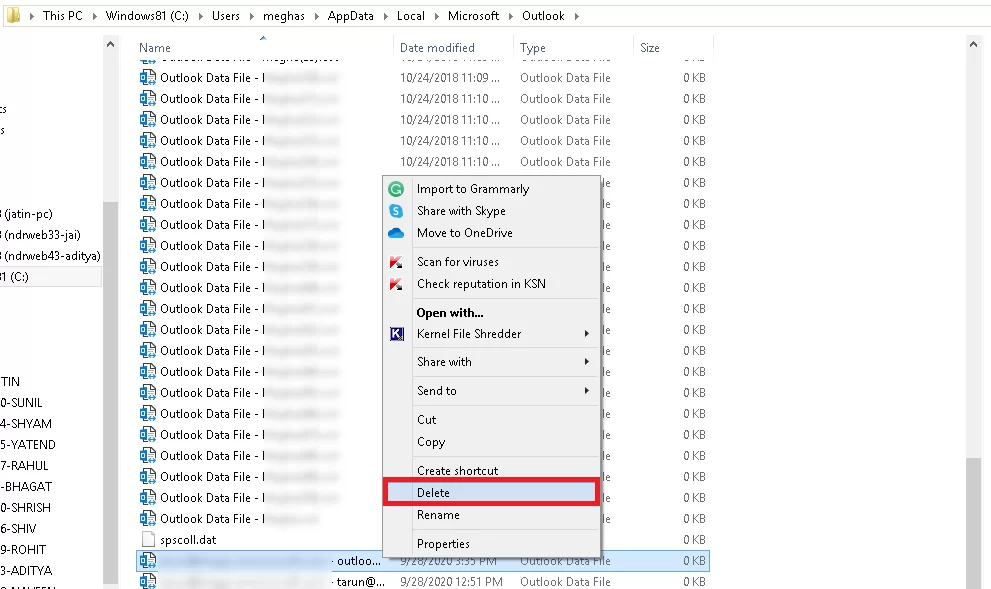
- Find the OST file location by navigating to this location “C:\Users\username\AppData\Local\Microsoft\Outlook”
- Delete the OST file with the issue.
- Then, restart Outlook. It will connect to the Exchange Server and build a new healthy OST file.
Note: If you are facing trouble in accessing the PST file folders, then rebuilding the OST file will not work. In such a scenario, you must use the Inbox Repair Tool to fix the PST
When to Seek Professional Help?
Manual solutions will work for most, but not for all. If you rebuild OST, you may face synchronization gaps. Also, in case of a severely corrupted OST, repairing Outlook will not work. When you are dealing with critical emails and cannot risk any failure, use a secure OST to PST converter to view the folders.
The Kernel OST to PST Converter tool allows you to bypass the “Cannot expand the folder” error and access all your OST file folders. You can view the data directly from the tool or export it into a PST file that you can import into Outlook. Moreover, the tool also works as an OST file repair tool and helps in fixing corrupt OST files.
Wrapping Up your Outlook “Cannot expand the folder” Issue
The article has discussed valuable insights on the causes of the “Cannot expand the folder in Outlook” error and relevant solutions to fix it. If the issue persists, then the reason could be corrupted or damaged OST files. For safe OST recovery, use the Kernel OST to PST Converter. The tool helps you with accurate mailbox data recovery from severely corrupted OST files. You can try the tool’s free trial version for a risk-free recovery.
FAQs
A- In Microsoft Outlook versions from 2010 to 2021 and Microsoft 365, the default size limit is 50 GB (expandable to 100 GB via registry). Experts recommend keeping the folder size well below 50 GB to avoid performance issues.
A- While it commonly occurs with shared, public, or secondary mailboxes, the error can also appear in personal folders if the Outlook data file becomes corrupted or if folder permissions are misconfigured.
A – No. Your emails will be safe. Disabling it will only force Outlook to connect directly to the Exchange server to read your data.