Read Time: 8 minutes
Nothing is more frustrating than settling in to watch a video only to see it freeze, jump forward, or play in a stop-and-go motion. Imagine you press play and expect smooth video playback. Instead, you’re getting choppy, jumpy, jerky, or skipping video every second while playing back.
Choppy or jerky video playback can quickly turn a good viewing experience into a frustrating one. And the cause is not always the video itself; it could be anything. However, you can fix it yourself and enjoy smooth, uninterrupted playback. To know the reason and how to fix choppy video, let’s get started with this write-up now!
Why is My Video Choppy or Stuttering? Common Reasons
Video playback depends on several components working together. Common causes for choppy or stuttering video playback issues are:
- Unstable internet or insufficient bandwidth when streaming
- High CPU, memory, or GPU usage
- Outdated or incompatible graphics drivers
- Browser extensions or hardware-acceleration conflicts
- An outdated media player or unsupported codec
- High-resolution or high-frame-rate video that is demanding to decode
- Display or refresh-rate configuration problems
- A damaged, incomplete, or corrupted video file
Quick Diagnosis: Where Is the Problem?
This diagnosis can save time because you do not need to change Windows settings if the actual problem is a weak streaming connection. Before changing several settings, use this simple test:
| Issue | How to Fix Choppy Video |
|---|---|
| Only online videos are choppy | Check your internet connection, streaming quality, browser, and extensions |
| Only YouTube is affected | Test another browser, check extensions, and compare different video qualities. |
| Only one browser is affected | Check browser updates, extensions, and hardware acceleration. |
| Only 4K videos or 60 FPS videos stutter | Check GPU/CPU load, hardware decoding, and video quality |
| All local videos are choppy | Check your graphics driver, media player, codecs, and system resources. |
| Only one local video is affected | Test the file in another player or device. The file may be damaged/corrupted |
| The problem appears only with two monitors | Check their refresh-rate settings |
First Steps to Fix Choppy or Jerky Video Playback Issue
- Check and make your internet connection stable when online video has playback issues.
- Disable faulty extensions or those you don’t need; video lags can happen in the browser.
- Update the media player or browser in which you’re playing the video.
- Check your monitor’s refresh rate; sometimes it affects the player and playback both.
- Try to play the video file in another media player or device because the existing media player has issues.
- Reshare or download the video file again and then try playback.
- Disable graphics or hardware acceleration available in your browser.
- Split a long video into smaller chunks in case the video file is oversized or difficult for your system to process.
- Reduce background activity (CPU, Memory, and GPU Usage) to ease the system load.
Effective Ways to Fix Choppy or Jerky Video Playback
Here are the tried and tested ways by which you can effectively fix choppy or jerky video playback. Go through each and check what works for you:
Method 1: Check the Video Codec and Format
Video playback behavior can depend on the hardware available on the PC. If your video plays with issues like choppy, jumpy, slow motion or jerky playback, you must check the video codecs and formats so that you can play it in a compatible media player. Here is how to check video codecs and formats in VLC:
- Open your video file in VLC Media Player, and press CTRL+J.
- Go to the Codec tab and check all information about your video file.
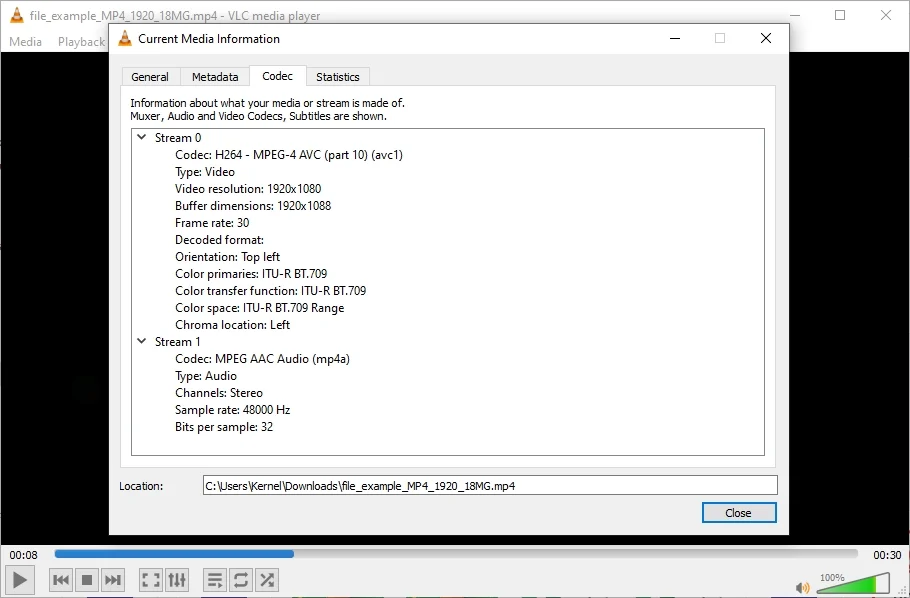
Alternatively, right-click on your video file and then tap on Properties and go to the Details Tab.
If your media player doesn’t support the codecs, download the codecs from the official site or the Microsoft Store and then play the video.
Method 2: Update the Graphics Driver
An outdated, corrupted, or incompatible graphics driver can interfere with video rendering and hardware decoding. On Windows, open Device Manager and expand Display adapters
- Press Windows + X and select Device Manager.
- Double-click Display adapters and right-click your graphics card name, then tap Update driver.
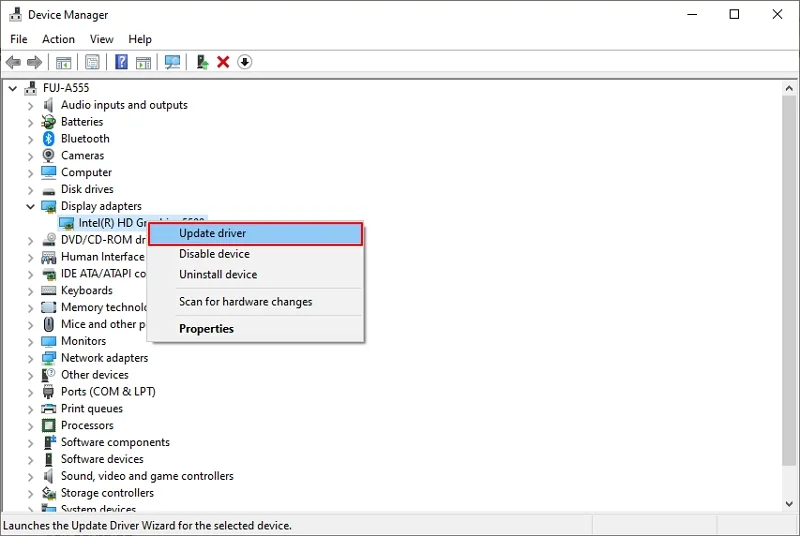
- Click Search automatically for drivers and install if available.
After updating the driver, restart the computer and test the same video again.
Method 3: Lower the Video Quality or Frame Rate
High-resolution and high-frame-rate videos require more processing and, for streaming, more bandwidth. A 4K or 60 FPS video may stutter on a system that handles 1080p video without problems. Follow the steps below to lower the video quality or frame rate using VLC Media Player:
- Open VLC Media Player, click on Media, and then Convert/Save (or press Ctrl + R).
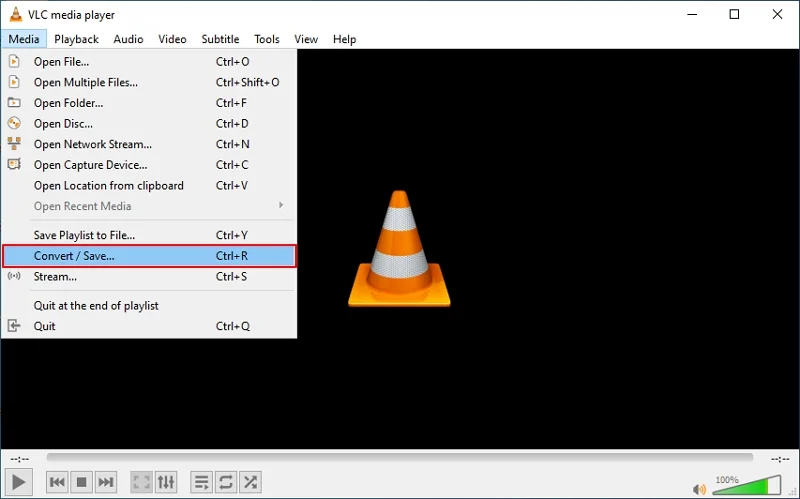
- In the Open Media window, click + Add, choose the video file, and click the Convert/Save button.
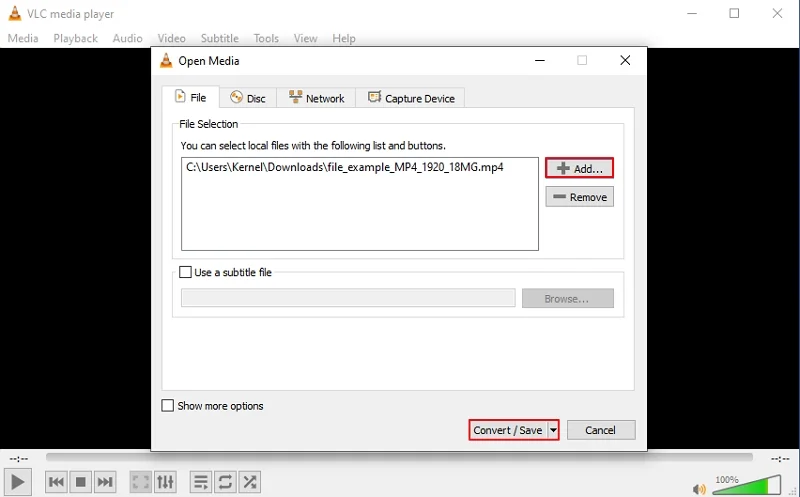
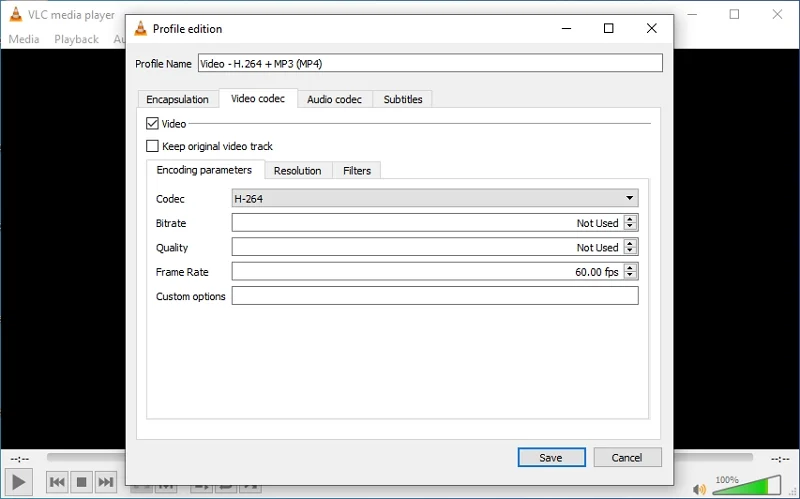
- Choose an output format profile like Video – H.264 + MP3 (MP4), then click the Edit selected profile icon (shaped like a wrench or spanner).
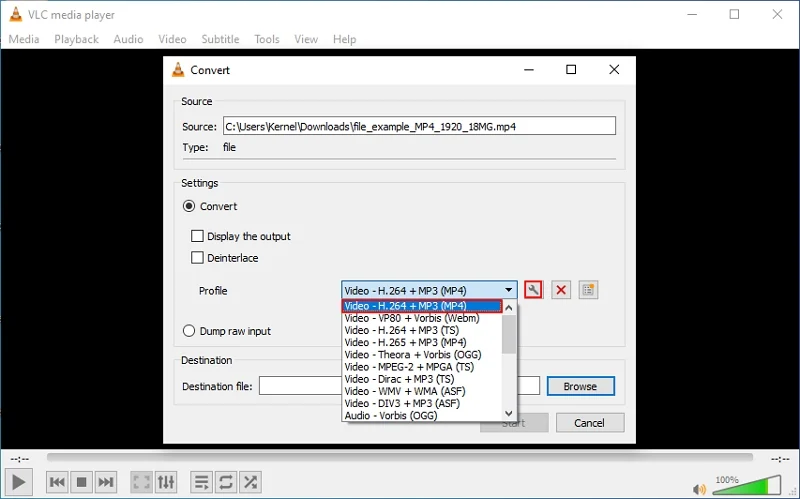
- Go to the Video codec tab, reduce the Bitrate (for example, lower it to 2000 kbps or 1500 kbps), and type a lower number in the Framerate box (such as 24 or 30 fps). Go to the Resolution sub-tab under Video codec to lower the dimensions, such as changing width to 1280 and height to 720 for 720p, and click Save.
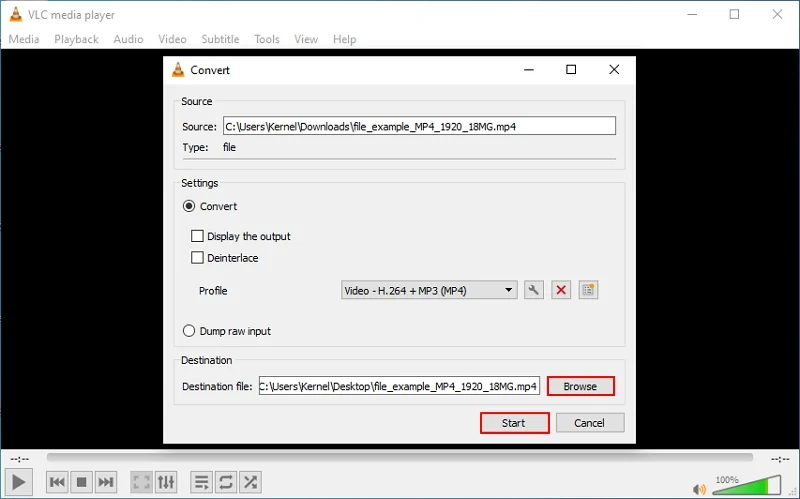
- Click Browse to choose a destination folder and name your new file, and click Start to begin converting and compressing the video.
Note: Do not permanently reduce quality unless necessary. Switch from 4K to 1080p or from 60 FPS to 30 FPS when the option is available. If playback immediately improves, the problem may be related to decoding performance, available system resources, or network capacity.
Method 4: Check for Corruption in Source Video File
A choppy video is not automatically a corrupted video. File corruption becomes more likely when:
- VLC is not playing the MP4 video.
- Only one video is affected.
- Audio and video lose synchronization.
- A fresh copy of the same video plays correctly.
- The same problem occurs in multiple media players.
- The video flickers or glitches at the same point every time.
- Frames appear distorted, black, missing or severely pixelated.
- The file became problematic after an interrupted download, transfer, recording, or storage failure.
If any of the above conditions match your video file playback issue, then the file is considered to be corrupted; use repair software to get smooth accessibility.
How to Repair Corrupted Video File Causing Choppy, Jumpy, Jerky, or Skipping Playback
If your video file format is AVI, you can use Preferences in VLC Media Player or FFmpeg commands to repair it for free. However, it sometimes fails and doesn’t support other formats. Indeed, you can use a dedicated video repair tool to fix damaged files that show choppy playback, missing frames, freezing, distortion, black sections, or synchronization problems.
Kernel Video Repair can be used as a dedicated option for damaged or corrupted video files. It is best treated as a file-recovery step rather than a general solution for every type of video stuttering. You can repair any video format and any level of corruption (minor or severe), regardless of file size.
Conclusion
Your video can be choppy, jerky, or stuttering during playback at any time, whatever the reason. You must know the method to fix that quickly in no time. We hope you now understand how to fix choppy video.
If you’re facing a choppy video issue in a browser or while streaming online, start by fixing your internet connection and end by reducing background activity. In case you’re playing a video locally in any media player and facing an issue, check codecs, update the media player, try another media player, lower the video quality, and perform video file repair.
Frequently Asked Questions
A: For choppy video playback, there can be many reasons ranging from outdated graphics drivers, high system resource usage, misconfigured hardware acceleration, to video file corruption.
A: When facing it in online streaming, check your internet connection, reduce video quality, disable problematic browser extensions or hardware acceleration, and close unnecessary background applications. For local videos, update your graphics driver and media player, check codec compatibility, try another media player, and reduce the video resolution or frame rate.