Read Time: 9 minutes
Running out of storage doesn’t always mean you need to delete more files. Sometimes, you just need to find the copies you already have. Duplicate photos, documents, videos, and downloads scattered across folders and drives may be the culprit.
The biggest challenge is that identical files may have different names and be located in separate locations. A systematic scan helps you uncover these hidden copies and show the stored locations.
Here, we explore different practical ways to find duplicate files across multiple drives so you can identify genuine copies and reclaim space without accidentally deleting valuable data.
Manual Ways to Find Duplicate Files Across Multiple Drives On Windows & Mac
Go through the section below to find the most practical ways to find duplicate files across multiple drives or folders on your Mac and Windows operating system.
Method 1. Use Indexing Options & File Explorer to Locate Duplicate Files In Multiple Drives
A. Indexing Options
First, use the Indexing Options to speed up search queries in File Explorer by keeping a catalog of file properties across selected drives. Here’s how:
Step 1. Type Indexing Options in the search bar to access it.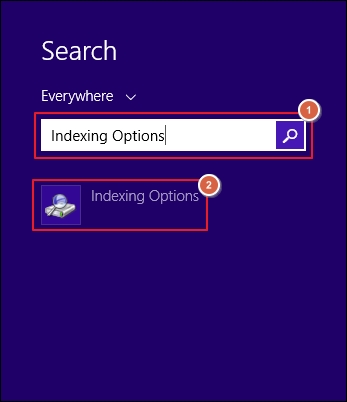
Step 2. Click on Modify to continue further.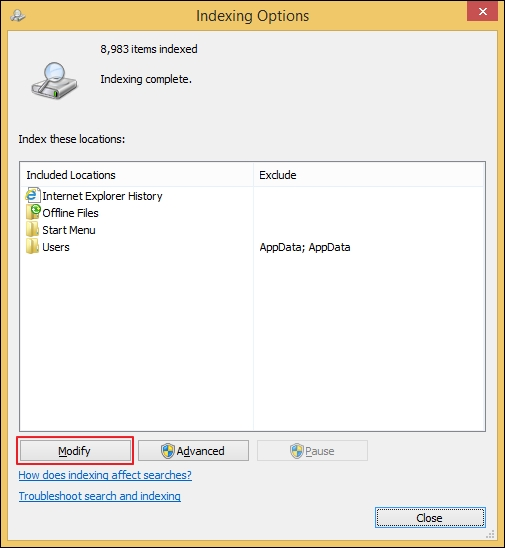
Step 3. Tap on Show all locations to proceed.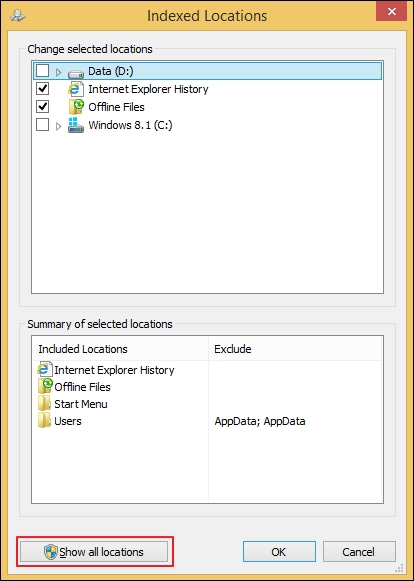
Step 4. Check all the boxes if they are not selected.
Step 5. Then, click OK to close it.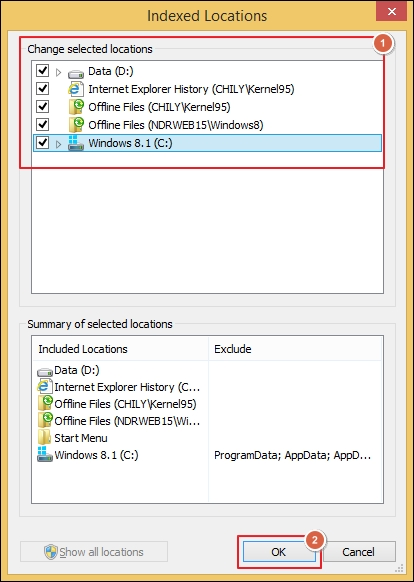
B. Windows Explorer
Later, use Windows Explorer to find duplicate items across multiple drives on Windows 11, 10, and other versions. Here are the complete steps:
Step 1. Open File Explorer using the Windows + E keys or click on it.
Step 2. Navigate to This PC to search for specific items.
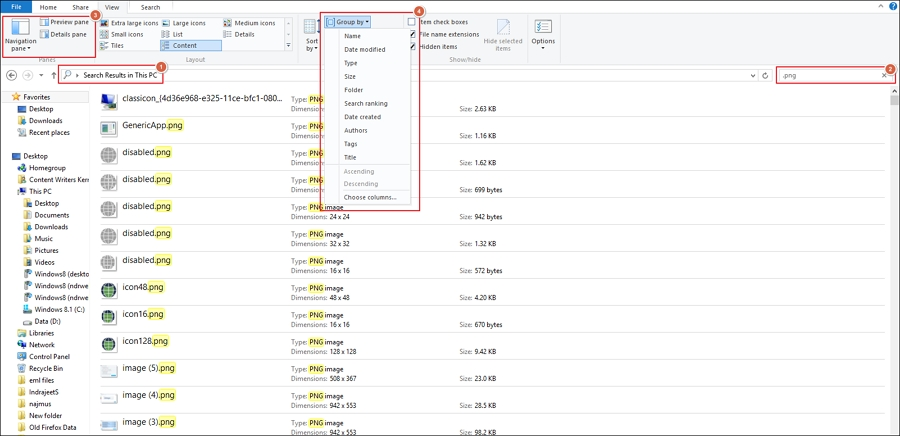
Step 3. Enter the file extensions to Search according to formats (.png, .docx, .xls, & more).
Step 4. Sort the results using the View tab:
- Preview pane
- Details pane
- Navigation pane
- Group by
Step 5. Once reviewed, Delete the selected ones.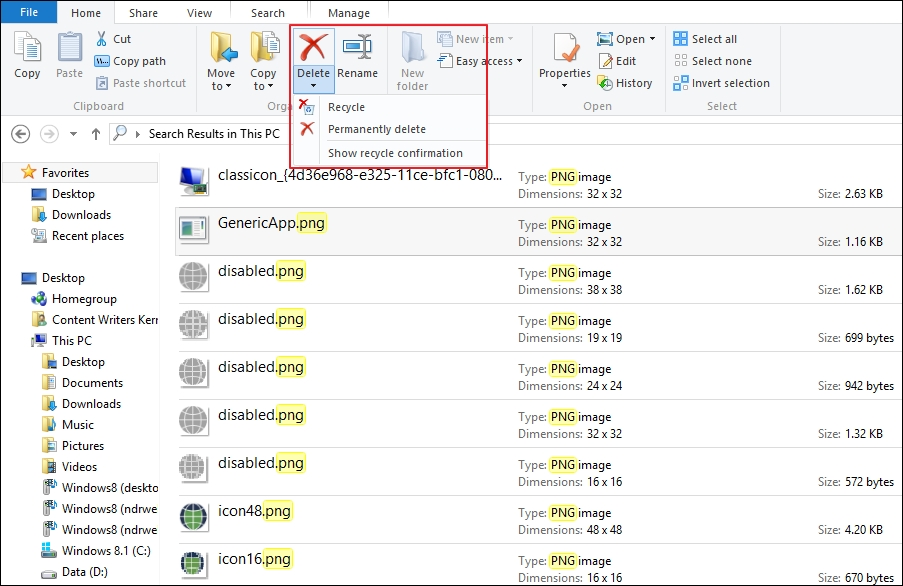
Step 6. Please note that you have to repeat the same process for each format.
Also Read:A Free Method to Find Duplicate Photos.
Method 2. Find Duplicate Files Across Multiple Drives With PowerShell
PowerShell is one of the most reliable approaches that can compare the actual content of files using hash values, even when the file names differ. It only reads your files to match the duplicate ones. Here’s how:
Step 1. Access and run PowerShell as administrator.
Step 2. Run the script below to compare drives for similar files.
# Folders or drives to scan (edit these)
$paths = @(“D:\Documents”, “E:\Backup”)
# Collect all non-empty files
$files = Get-ChildItem -LiteralPath $paths -File -Recurse -ErrorAction SilentlyContinue |
Where-Object Length -gt 0
# Compare file content using hashes (only files of the same size are checked)
$report = $files |
Group-Object Length |
Where-Object Count -gt 1 |
ForEach-Object {
$_.Group | ForEach-Object {
Get-FileHash -LiteralPath $_.FullName -Algorithm SHA256 -ErrorAction SilentlyContinue
}
} |
Group-Object Hash |
Where-Object Count -gt 1 |
ForEach-Object { $_.Group | Select-Object Hash, Path }
# Show the results
$report
Step 3. Save the results to a file using the command below.
Step 4. Review the results carefully to delete the extra copies manually.
Method 1. Locate Duplicate Files In Multiple Drives Using Mac Finder
Mac users can use Finder to search accessible drives and folders for files with similar names, sizes, or attributes. Use this approach when you have to analyze smaller file collections. Here’s how:
Step 1. Connect the external hard drives or storage devices.
Step 2. Open Finder to begin.
Step 3. Use the Command + F keys to start a search.
Step 4. Select the required search location, such as This Mac.
Step 5. Apply filters like Kind, Name, or File Size to narrow the results.
Step 6. Review the potential duplicate files.
Step 7. Choose a file and press Command + I to inspect its properties.
Step 8. Repeat the same process for other locations if needed.
Method 2. Use Mac Terminal to Find Duplicate Files Across Multiple Drives
It allows you to calculate file hashes and compare data across mounted storage locations. The method is useful when the files have different names but contain identical content. Here are the complete steps:
Step 1. Connect the required drives and confirm that they appear in Finder.
Step 2. Access Terminal using Command + Space, type Terminal, and press Enter.
Step 3. Create a hash list of all files using the command below:
Step 4. Get the duplicate report with this command.
Step 5. Review the report file carefully to delete the duplicate copies.
Why Use a Duplicate File Finder When Free Methods Exist?
Native approaches can help you find duplicate files across multiple drives, but they come with these limitations:
- Difficult to manage large result sets.
- Risk of accidental deletion of important files.
- Limited identification of similar files through properties.
- Repeated manual work for additional drives or storage.
- Time-consuming comparisons during drive search or review.
- PowerShell or Terminal requires familiarity with technical commands.
To avoid all these restrictions, you can use our Kernel Duplicate File Finder tool. The software helps you remove duplicate photos, videos, audio files, documents, and PDFs in a few simple clicks.
Here are the steps to find and remove duplicate files quickly:
Step 1. Launch the Software and click on Add Folders to proceed.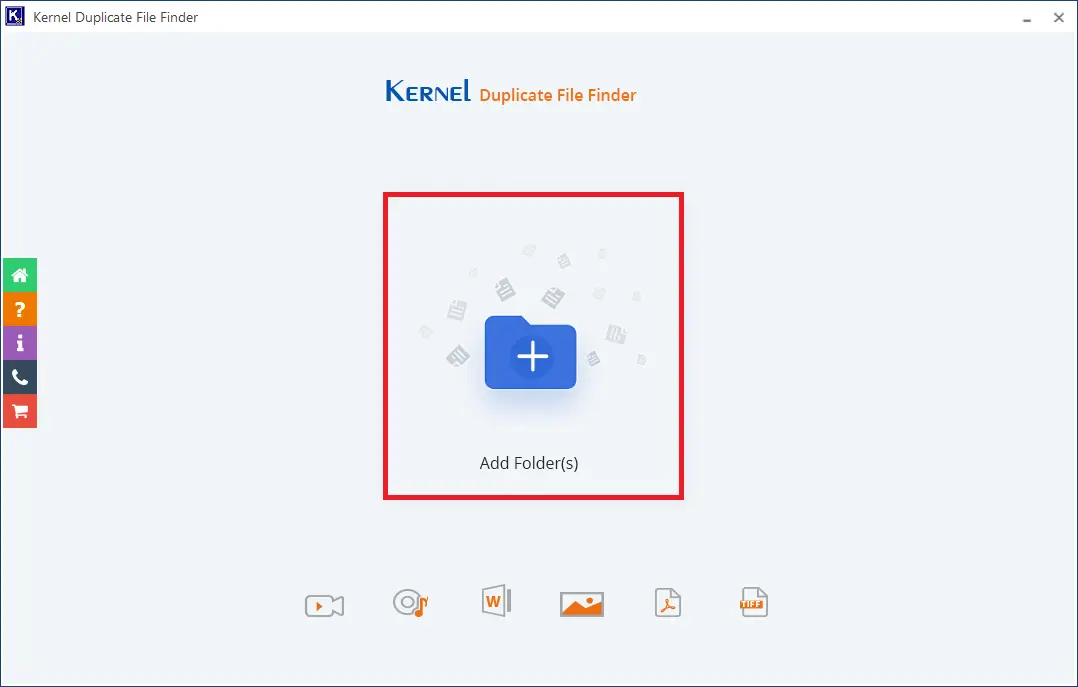
Step 2. Select Folder to begin the process.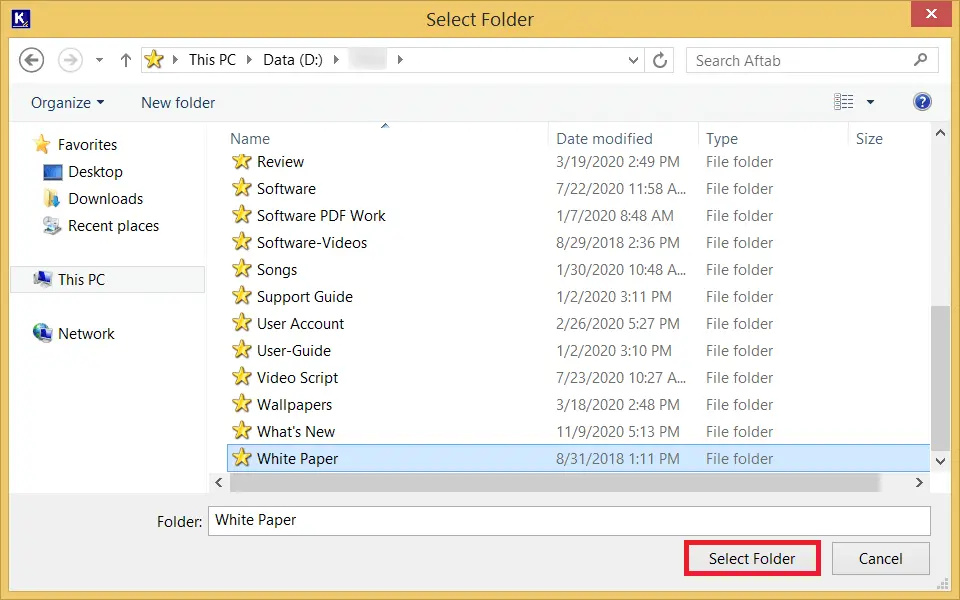
Step 3. Click on Start Scan option once the folders are added.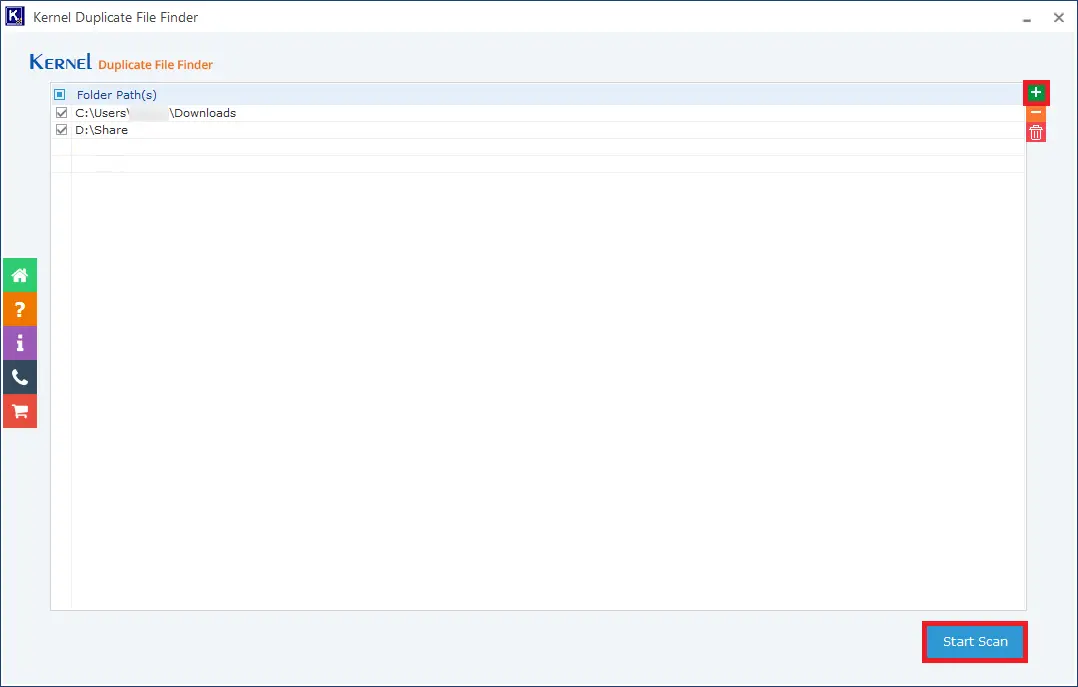
Step 4. Check the required file formats and enter the size limits. Then, click OK. 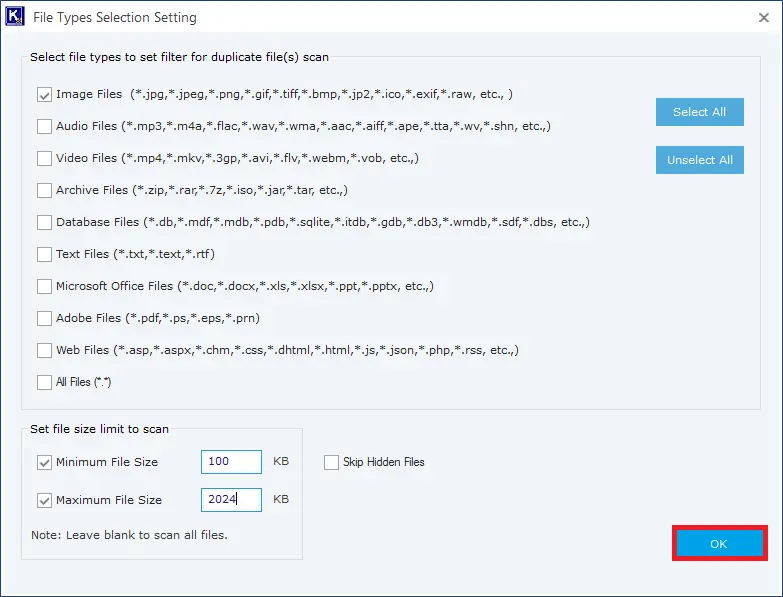
Step 5. It will start displaying the duplicate folders on your screen.
Then, click on Pre Operation Analysis.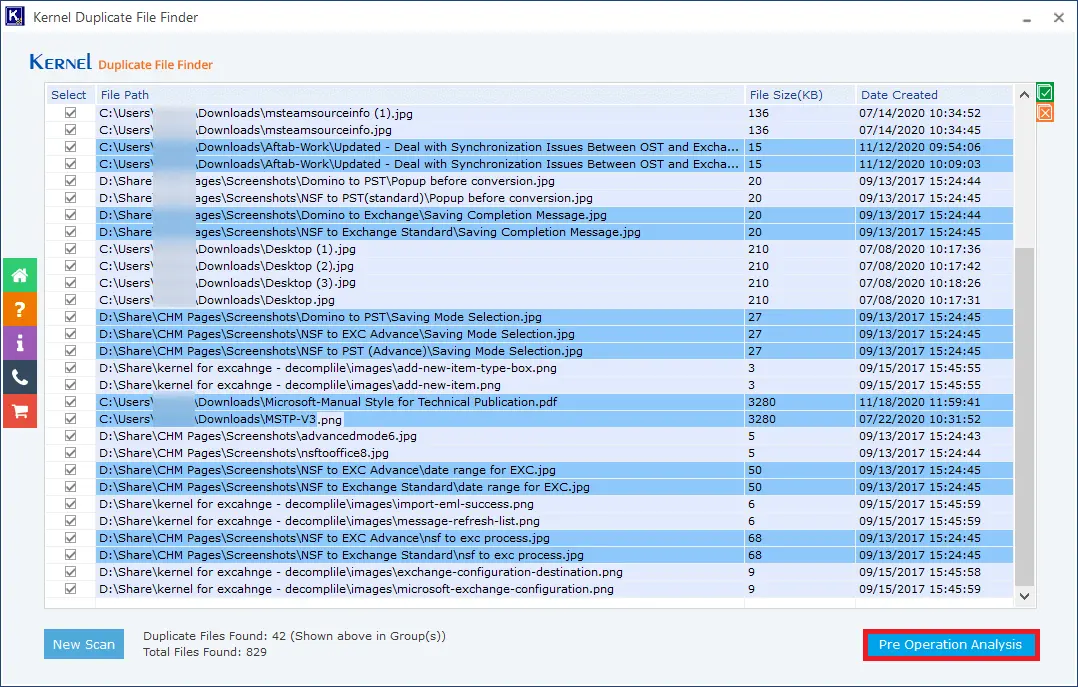
Step 6. Select the required options and proceed to Display Duplicate Files.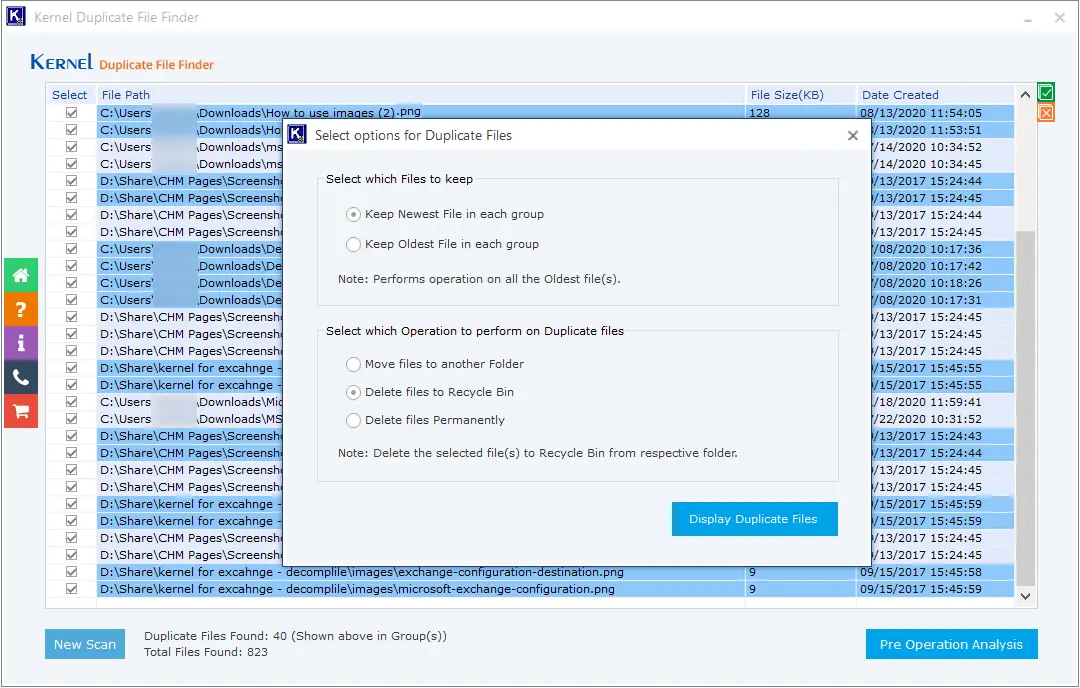
Step 7. The software shows the files that will be affected by the selection. Once reviewed, click on Proceed.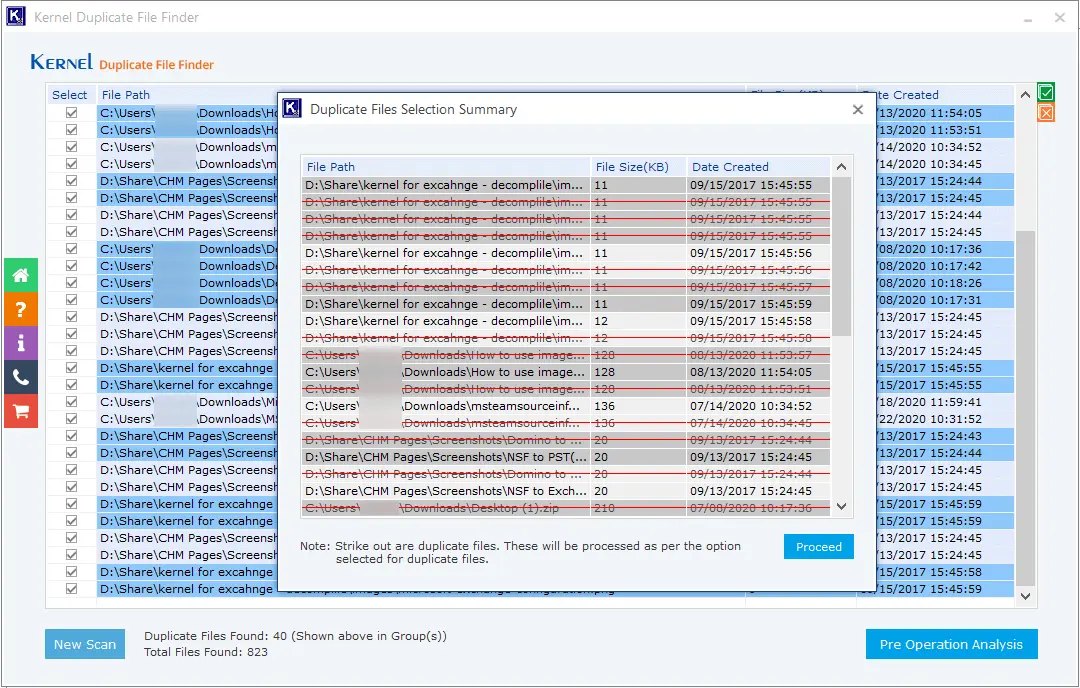
Step 8. Confirm Operation to start deleting the duplicate items.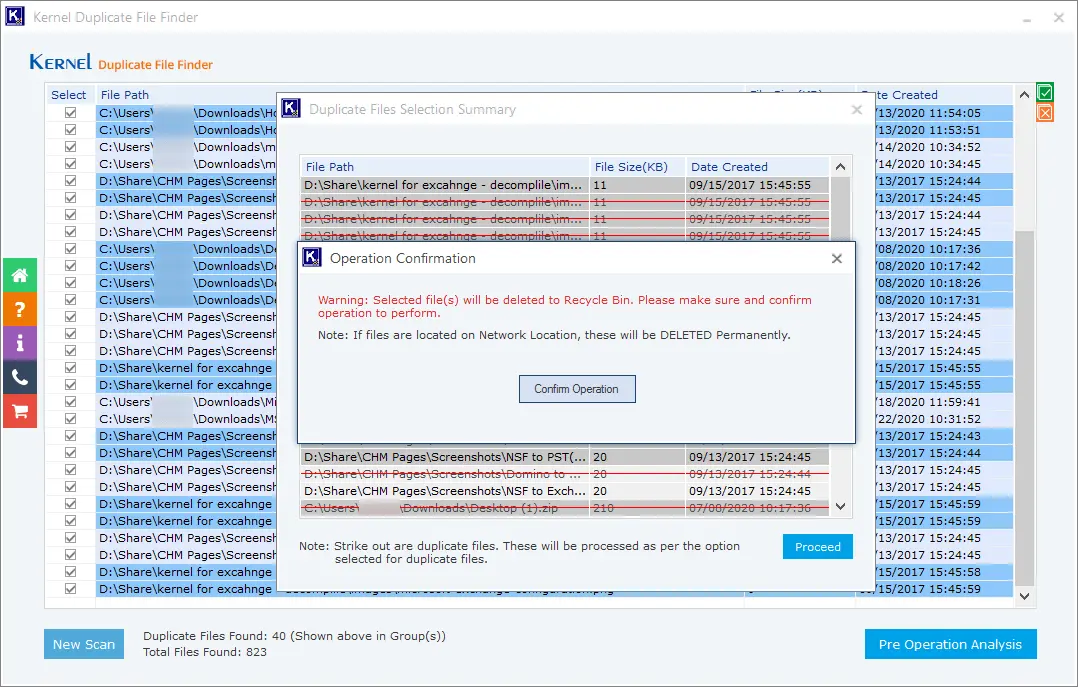
Step 9. A success message shows that the duplicate items are deleted to the Recycle Bin after completion.Then, click OK to close it.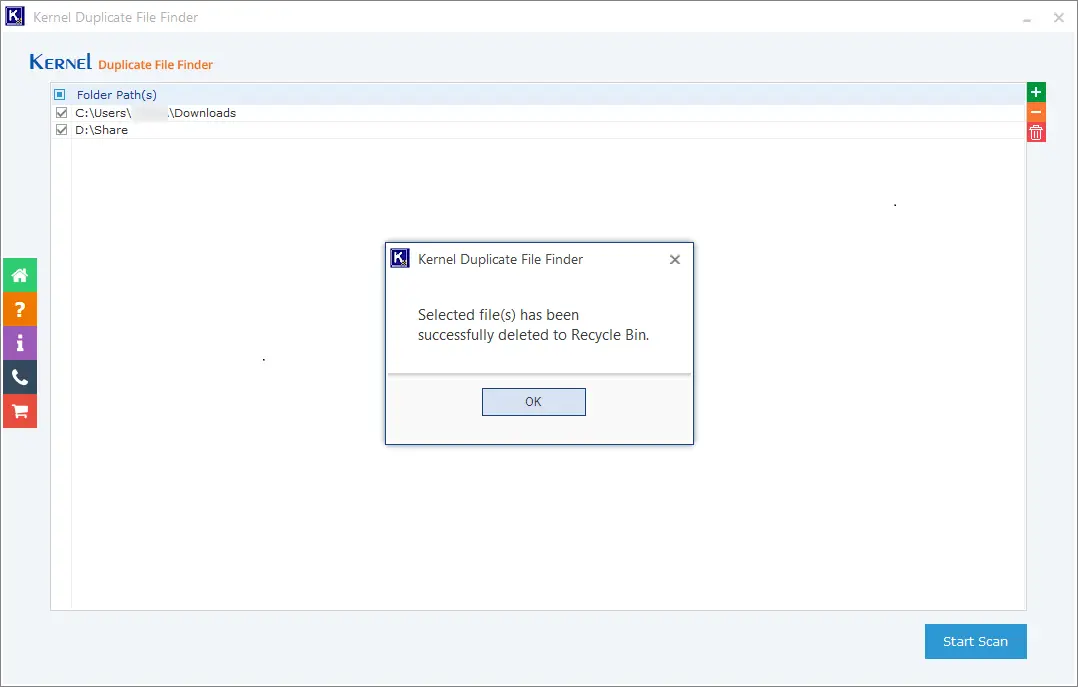
Final Thoughts
Here, we have covered detailed information to find duplicate files across multiple drives on both Windows and Mac. You can use manual as well as direct solutions to locate and remove duplicate copies from your system drives. Use the free methods when you have limited folders to scan, and the recommended approach for large-scale file review and deletion. The software provides multiple options to manage duplicate files more precisely.