Read time: 5 minutes
Outlook for Mac stores exported mailbox data in OLM (Outlook for Mac Data File) format. As you continue using Outlook, this file grows with every email, attachment, contact, calendar event, and notes you add. Over time, they start to degrade Outlook for Mac performance, as they:
- Make exports take longer
- Increase the chances of file corruption
- Might lead to problems during backup and migration
Although Outlook for Mac doesn’t allow you to directly split OLM file into multiple files based on size. But with practical ways, you can manage large mailbox data. So, join us and get the possible ways to split OLM files.
Why Do OLM Files Become Large? Hidden Reasons
An OLM file grows as more data is stored in Outlook. Some common reasons include:
- Archived mailbox data
- Years of gathered emails
- Emails with large file attachments
- One Outlook profile with multiple email accounts
However, a large OLM file isn’t always a problem. But it affects Outlook performance and makes mailbox management more challenging.
Reasons Behind Splitting OLM Files By Size: Main Benefits
When you have OLM file in small sizes, it can help you with a variety of benefits:
- Search speed in Outlook might improve.
- No lagging or other Outlook not working or freezing issues.
- Faster migration to another Outlook profile or platform.
No. Outlook for Mac doesn’t offer any native way to split an existing OLM file into multiple files based on a specific size. But what you can do is export mailbox folders separately for each email list like inbox, calendar, contact, etc., and create multiple smaller OLM files with the Import/Export option.
How to Split OLM Files Manually [Outlook for Mac Import/Export]
Outlook for Mac Import/Export function helps to split OLM files effectively. Generally, this method doesn’t split the existing OLM file; it stores the file data into a different account. Follow the steps below to perform this task:
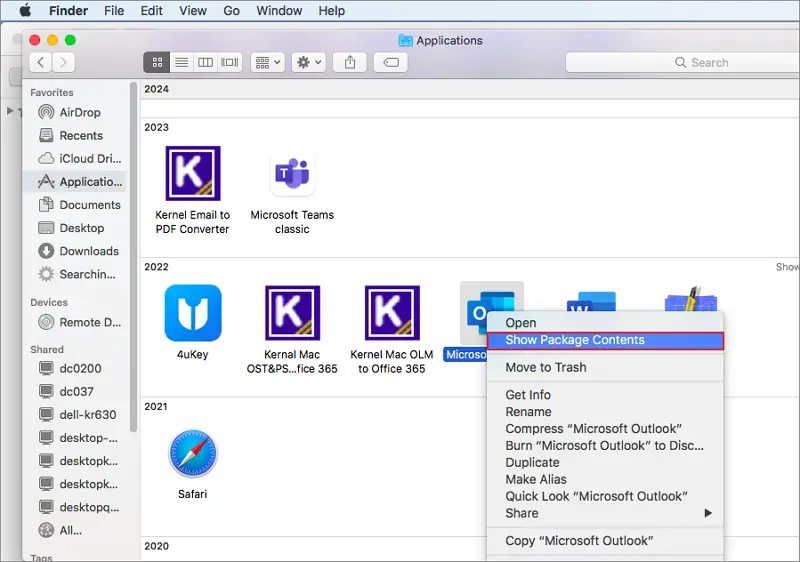
- To create a new Mac Outlook profile. Close Outlook, go to Finder, then Applications.
- Right-click on the Outlook application, then tap on Show Package Contents.
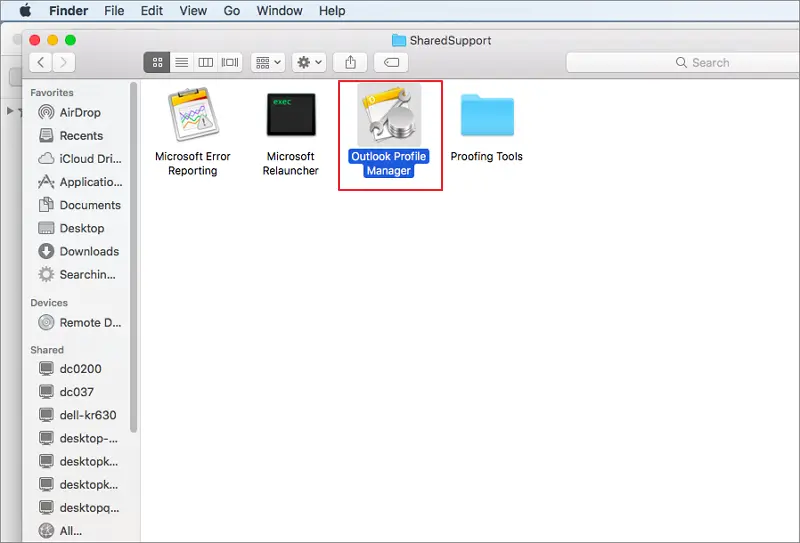
- Within the Contents folder, go to Shared Support and click on the Outlook Profile Manager.
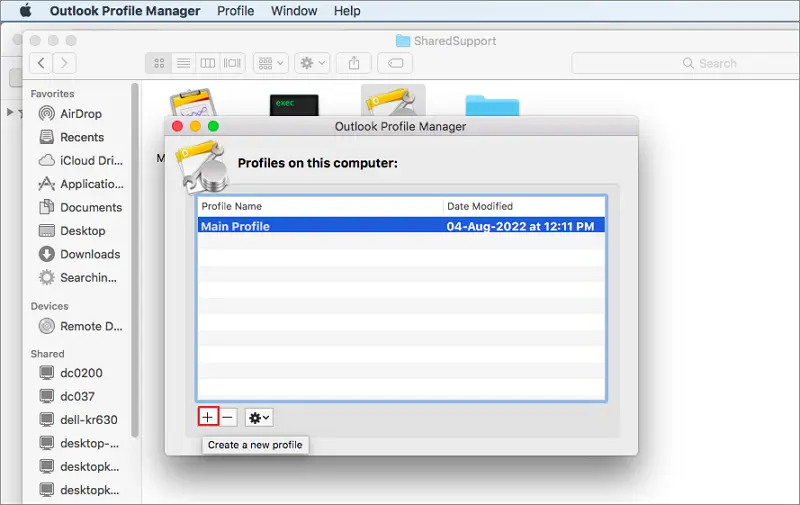
- Tap on on the plus (+) button and create a new profile.
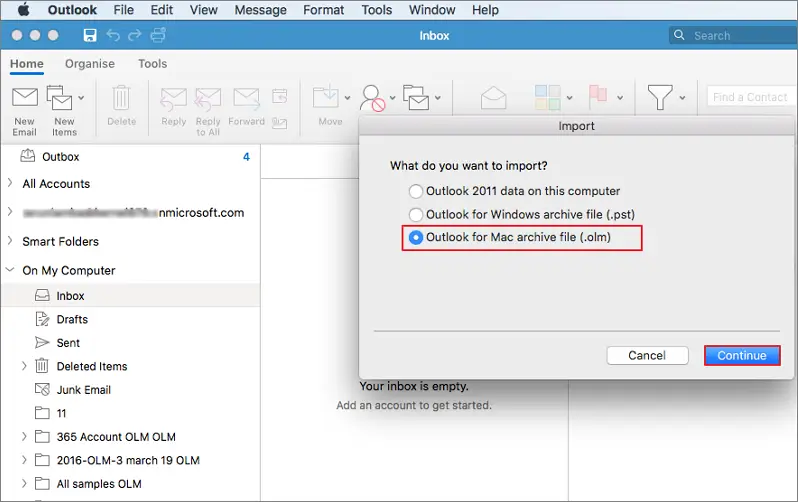
- Once the Outlook profile is created, click on the Outlook for Mac archive file(.olm) option to import your oversized OLM file into it.
- After that, export the newly imported OLM file into contacts, emails, calendar, etc. individually and then click on Continue.
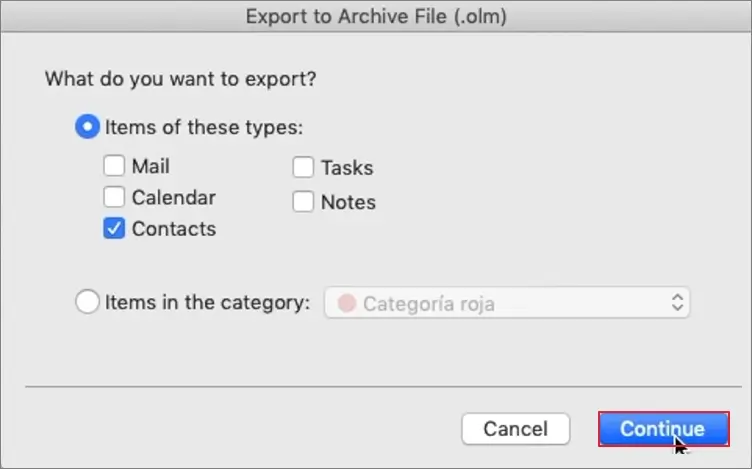
Thus, each of the OLM data items such as contacts, emails, calendar, etc. will have its own OLM file.
Does Any Other Way to Split Large OLM Files by Size Exist?
To split OLM into PST with specific file sizes for purposes like migration, storage, or other, an OLM conversion tool can help to simplify the overall process. OLM to PST Converter converts OLM files into Outlook PST format and allows you to split the output PST into multiple smaller files (1 GB to 45 GB) automatically.
Final Words
In the above blog, we have provided some ways to split OLM files by size. You can follow the step-by-step guide and easily split your OLM files by size. While Outlook for Mac doesn’t provide a built-in option to split an OLM file by size, you can export mailbox folders separately to create smaller archives of individual components. For a faster and easier solution to split OLM files, a practical alternative is also given. Reduce manual efforts and create multiple smaller Outlook data files with ease.
Frequently Asked Questions
A. Microsoft doesn’t specify any limitations to size for OLM files. But if your Outlook performance is low or lags, you must check for file size first.
A. No. Splitting or exporting mailbox data only creates additional copies of your data with deletion of OLM file contents.