Read time: 9 minutes
Gmail running out of storage? Well, that’s what happens when months and months of emails and attachments get piled up in the mailbox. Sure, majority of those emails are important and hence they can’t be deleted randomly, but then how to free up storage space in the mailbox? You can keep the important emails and attachments safe without filling up your mailbox storage by saving individual attachments locally on your system or exporting your mailbox data with the help of Google Takeout. This blog talks about how to save Gmail emails with attachments to desktop easily and which method to choose based on your end goal.
How to save Gmail emails with attachment to desktop?
There are different methods to save Gmail attachments to your desktop. You can save each attachment manually if you only want a few attachments of your choice, save specific emails with attachments in EML or PDF format, or export them using Google Takeout.
Method 1. Save each attachment manually
This method works well for people who only need specific attachment files downloaded on their system. This is useful when users only want the attachment file and don’t need the whole email. Follow the steps below to download the attachment file:
- Open your Gmail account and click on the email with the specific attachment file.
- Hover your cursor over it and click on the Download icon to save it on your system.
Method 2. Download Gmail emails with attachments as EML files
Users can download the whole email along with its body, subject, metadata, and the attachment file as EML files in a few simple steps. This helps when there are compliance requirements which require organizations or individuals to provide old emails as proofs. Follow the steps below to do so:
- In your Gmail mailbox, open the email you want to download.
- Click on the More option (three dots) and select Download message option.
- Your email will get downloaded as an EML file on your system.
Method 3: Save Gmail emails using Google Takeout
Google Takeout Tool is a great tool to back up Gmail emails to computer. It works great if the backup required is only with the limited number of emails with attachments. But with a bulk amount of emails, it is time-consuming and might cause interruptions during the backup process.
Below are the steps on how to save emails with Google Takeout.
Step 1:Go to Google Takeout and sign in with your Google account.
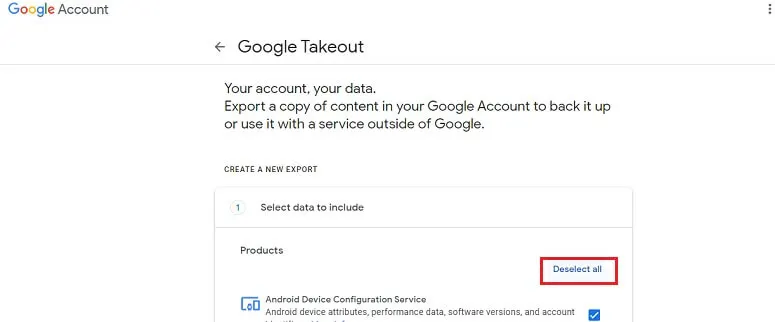
Step 2: You will see all the products are selected by default. Under the Select data to include option, click on Deselect all.
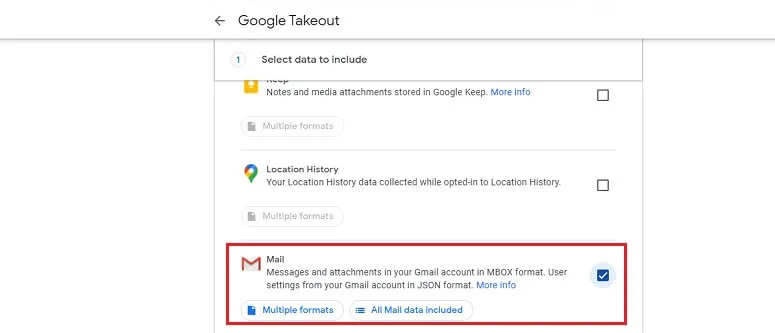
Step 3: Check the box corresponding to Mail and click on All Mail data included. This will open the Mail content options box. All the labels and default folders of the Gmail account are displayed here.
Step 4: Select any folder whose data you want to export. Click OK.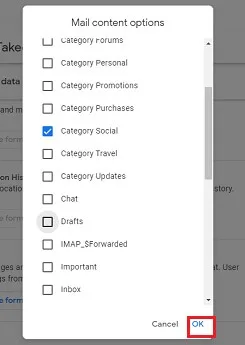
Step 5: Select the data you want to include and click on Next Step.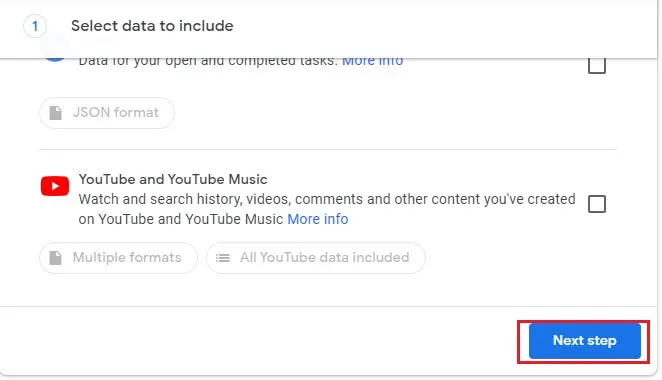
Step 1: Under the Delivery method of Customize archive format box, you will see four options i.e. Send download link via email, Add to Drive, Add to Dropbox, Add to OneDrive and Add to Box. Select Send download link via email.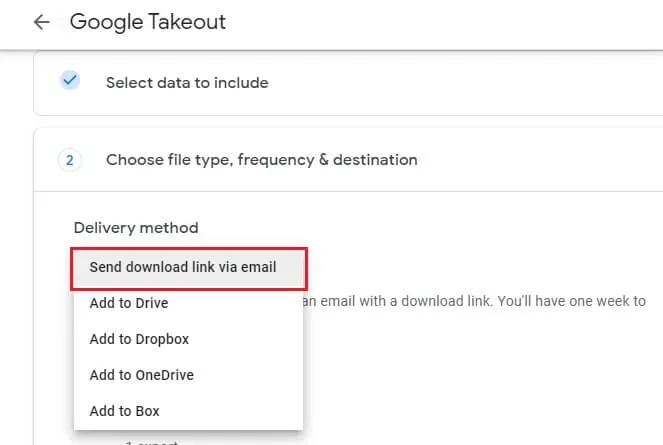
Step 2: To save the archive file on your desktop, you have to select either .zip or .tgz file type. Select .zip format as it is accessible on any Windows platform.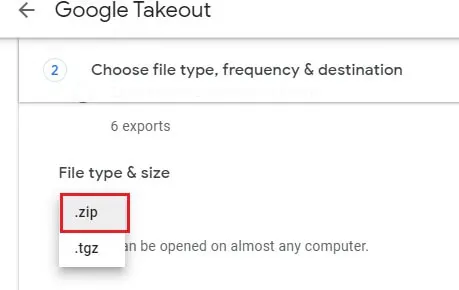
Step 3: Select the archive file size and click on the Create Export button.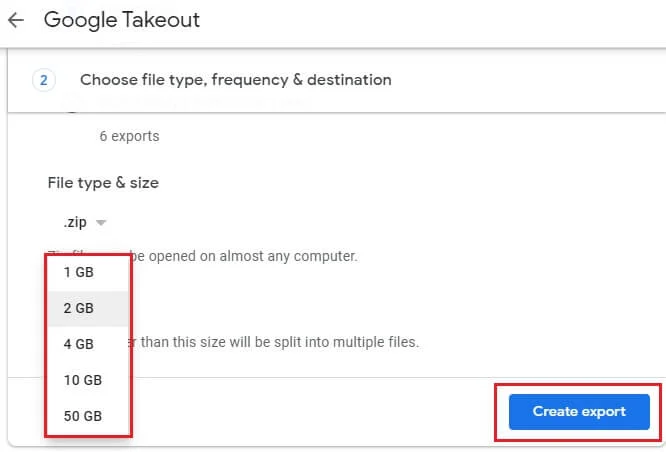
Step 1: Select Download under the Manage your Exports section.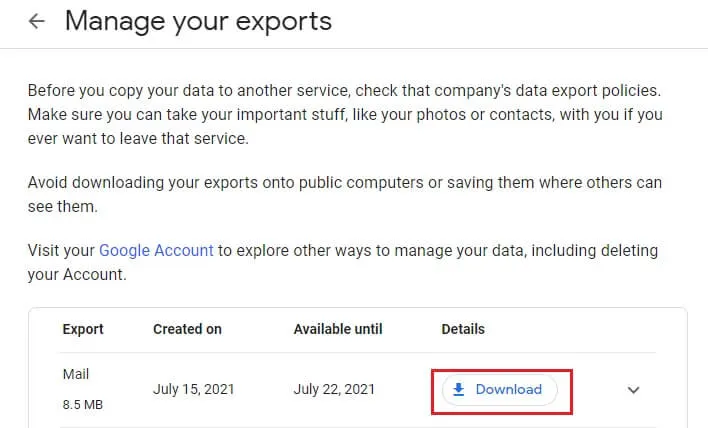
Step 2: You will be redirected to a new tab asking for the password. Enter the password and click on Next. The archive file will be downloaded.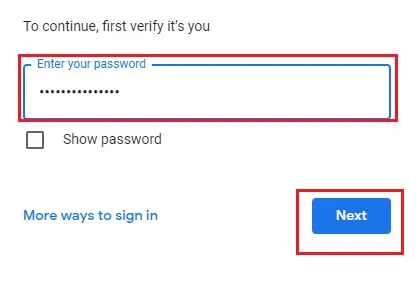
Step 3: The link to the archive file will be sent to your Inbox folder, which is applicable for one week.
Step 4: Open the mail and select Download your files which will work for the next seven days. Extract the ZIP file, which will be available in MBOX format. Import this MBOX file in the supported mail application and view the mail along with its attachment data. 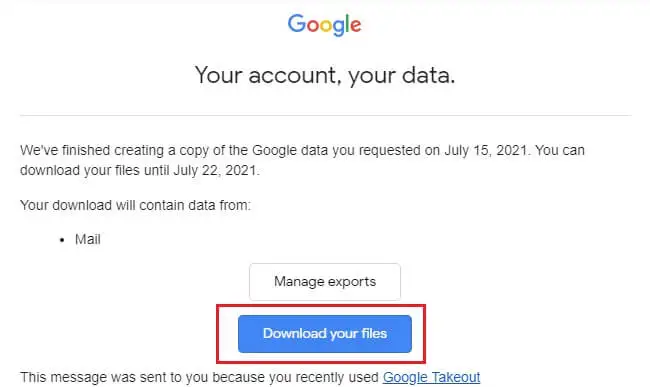
Method 4: Save Gmail emails in PDF format
Just like the method to save Gmail attachments in EML format, you can also save individual emails with attachments in PDF format. Here’s how to save Gmail attachments as PDF files:
Step 1: Log in to your Gmail account and open the email you wish to create a backup of. You have to save it as a PDF now.
Step 2: Select the Print all icon.
Step 3: A new window will open with the print option. Set all the settings as per your requirement and click on the Print button. The email will now be saved as a pdf file.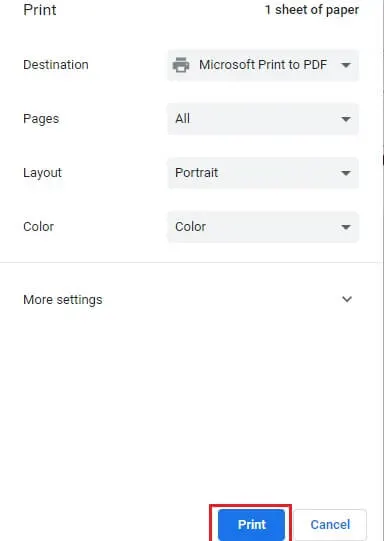
Method 5. Export Gmail emails with attachments in bulk
The above given methods are sufficient if you want to download a few attachments to your system. And as mentioned, Google Takeout works well for a one-time export of your entire mailbox data. But it’s not a reliable solution for regular backups of your Gmail data. Large exports can hit bottlenecks that can take a long time to resolve. In this case, a reliable Gmail Backup tool can be a practical choice to save Gmail emails with attachments on your desktop. Kernel Gmail Backup software can be a good option for this task as it easily exports large mailboxes without any downtime.
Final note
To wrap things up, there are different ways on how to save Gmail emails with attachments to desktop as explained in this blog. You can choose whichever suits your requirements and your situation the best. You can perform the given methods to either save a single attachment file or export the complete mailbox data on your system.
Frequently asked questions
A. Yes you can save Gmail email attachments in Google Drive by clicking on Drive icon (Add to Drive) on the attachment file. To move multiple attachments to Drive at once, just click on the Add all to Drive option.
A. No, Google Takeout isn’t a good choice for taking regular backups of your Gmail data. The exported Google Takeout data is often split into multiple zip files with messy file and folder hierarchies. It’s very time taking to sort through the exported data afterwards.
A. That solely depends on whether you want just the attachment files or emails with the attachment files. Also, manually downloading each email is best if you want to save only a few attachments, however, if you’re planning to export a large number of emails, you should consider a backup solution.