Read time: 8 minutes
When working on a Word document on a laptop or desktop, sometimes an error pops up – ‘Microsoft Word not responding’. It freezes the complete Word application. To fix the issue, try to disable any recently installed add-in, repair DOC file, or run an Office suite repair.
When you face issues like Word constantly not responding, it immediately freezes every Word feature. You cannot write, edit, or save the .docx file. The situation becomes more critical when the error appears before you can save the work. Do not panic. Moving further in the blog, we will discuss methods to fix the problem.
Why Microsoft Word not Responding?
If your Word application is not responding, you may either wait until the program starts responding or close the program if it takes too long to respond. Let us understand what causes Microsoft Word to not respond.
- When accessing the Word file from a network drive, internet latency can lead to Word constantly not responding.
- Word file style or formatting is corrupted, and the Word program fails to open it correctly.
- An incompatible add-in is installed.
- The Word is outdated
- The Office edition is incompatible with the operating system on your computer.
- The system drivers are not updated.
- System resources like RAM and the hard drive (HDD) are 100% utilized.
How to Fix the ‘Microsoft Word not responding’ Issue?
Try these solutions to fix the Word program freezing issue.
Method 1: Restart Word
The simplest thing you can try is to close and start the Word application again. However, since the application is frozen, you must use the Task Manager to close it. Follow the steps given:
- On your desktop, open Task Manager.You can either type Task Manager in the search box, click Open, or press the Ctrl+Alt+Del keys and select Task Manager.
- Click Microsoft Office Word and select End Task.
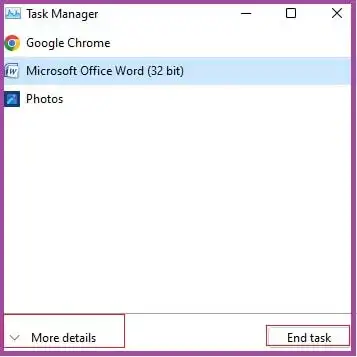
- This will help you close the selected program, Word, in this case.
The Word program can also freeze if your system’s resources (RAM or HDD) are 100% used. This mostly happens when you have low system memory. In this case, use Task Manager to find the resource-heavy application.
To find such applications, in Task Manager, look for any app that is consuming most of the system’s Memory or Disk and then close them. However, if this is a common occurrence, I recommend increasing the RAM.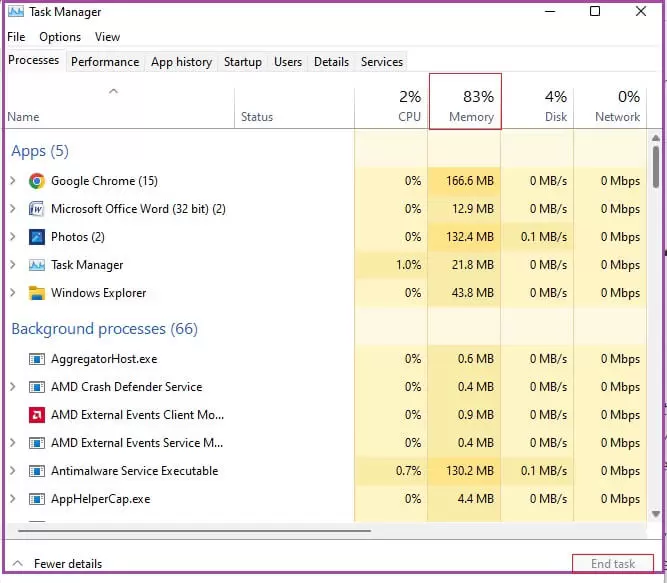
Method 2: Try to Open Word in Safe Mode
Opening Word or any other MS Office application in Safe mode allows you to use the application safely when it is facing some error. You may try to open a file in this mode that is not opening in normal mode due to the crashing of application or interference of an add-in or extension.
Follow the steps given below to open Word in Safe Mode:
- Press the Windows+R keys which will open the Run box.
- Type WINWORD /safe in the Run box. Click OK.
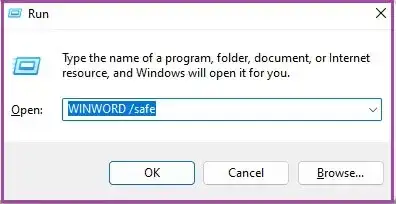
If the Word file opens, it means that there is no damage to the file. If you cannot open a Word file, it is either due to an incompatible Add-in or the corruption of your file.
To fix the issue of incompatible add-ins, try to disable/remove them as given in method 3.
Method 3:Try to Disable Third-Party Plug-ins or Add-ins
You should disable plug-ins or add-ins one at a time, and every time you disable/remove an add-in, you need to restart your computer and open Word. This will enable you to know which plug-in/add-in is responsible for this issue.
To disable or remove third-party add-ins, follow the steps given below:
Important Note: First, make sure to follow steps 1-3 of method 2 to open Word in Safe mode.
- Open MS Word and click File in the toolbar.
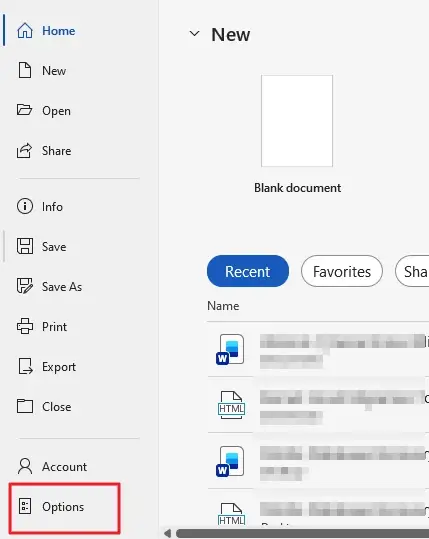
- Click Options on the left panel.
- Click Add-ins on the left panel. A list of all add-ins will be displayed.
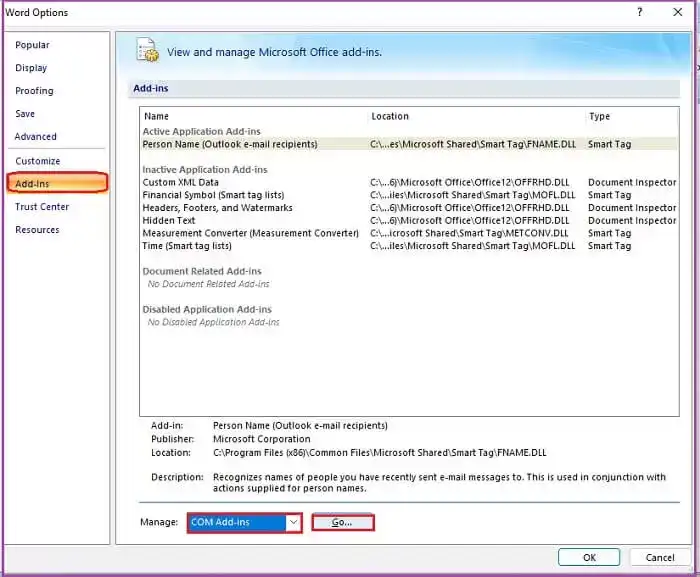
- Make sure that, for the Manage drop-down, COM Add-ins is selected. Then, click Go.
- Click on the check box next to the add-in you wish to disable. Click OK.
Method 4: Use the Native Word Repair Feature
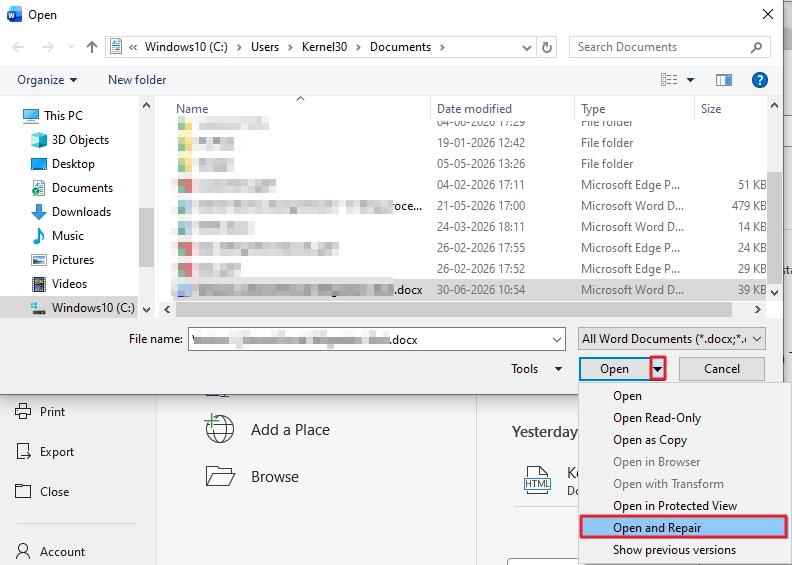
Microsoft Word has a built-in Open and Repair option. It extracts the readable data from a damaged Word file and saves it to a new .docx file. Follow these steps to recover Word document data.
- Launch Word, click File.
- Select Open and click
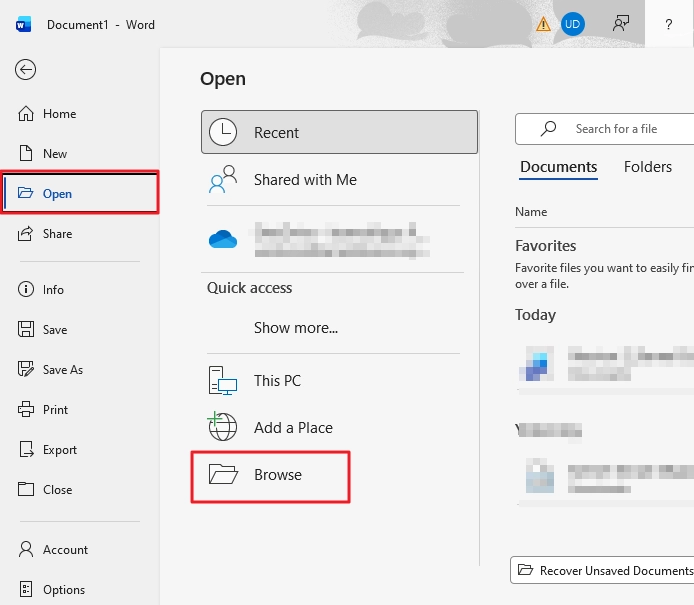
- Select the Word file that causes Microsoft Word to not respond. Click on the arrow next to Open and select the option Open and Repair.
However, this method can only fix minor formatting and font-related issues. But what to do when Word is not responding because of severe file corruption? In such a case, do not waste time with a manual method. Instead, try a professional Word repair tool.
A tool that I recommend is Kernel for Word Repair. This tool can repair single or multiple Word documents in one go. With this tool, you can fix any Word file format, including .doc, .docx, .docm, .dot, .dotm, and .dotx. The tool can retrieve complete MS Word text, fonts, formats, forms, tables, lists, hyperlinks, graphics, graphs, headers, and footers of the documents in their original form.
Method 5: Repair Complete Office installation
If none of the methods are working and the Word file is not damaged, then the issue lies with your Office suite files. Repair the MS Office setup with the following steps:
- Go to the search box, enter Control panel, and click Search.
- Open Control Panel.
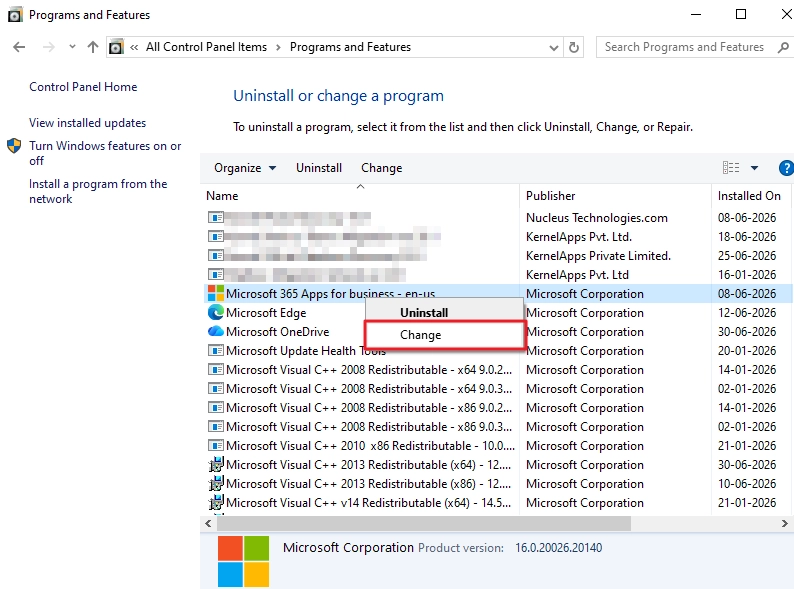
- Click Programs & Features.
- Find the Microsoft Office Enterprise version in the list and right-click. Select Change.
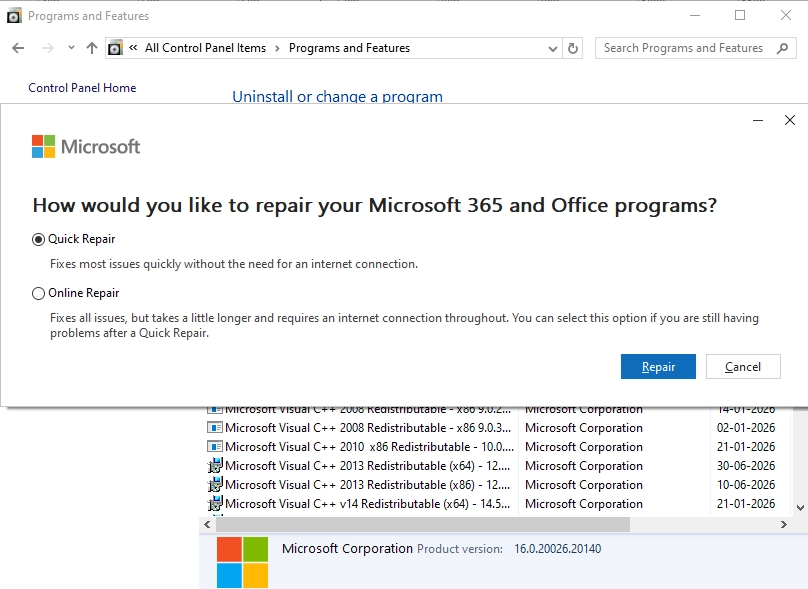
- Choose Quick Repair and click Repair. If that did not work, choose Online Repair
Conclusion
When facing the ‘Microsoft Word not responding’ issue, Word will throw errors like Word won’t open error, Word file is corrupt or inaccessible, the document could not be auto-saved, etc. Use the methods above to fix Word not responding.
However, if the application troubleshooting fails, the issue is with the Word file’s integrity. Fix the damaged file using the native repair method, and if that does not work, use Kernel for Word Repair.
Frequently Asked Questions
A . If you have not saved your work on Word and want to fix Microsoft Word not responding issue without losing data, you have two options:
1. Use Task Manager to close background applications to free up RAM. However, this only works if 100% RAM utilization is the culprit.
2. The second option is to restart the Word application and use the “Recover Unsaved Document” feature. This will show the list of recent unsaved documents on your PC.
A . When you forget to save a Word file before closing the Word application, follow these steps to get it back:
1. Open Word, click on File > Open.
2. On the right pane, click on Recover Unsaved Documents.
3. Select the unsaved Word file and click Open.