Read Time: 10 minutes
Are you troubled by weekly or daily error messages with the warning “Your mailbox is full.” You can’t send messages.” “The message could not be sent. Your mailbox is full.” “Microsoft Unified Storage is full” / “Your Microsoft storage is full” “Mailbox is full” or a storage warning bar? This is a basic Outlook pop-up that the majority of users get on their systems. And Outlook mailbox cleanup is the only solution to get rid of this situation.
Quick Solutions
Solution 1. Empty Deleted Items and Junk Email
Right-click on Deleted Items >Empty Folder and Junk Email >Empty Folder. But deleted items still count towards your mailbox space until permanently deleted.
Solution 2. Clean Up Sync Issues and Conflicts
Go to Folder List View (CTRL+ 6) >expand Sync Issues >Conflicts >Local Failures, Server Failuresstrong>, then delete them. They are safe to delete.
Why Does Outlook Mailbox Get Full?
Below are some reasons why your Outlook mailbox gets full:
- Large attachments
- Lots of emails in Inbox or Sent Items
- Deleted items and Junk folder not emptied
- Sync issues
- Duplicate emails
- Subscriptions, newsletters, and spam
Before You Clean Up: Configure Your Settings First
Before using the Clean Up feature itself, it’s worth configuring where your cleaned-up items actually go, and which messages get excluded from cleanup. Here is how to change the folder settings of your clean-up items to a specific folder.
- Access Outlook and tap on the File menu.
- From the left side dashboard, click on Options.
- Click on the Mail option, then scroll down to the section Conversation Clean Up. You will get some options to modify your Inbox settings.
- Tap on Browse to select a destination folder to store your deleted items.
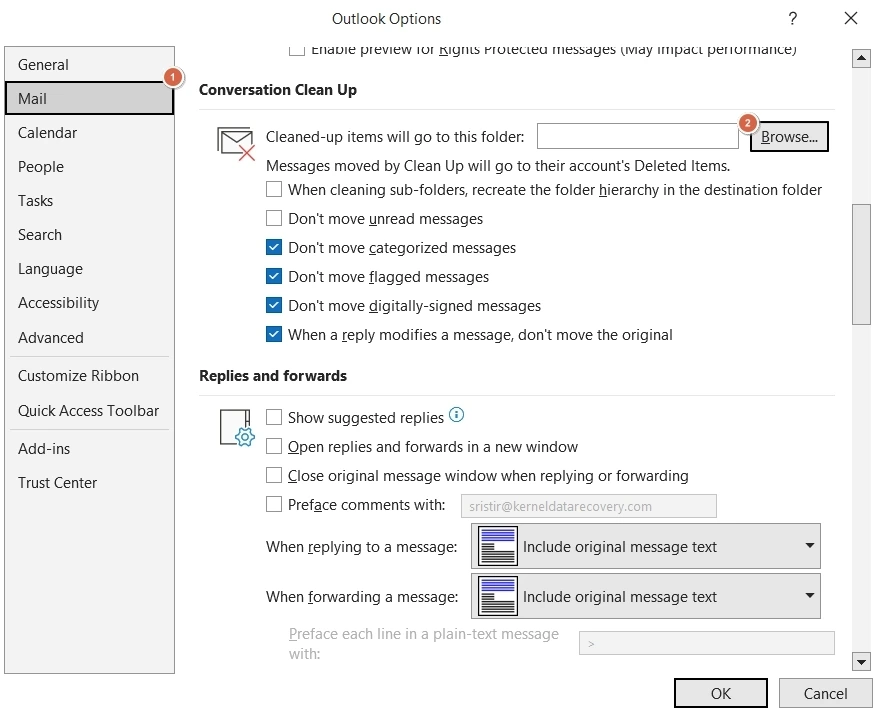
- As per your preferences, you can check the boxes below. Different checkbox options are available for flagged messages, categorized messages, unread messages, and more.
- Once done, tap on OK to finish.
How to Clean Up Mailbox in Outlook? Free Methods
There are a few free methods available to clean up mailboxes in Outlook. You can follow any method that fits your requirements the best.
Method 1. Delete Unnecessary Email Messages
This is the easiest and simplest method for Outlook mailbox cleanup. You can delete all unwanted or less important emails using the steps below:
- Open Outlook and go to Inbox, then select all the unnecessary emails.
- After selecting, press the Delete button.
- Repeat the process for each folder present in Outlook.
Note: You can sort emails based on Date, From, To, Size, etc.
Method 2. Using the Clean Up Feature in Outlook
With the Clean Up Conversation options, you can clean up your inbox by selecting a particular conversation, a folder, or subfolders. We will help you go through all these options.
Option 1. Deleting A Particular Conversation
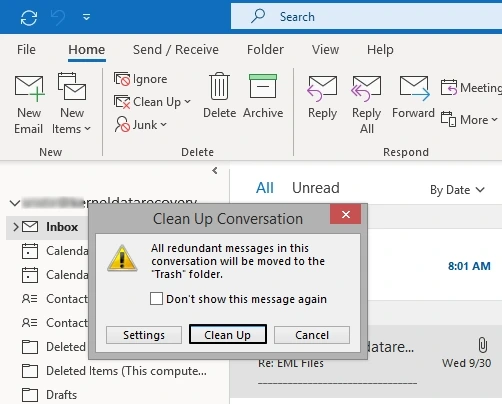
- Firstly, select a particular email and click on the Clean Up option, then click Clean Up Conversation.
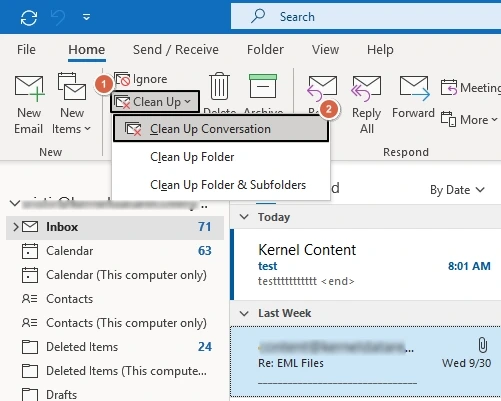
- You will get a message pop-up quoting ‘All redundant messages in this conversation will be moved to the “Trash” folder.
- Click on Clean Up to finish.
Option 2. Deleting A Folder
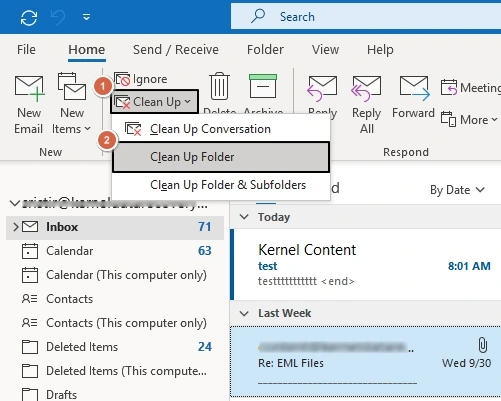
- Click on the Clean Up button, then tap on Clean Up Folder.
- You will get a message pop-up quoting ‘All redundant messages in this conversation will be moved to the “Trash” folder.’
- Click on Clean Up Folder to finish.
Option 3. Deleting Folders & Subfolders
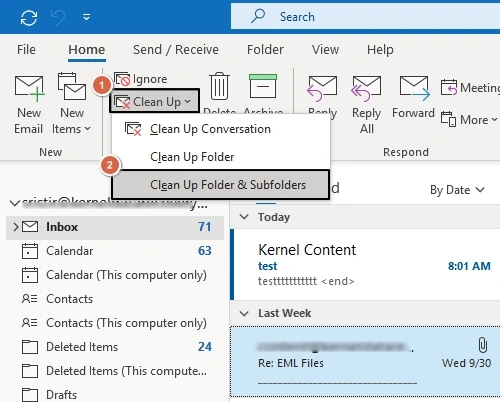
- Click on Clean Up & tap on Clean Up Folder & Subfolders.
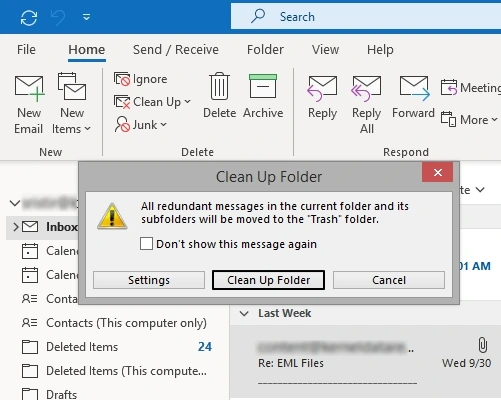
- You will get a message pop-up quoting ‘All redundant messages in the current folder and its subfolders will be moved to the “Trash” folder.’
- Click on Clean Up Folder to finish.
Read Also: How to Deal With Outlook Performance Issues Related Large PST Sizes?
Method 3. Using Outlook’s Built-in Tools Option
In Outlook, there is a built-in Tools option that allows users to delete unwanted emails. It has multiple options to delete emails: Mailbox Cleanup, Empty Deleted Items Folder, Clean Up Old Items, and Set Archive Folder. We will explain each option with detailed steps for clear idea: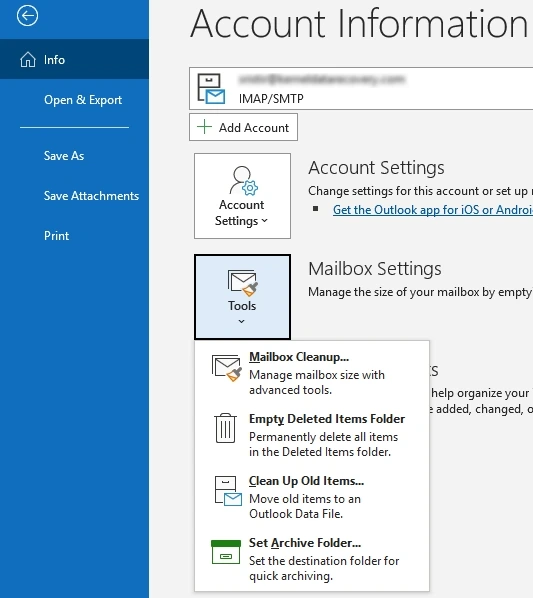
Option 1. Mailbox Cleanup
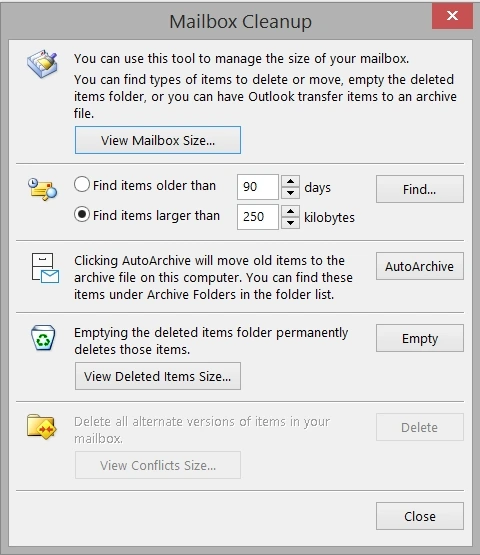
Outlook Mailbox Cleanup tool comes with a set of advanced options by which you can easily manage your mailbox. It is a one-stop tool using which you can easily reduce the Outlook mailbox size. It comes with various different options such as:
- View Mailbox Size: You can see the size of emails in each folder. Sent Items and Deleted Items are always bigger than the rest.
- Find items older than: Find older items in your mailbox based on number of days and delete directly from there.
- Find items larger than: Find large items in your mailbox based on kilobytes and delete unnecessary ones.
- AutoArchive: Clicking AutoArchive will move old items to the archive files on your computer. You can find these items under Archive Folders in the folder list.
- Empty: Emptying the deleted items folder permanently deleted those items stored in your Deleted Items folder. By tapping on View Deleted Items Size, you can check for the space these deleted folders occupy.
Option 2. Clean Up Old Items
This option allows users to clean up old items and move them to a new archive PST file. Select the folder to clean up, click on the Browse button to provide a saving location and finally click OK.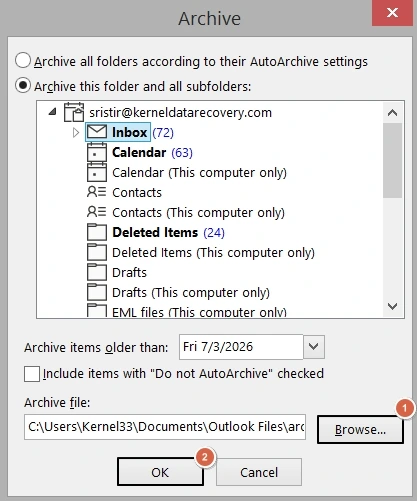
Option 3. Set Archive Folder
Select a folder and set the destination folder for quick archiving. Once selected, click OK.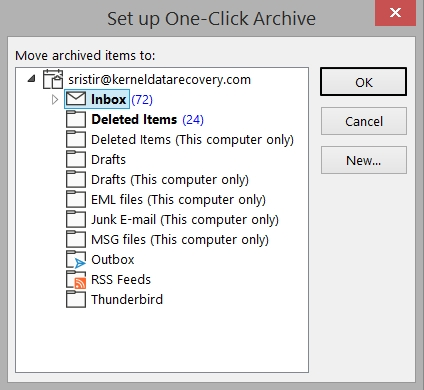
Method 4. Remove Large Attachments From Emails
Large attachments consume a lot of mailbox space. Deleting them can help make space for new emails. But before deleting attachments, you can extract Outlook attachments and save them on your local system to make sure your important items stay safe. After that, follow the steps below:
- In Outlook’s Search box, type: hasattachment:yes size:>15MB.
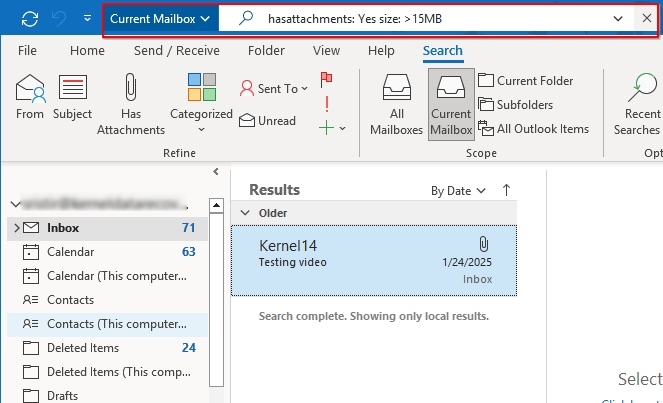
- Open email with large attachments, then right-click on the attachments present in it or click on the drop-down menu.
- Click on the Remove Attachment option to delete it.
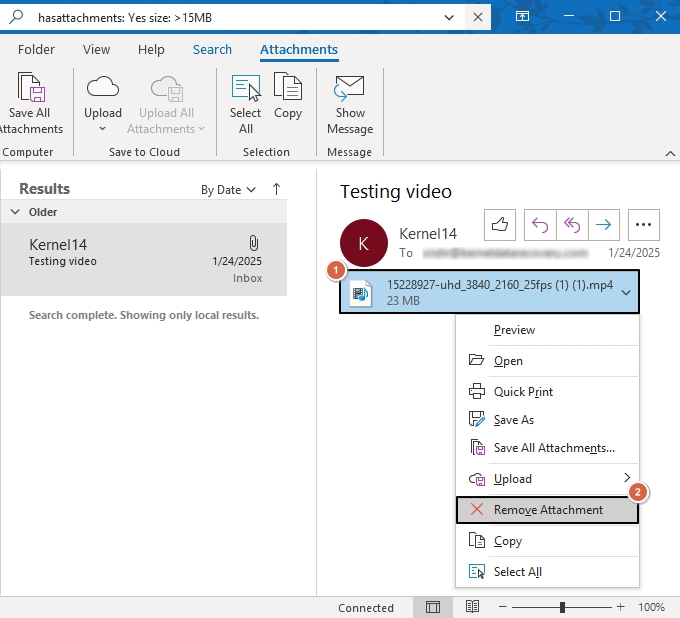
Repeat this process for each email with large attachments.
Method 5. Enable AutoArchiving Setting
- In Outlook, go to File >Options >Advanced >AutoArchive Settings.
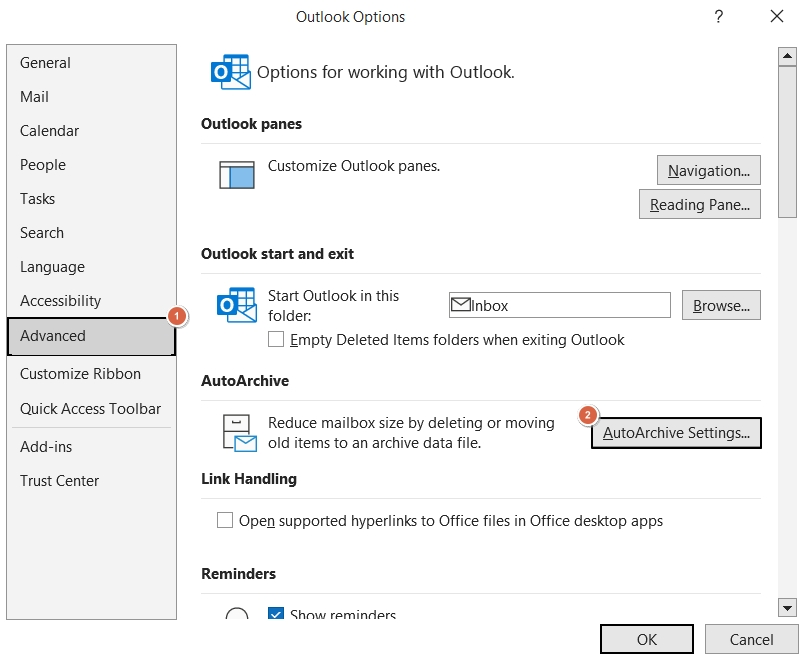
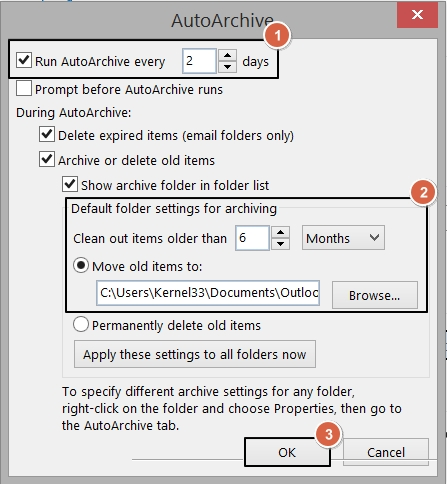
- Select the number of days in Run AutoArchive in XX days, select the number of months, weeks, or days in Clean out items older than, then click Browse to provide a saving location for the archive file. Lastly, click OK.
Method 6. Compact Outlook Data File
There is a built-in option in Outlook to compact the PST and OST file size. Here is how you can use this option:
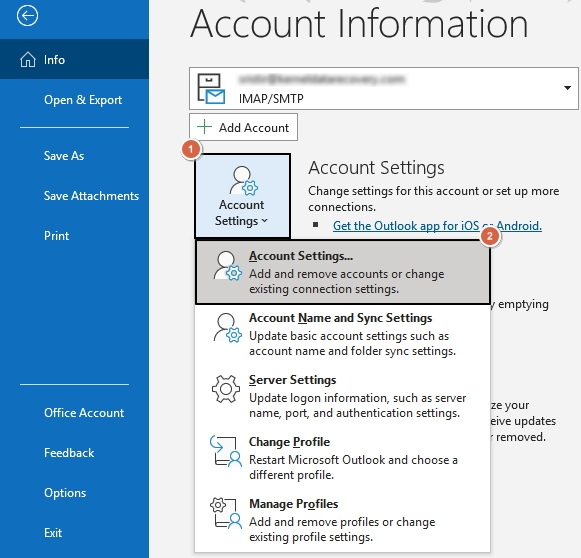
- Go to File >Account Settings >Account Settings.
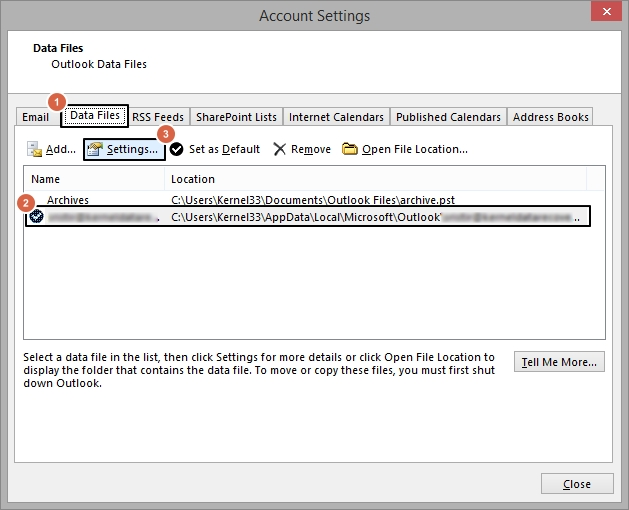
- Go to the Data Files tab and select the required Outlook data file, then click Settings.
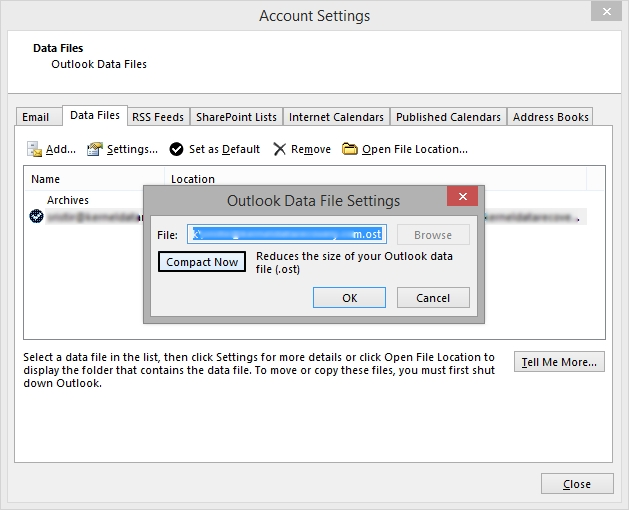
- Click on the Compact Now button and wait till the process completes.
If your Outlook Data File is slightly corrupted or oversized, the Compact Now option fails with no log of errors. Moreover, the attachments are major size contributors and they cannot be removed, extracted, or compressed by this method.
A Smarter Way to Reclaim Space Without Deleting Emails
Another way to reduce the size of your PST file without deleting any of your mailbox data is by using the Compress PST tool. Kernel PST Compress & Compact is designed to tackle such PST size issues. Unlike Outlook compact function, this tool actually offers you some practical solutions:
- Compress all attachments in new PST file
- Remove all attachments in new PST file
- Remove all attachments from new PST file and save them in separate folder
- Remove all attachments from new PST file. Compress and save them in separate folder.
Final Words
Cleaning up Outlook mailbox is not a one-time job. Methods of cleaning up Outlook mailbox manually can free up some space in the data file by removing white space. However, this approach only temporarily solves the issue as they delete blank space, and they can take too long to complete if there are several PST files or large files. So using Outlook mailbox cleanup tool is always a reliable option.
Frequently Asked Questions
A. To empty your mailbox quickly, delete large attachments, remove old messages in bulk, and permanently delete the Junk or Deleted Items folder.
A. Default limit in Microsoft 365 is 35MB per email but most organizations set it to 25MB-30MB email size limit.
A. Because deleted emails are still in your Deleted Items folder. You need to empty deleted items from your Outlook to resolve Outlook mailbox full after deleting emails issue.