Read time: 7 minutes
cPanel makes the website management task straightforward and accessible to all users, all thanks to its array of tools designed to simplify web hosting. It provides advanced capabilities for monitoring performance, tracking data, and configuring security practices.
When we lost access to our cPanel account, instead of panicking, we used the previously downloaded cPanel email backup to restore old email data to a new server. Here are the methods that we followed to save the data in a structured manner.
Why take cPanel email backup to PC?
Understanding the reasons to backup cPanel emails will help you reach the root cause and resolve the issue thoroughly. Here are a few reasons to backup cPanel emails:
- Backup helps with easy recovery from accidental data loss situations.
- Help you avoid risks of losing crucial emails to hacking or other cyber breaches.
- Fulfil industry regulations and compliance using the available backups.
- Keep business historical records, allowing easy access whenever needed.
- Allows easy transition between email platforms.
How to backup cPanel emails to computer?
Data backup is a critical consideration, regardless of whether you’re using cPanel or other email clients. In this guide, we will explore the process of backing up email data using cPanel.
Solution 1- Using backup wizard
- Go to your cPanel account and log in.
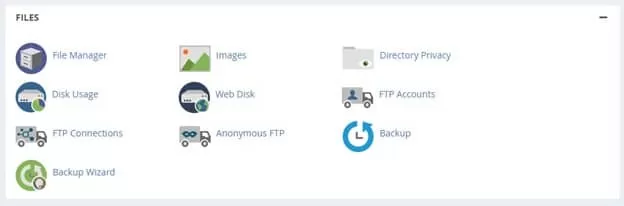
- In cPanel, go to the File section and click on Backup wizard.
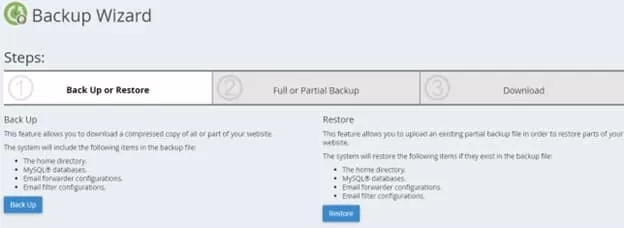
- In Backup Wizard, click on the Backup option.
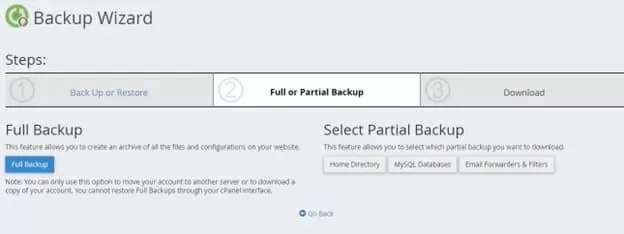
- In the Backup window, click on Full Backup.
- Finally, click on the “Generate Backup” button.
- Now go to File Manager, and select the downloaded file.
- You will see the folder containing all Email IDs. Now right-click on a folder and select the compress option from the drop-down menu.
- A compress window will appear, select the Compress type, i.e., Zip Archive, and click the Compress File(s) button. Now you can see a pop-up message creating an archive.
- A Compression Result window will appear. Here, click on the Close button.
- Now the file is on your hosting account server; right-click on it and select the Download option.
Now you can see your selected backup file is downloaded.
Solution 2- Using the export option
- Go to your cPanel account and log in.
- Go to the Email tab and click on the Email account option.
- Select the email account and click the Check Email button.
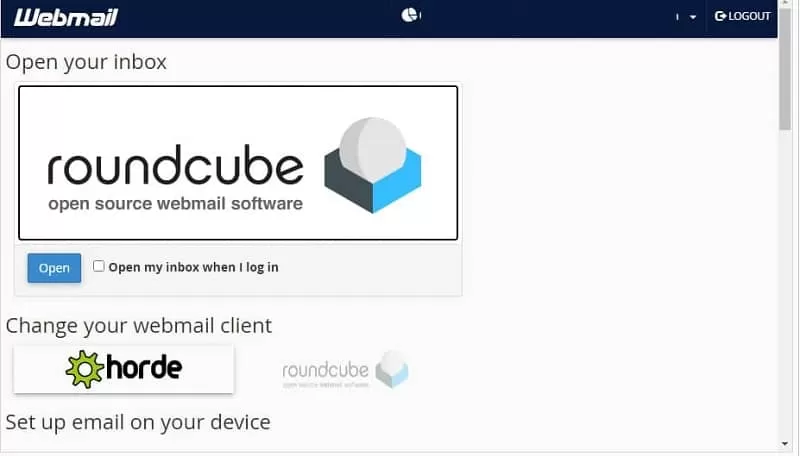
- Go for the “Horde” icon and choose the “Open” button.
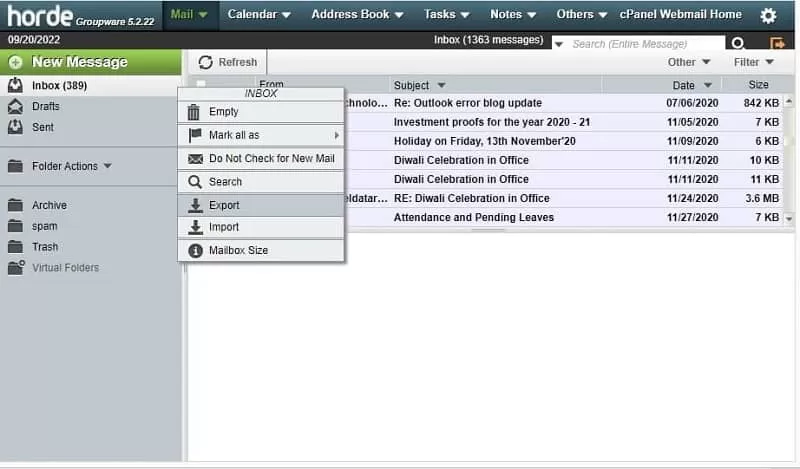
- Now right-click on the mailbox and choose the “Export” button.
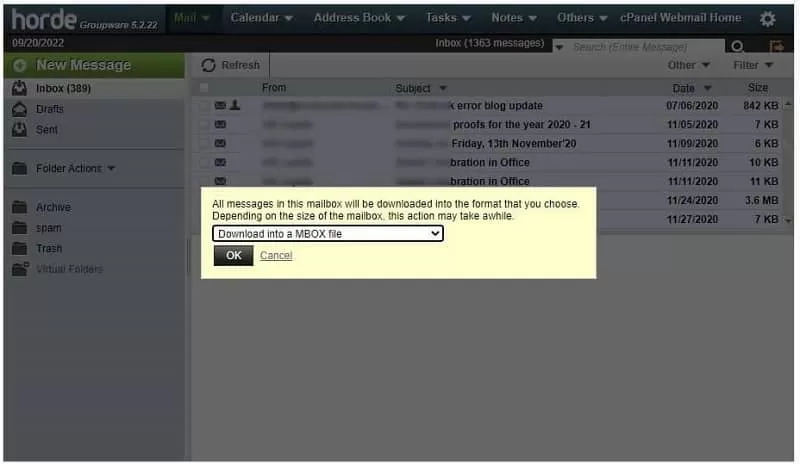
- Now, a pop-up message box will appear. Hit on the OK button to back up the email. It will download as an MBOX file.
Solution 3 – Manual cPanel email backup to PC using Outlook
To export cPanel emails with this method, you’ll use Outlook application. First, configure cPanel and Outlook accounts, and then export data to PST.
Step 1: Launch Outlook and tap on File tab to select Add Account.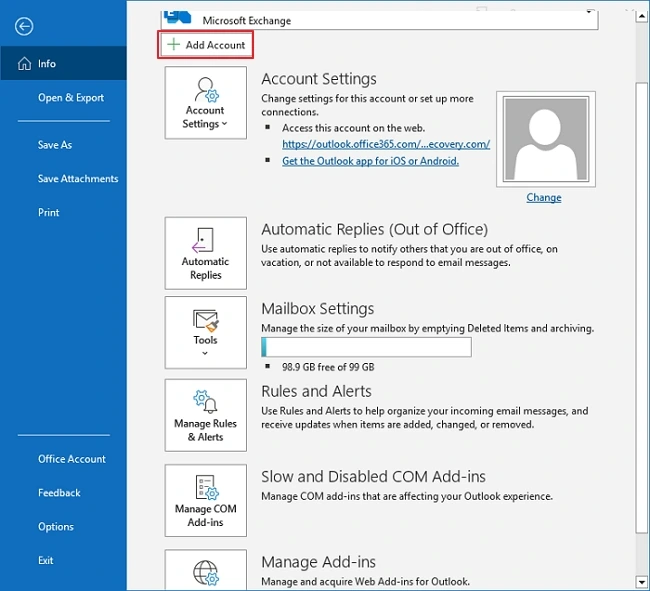
Step 2: Enter the cPanel email address and select the option “Let me set up my account manually.” Click Connect.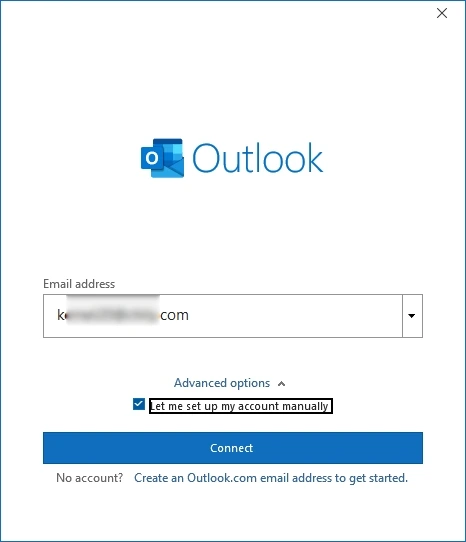
Step 3: Select IMAP and then enter the account password. Click Connect.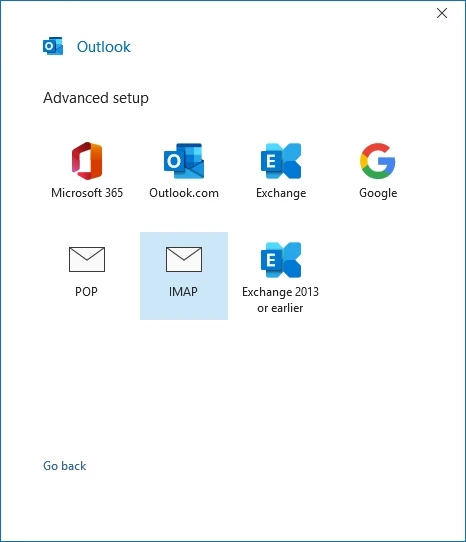
Step 4: Tap on Done in the confirmation wizard.
Step 5: Again, go to File and then click Open & Export > Import/Export.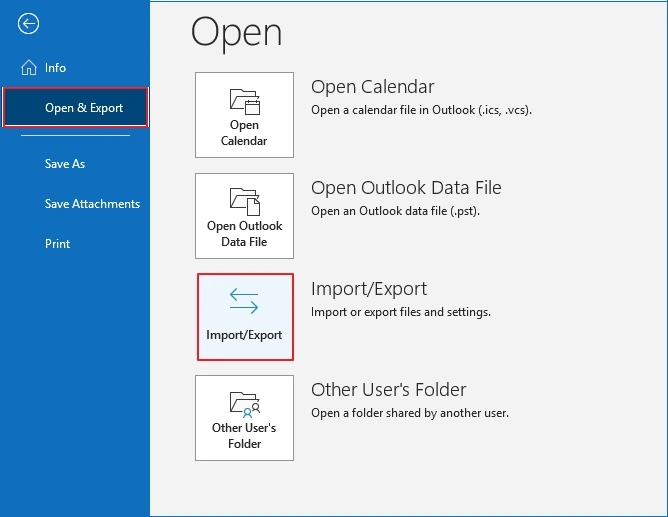
Step 6: Select Export to a file and click Next.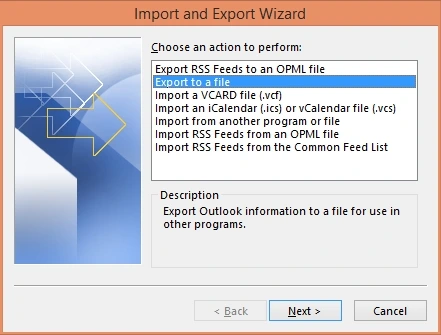
Step 7: Tap on Outlook Data File (.pst). Click Next.
Step 8: Click Browse to provide the location to save the file and then Next. Click Finish.
Quickly backup cPanel emails using an advanced IMAP backup tool
With the manual methods, you can easily backup cPanel emails. However, you need to be very cautious when working with them. You may experience slow performance during large mailbox migrations, and skipping any step can cost you a lot. To help you avoid this or other complications, use an advanced Kernel IMAP Backup solution. This tool can effortlessly backup IMAP mailboxes in just three straightforward steps. It’s designed to maintain data integrity and preserve the hierarchy of your email data. The IMAP backup tool allows users to conveniently choose from various file formats, including PST, DOC, DOCX, EML, MSG, MHT, HTML, and PDF, to save the IMAP mailbox data they’ve added. Furthermore, the software interface conveniently provides the server’s name and port number information for multiple IMAP servers, enhancing user convenience.
Conclusion
The methods discussed above help you take cPanel email backup to PC with ease. Manual procedures can be technically complex and may necessitate professional assistance, particularly when choosing the backup format. For efficient and error-free IMAP backups, opting for a professional IMAP backup tool is a wise choice. It will help you to effortlessly back up your data in various file formats such as PST, EML, PDF, and more, all in just a few straightforward steps. This approach can simplify the backup process and ensure that your email data is securely stored in the format of your choice.
Frequently Asked Questions
Ans: cPanel usually allows you to save backups in files with the extension .tar and .gz within a compressed tarball format. However, the file format can vary with the backup method you select. For instance, using the export option saves the data to an MBOX file format.
Ans: For most cPanel accounts (especially businesses), it is recommended to take cPanel email backup on a daily basis. It helps in maintaining data integrity with very low chances of data loss.
Ans: Yes, cPanel permits the user to restore partial backups; however, the full restore is not allowed to a general user.