Read time: 13 minutes
Microsoft has phased out or disabled the “Export Mailbox” feature from Outlook.com (OWA) due to its unreliable processing of large mailboxes. So backing up your mailboxes directly from Outlook.com is no longer a viable method. However, you can back up your @Outlook.com, @hotmail.com, @Live.com, @Msn.com, and other Microsoft email services mailboxes in different ways.
|
User Level |
Applicable Method |
Backup Items List |
Output format |
|
Complete or Selective backup of personal mailboxes |
New Outlook or Classic Outlook |
Inbox, Drafts, Sent Items, Deleted Items, Junk Email, Outbox, Archive, Contacts (or People), Calendar, Tasks, Notes, Journal |
PST |
|
Archive Older Emails Automatically |
AutoArchive in Classic Outlook |
Inbox, Sent Items, Deleted Items, Outbox, Drafts, Custom Mail Folders, Calendar (Past Appointments & Meetings), Tasks, Notes, & Journal. |
PST |
|
Multiple User Mailboxes Backup |
Microsoft Purview eDiscovery |
Primary Mailboxes, Archive Mailboxes, Shared Mailboxes, Microsoft 365 Groups or Teams Mailboxes, Inactive Mailboxes, and other Office 365 supported data. |
PST & MSG |
|
Personal Mailbox Backup on Mac Devices |
Legacy Outlook for Mac (till October 2026) |
Mail, Calendar, Contacts, Tasks, and Notes. |
OLM |
|
Individual Email Message Backup |
OWA or New Outlook |
Email header data, Message body content, and attached files. |
EML & MSG |
Here, we will explore each method in detail along with the steps to back up Outlook.com emails to your computer. Let’s begin.
Outlook.com Emails Backup Checklist: Verify These Steps Before You Start
Make sure you have completed all the following prerequisites before you begin backing up your Outlook.com emails.
- Install the New or Classic Outlook on your system.
- Configure your Hotmail, Outlook, MSN, Live, & other email accounts.
- Wait for the mailbox to synchronize the required messages and folders.
- Check for older emails in Classic Outlook (Account Settings > Account Name and Sync Settings > All).
- Keep Outlook connected to the internet during the synchronization.
- Prepare the list of mailboxes that you want to back up.
- Required permissions for backing up multiple mailboxes.
- Select a local and non-synced drive to save mailbox data offline.
- Make sure you have enough storage space in the destination drive for the resulting files.
How to Backup Outlook.com Emails to Your Computer? [Manual Ways]
After trying several methods available on the internet, we have found the methods below to be the only working ones. Check them out to find the most applicable method based on your requirements.
For Windows Users
You can backup Outlook.com emails on Windows OS using the New or Classic Outlook application based on your specific requirement.
Method 1. Backup Outlook.com Emails With New Outlook
Here’s how to backup Outlook.com emails to computer in Windows:
Step 1. Go to the File menu and proceed to the Open & export option.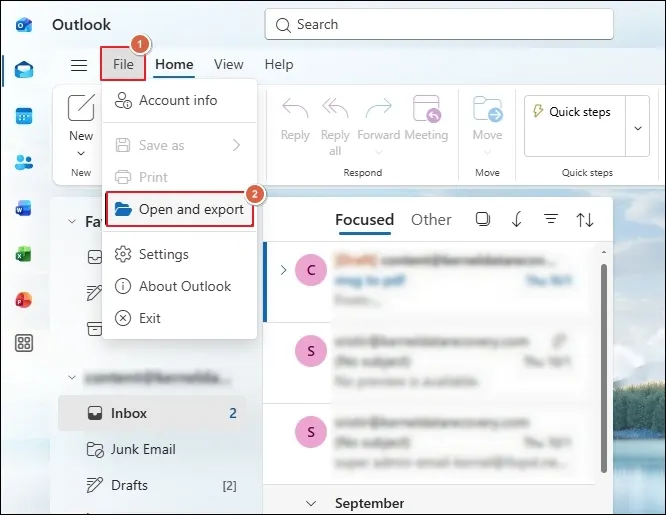
Step 2. Then, click on Data files > Export > Get started.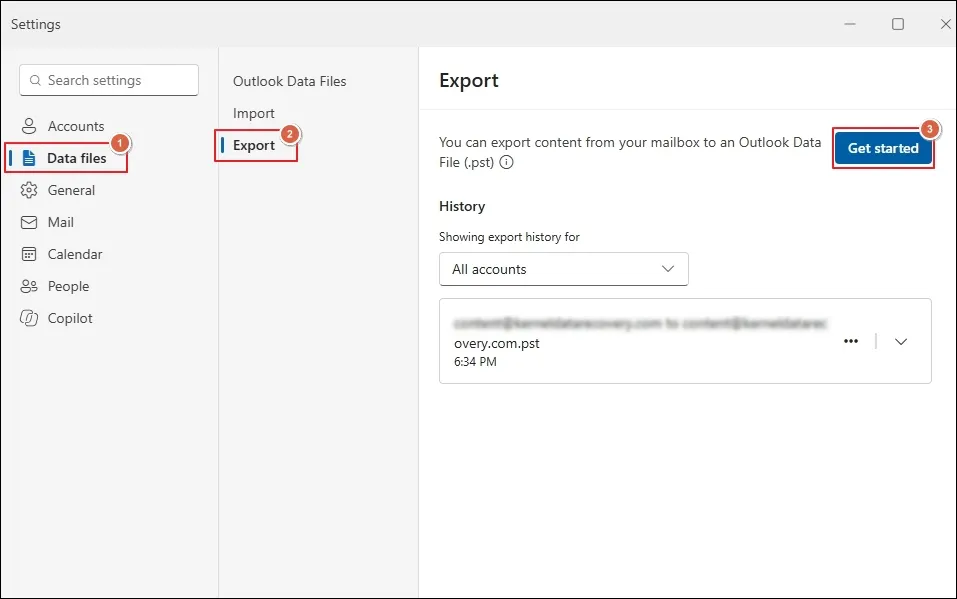
Step 3. Choose a folder to export and click Next.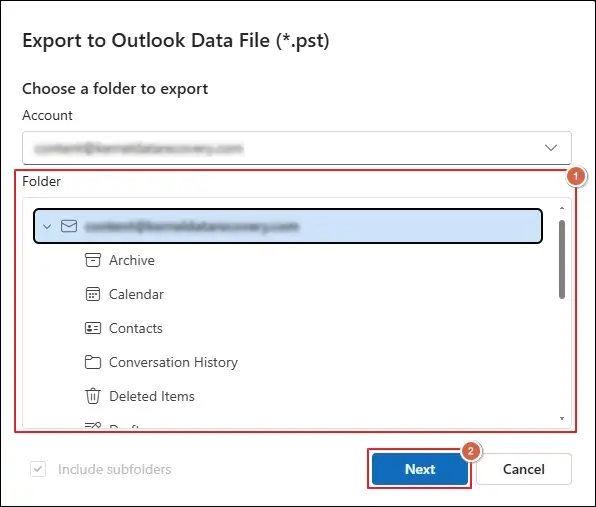
Note: You can select an individual mailbox folder or entire email account to backup data.
Step 4. Select the applicable options for duplicate items & time range and click Next.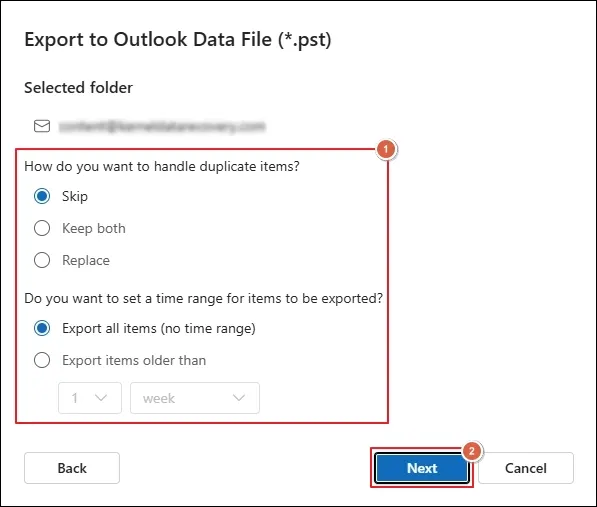
Step 5. Choose destination and action as needed.
Step 6. Then, Set recurring export if required and click Export.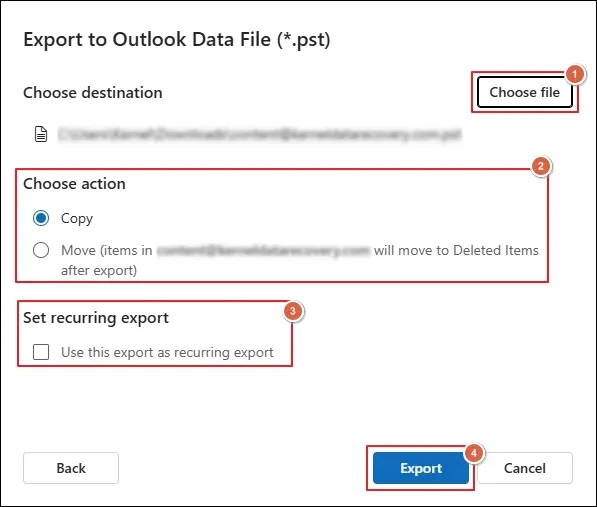
Step 7. It will start saving the selected emails to the provided destination.
Step 8. Once done, you can view the export history to track the item counts and status.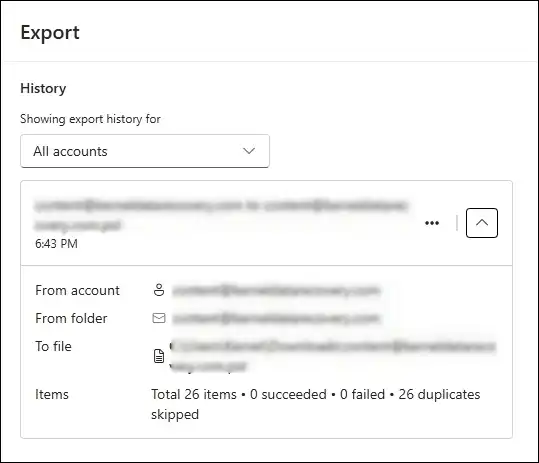
Important to Know: You can use the New Outlook to also backup individual emails to your local system. For this, access the email > Right-click on it > Download as EML or MSG files. .
Method 2. Use Classic Outlook to Backup Outlook.com Emails
Here’s how to backup Outlook.com emails on PC using Classic Outlook:
Step 1. Launch Outlook and click on the File menu.
Step 2. Under the Open & Export section, go to Import/Export.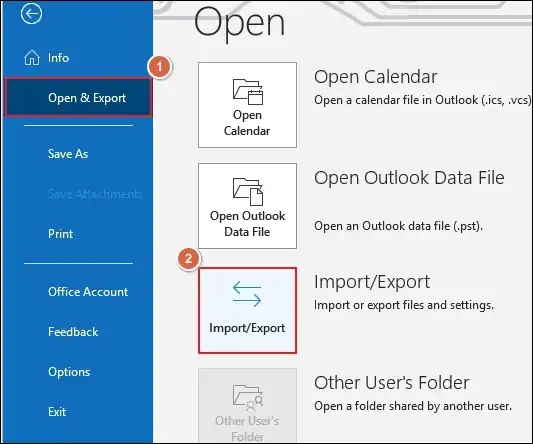
Step 3. Choose Export to a file and click Next.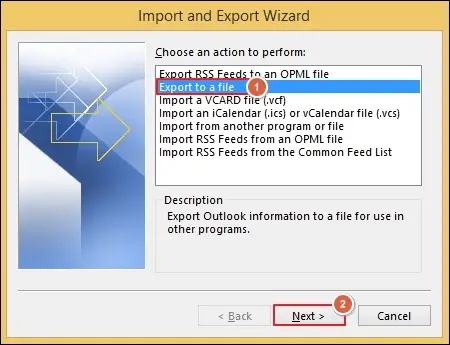
Step 4. Select the Outlook Data File (.pst) and click Next.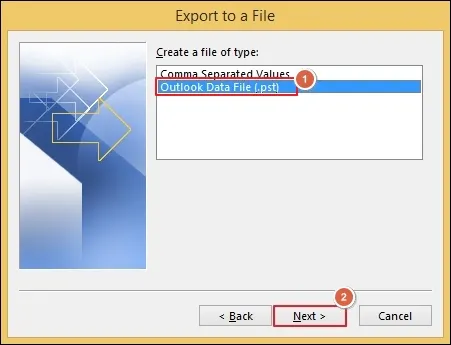
Step 5. Select the folder to export and proceed to Next.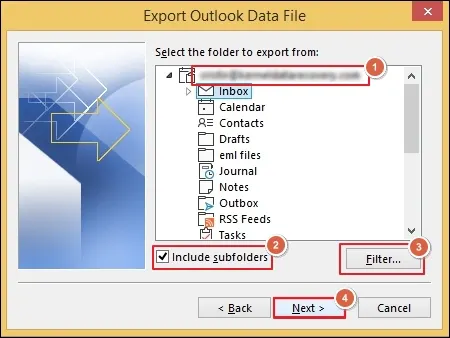
Note: Choose the single mailbox or entire email data to backup. Also, Include subfolders and apply Filters if needed.
Step 6. Browse to provide the saving destination and choose Options.
Step 7. Then, click Finish to start backing up mailboxes.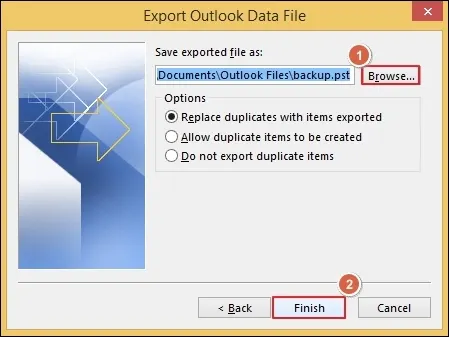
Important to Know: In Classic Outlook, you can auto-archive older emails, calendar items, and journal entries by enabling it. To configure this for the entire or specific mailbox, go to File > Options > Advanced > AutoArchive > AutoArchive Settings > Select applicable options > OK.
For Mac Users
You can use legacy Outlook for Mac to backup Outlook.com emails into an OLM archive file. Here are the complete steps:
Important to Know: Microsoft is ending support for legacy Outlook for Mac in October 2026 . So, backup now if you still have the legacy version installed on your system.
Step 1. Access the legacy Outlook for Mac and go to Tools. Then, click Export.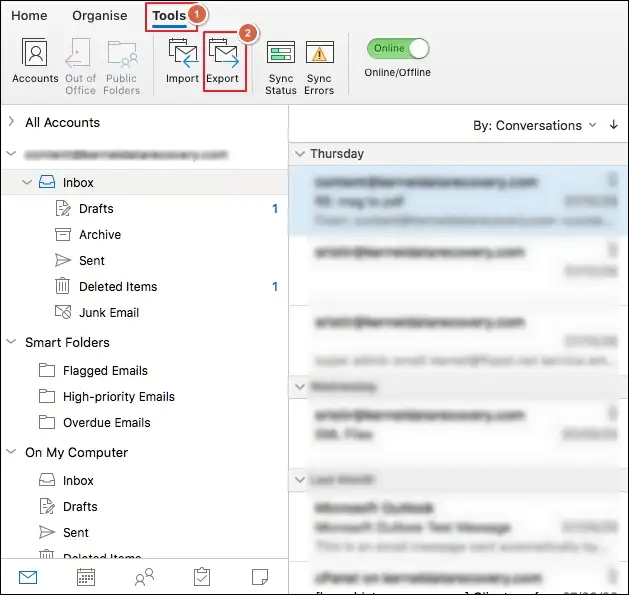
Note: If available, switch the toggle to access Legacy Outlook when using the latest version of Outlook for Mac.
Step 2. Select required mailbox items and proceed to Continue.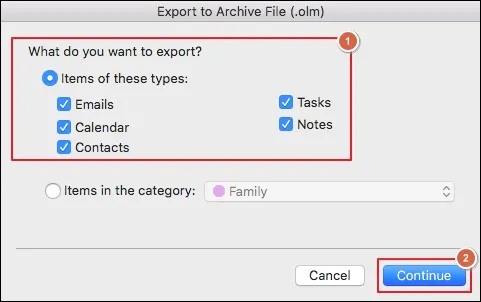
Step 3. Choose the destination to backup data and click Save.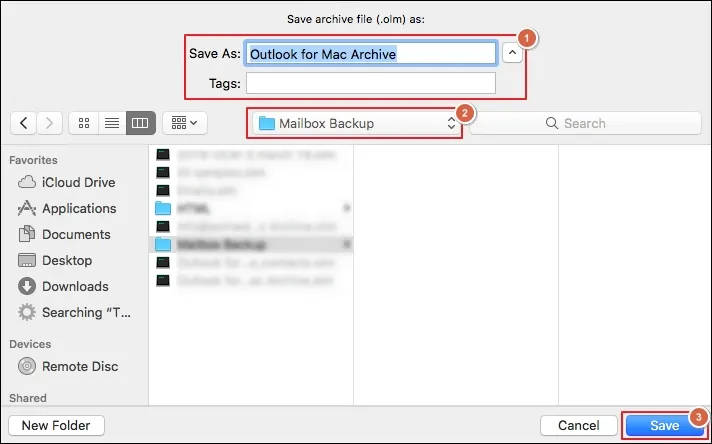
Step 4. Tap the Finish option after the data export is completed.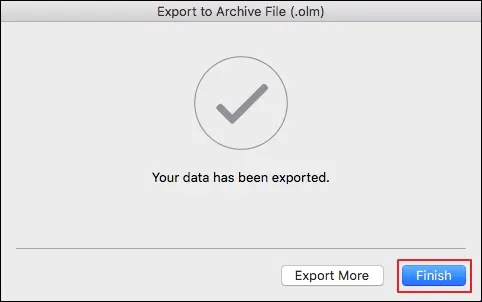
What If You Need to Backup Outlook.com Mailboxes At Once?
You can use the above-mentioned solutions to backup Outlook.com emails. But they are ineffective for backing up Exchange Online mailboxes if you generally manage them in OWA. For this, you have to rely on Microsoft Purview eDiscovery. So, follow the provided steps to back up Exchange mailboxes.
Step 1. Go to the Microsoft Purview Portal to begin.
Step 2. Under Solutions, go to eDiscovery compliance tool.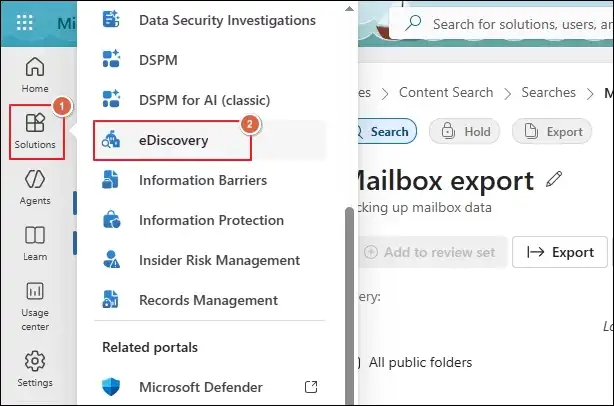
Step 3. Navigate to Content Search and Create a Search.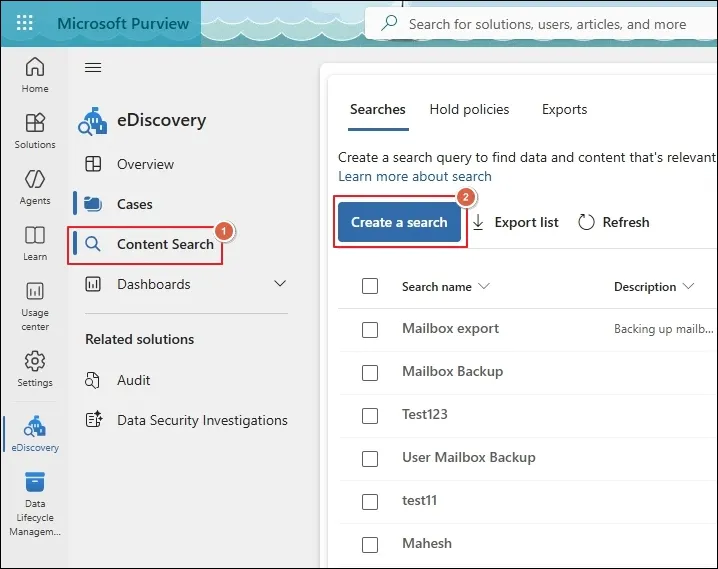
Step 4. Provide the Search Name & Description to Create one.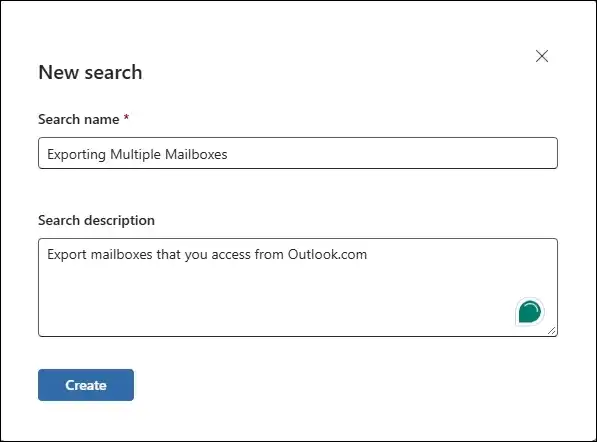
Step 5. Choose from the applicable options:
- Add sources
- Add tenant-wide sources
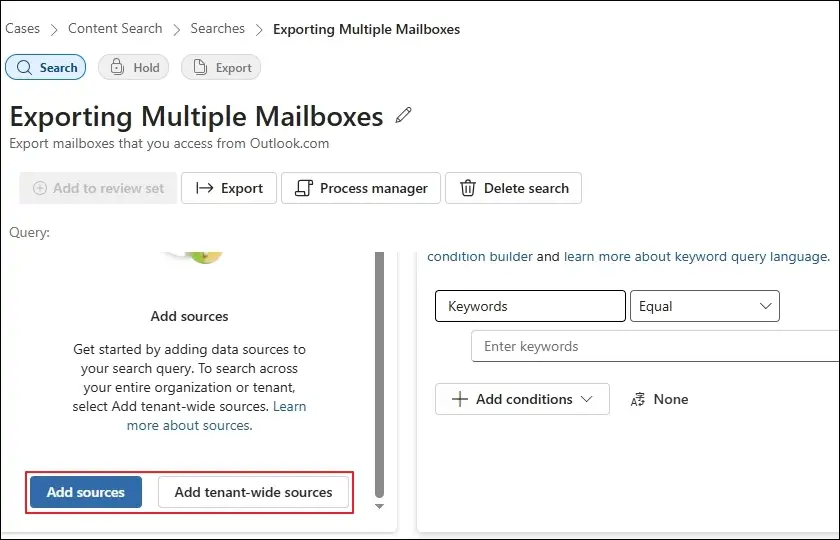
Step 6. Manage sources by searching and selecting them.
Step 7. Then, click Save and proceed to the Export option.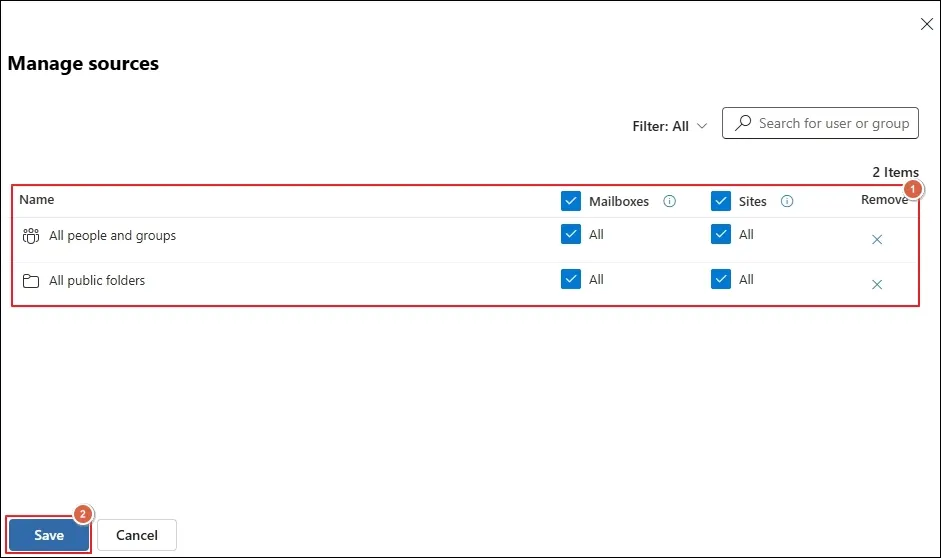
Step 8. Provide the Export name & Description.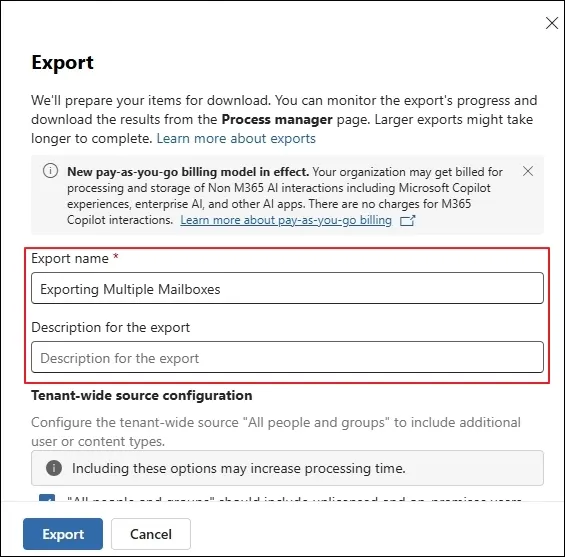
Step 9. Check the required Tenant-wide source configuration and Select items to include in your export.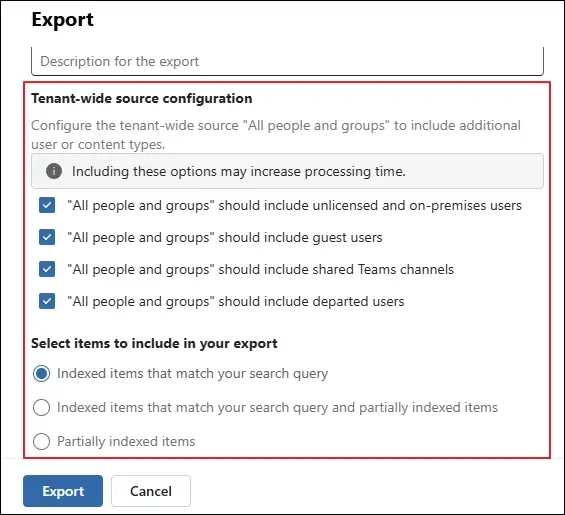
Step 10. Choose OneDrive and SharePoint items to continue if needed.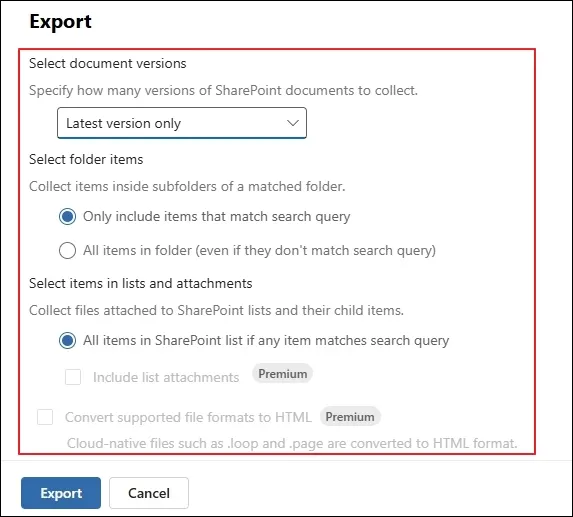
Step 11. Select the Messages and related items & proceed with the Export type.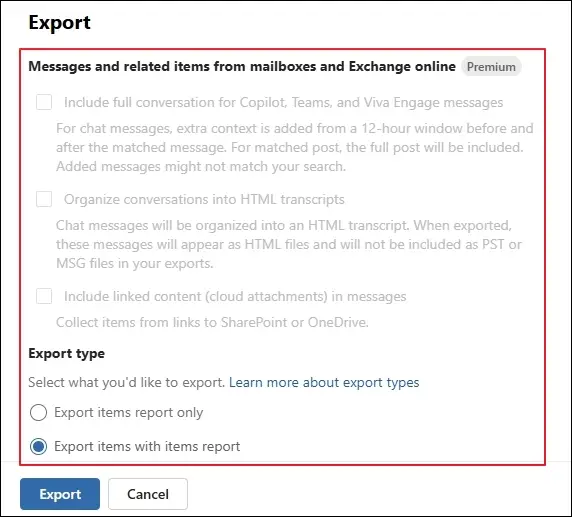
Step 12. Under Export, choose the required format (PST recommended) to export data.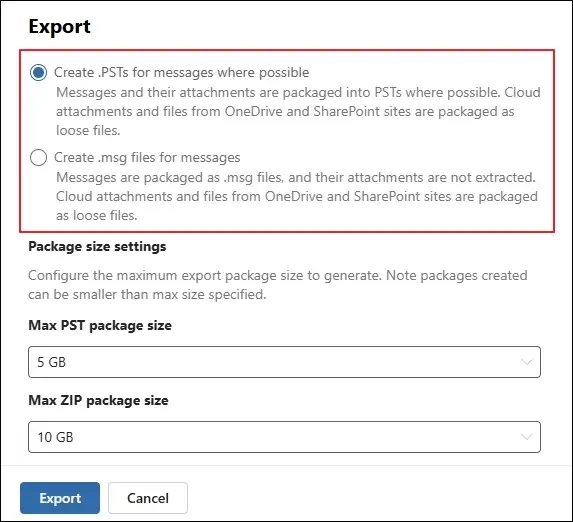
Step 13. Then, select Package size settings and other related options.
Step 14. Then, click Export to begin the process.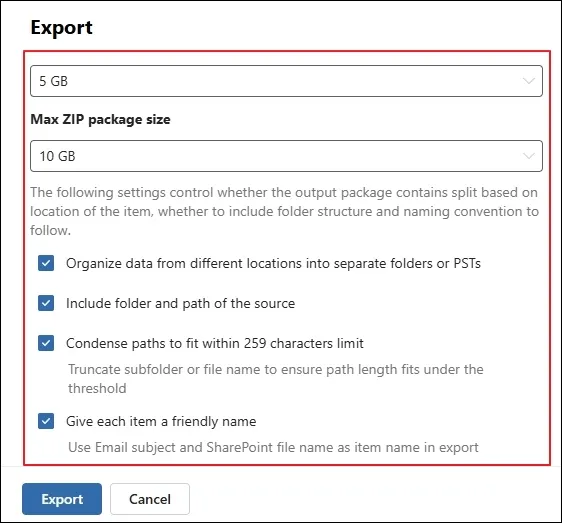
Step 15. Under Process Manager, check and wait for the Status to be “Complete.”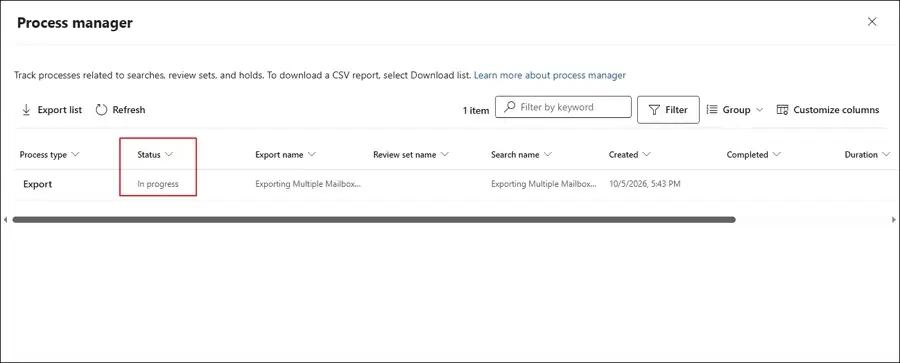
Read Also: 3 Simple Methods to Save IMAP Data to PST .
Are Manual Outlook.com Backup Methods Enough for Your Needs?
Manual methods like Outlook’s built-in export and Microsoft Purview eDiscovery can help you backup Outlook.com or Microsoft 365 mailbox data. But each method has specific requirements and limitations that make the process less convenient. Below are some common challenges that come with native methods:
- Provides limited options to save mailbox data.
- Requires technical knowledge to perform steps.
- Additional effort is needed for repeated backups.
- Dependence on specific applications and configuration.
Our Kernel IMAP Backup tool is a more convenient alternative to overcome these constraints. It allows you to take backups in different formats like PST, EML, MSG, HTML, DOC, and PDF in a few simple steps.
Wrapping Up
Here, we have covered a detailed guide on how to backup Outlook.com emails to computer using different methods. You can either use Outlook or the Microsoft Purview eDiscovery compliance tool to back up mailboxes based on your requirements.
Also, you can use the recommended solutions to simplify the entire process. Choose the method that best fits your mailbox type and backup requirements to make sure that your important emails are safely preserved.
FAQs: Quick Answer Section
A. No, you have to install a supported version of Outlook desktop to back up your Outlook.com emails manually. However, you can switch to dedicated solutions like Kernel to skip Outlook dependency.
A. Yes, almost every native backup option supports attachments along with your emails.
A. Yes, Outlook preserves your mailbox folder structure when subfolders are included. But folder properties like views and permissions are not exported.
A. The Archive option helps you move email messages to the Archive folder. On the other hand, AutoArchive is a classic Outlook feature that automatically moves older mailbox items to a local PST.
A. You can store the emails in a selected location (such as an external hard drive, USB storage, another internal device, or secure network storage) using the manual method as well as dedicated solutions.
A. No, AutoArchive is designed to automatically move older items to a local archived PST file in classic Outlook. It does not create a complete copy of your Outlook.com mailboxes, so go with the PST export option.
A. The frequency depends on how important your emails are and how often they change. Create a backup before closing an account, changing providers, replacing systems, or email migration at minimum.
A. Yes, you can use the Microsoft Purview eDiscovery compliance tool to back up Office 365 organizational mailboxes.
A. You can restore the backed-up emails using New or Classic Outlook, as well as Legacy Outlook for Mac. Just import the backed-up PST file data to access its contents easily in Outlook.