Read Time: 10 minutes
The process to manage Microsoft Teams can become difficult as organizations create more teams, add guests, change ownership, and combine inactive teams. The Microsoft Teams admin center gives admins a central place to review teams and make changes without managing every team individually from the Teams desktop or web app.
This guide explains how to manage teams in Microsoft Teams admin center, what admins can manage, and which Teams management practices help keep the environment organized.
What is Microsoft Teams Admin Center and How to Access It?
Similar to Microsoft Entra admin center, Exchange admin center, or other, the Microsoft Teams admin center is also a specialized web-based centralized administration portal that allows admin to manage Microsoft Teams effectively. Here, admins can manage teams, users, policies, apps, meetings, calling, messaging, templates, and other Teams-related settings. However, to access the Microsoft Teams admin center with full administration capabilities, the Global Administrator and Teams Administrator permissions and credentials are required.
Read More: Symbols Meaning in Microsoft Teams
What Can You Manage in Microsoft Teams Admin Center?
Microsoft Teams admin center provides a central view of the Teams environment. The ‘Manage teams’ section under Teams is more than a list of teams. From Microsoft Teams admin center, you can manage:
| Names and Descriptions | Team Privacy | Team Permissions |
| Team owners | Team members and guests | Archived teams |
| Team channels | Guest settings | Team status |
| Team templates and policies | Expiring & Deleted teams | Team expiration and renewal |
| Service and System Email | noreply@company.com or alerts@monitor.com | Team expiration and renewal |
Read More: How to Change Name on Microsoft Teams
Step-by-Step Guide to Manage Teams in Microsoft Teams Admin Center
The Microsoft Teams admin center > Teams > Manage teams is the main starting point when you need to review or change an existing team. Understand how you can manage teams in Microsoft Teams Admin Center:
Add a New Team in Microsoft Teams
To create a team from the Microsoft Teams admin center, follow these steps:
- Open Teams > Manage teams and then tap on +Add.
- Enter the team name and add a description.
- Add Team Owner, choose between public or private in Privacy, and click Add/strong.
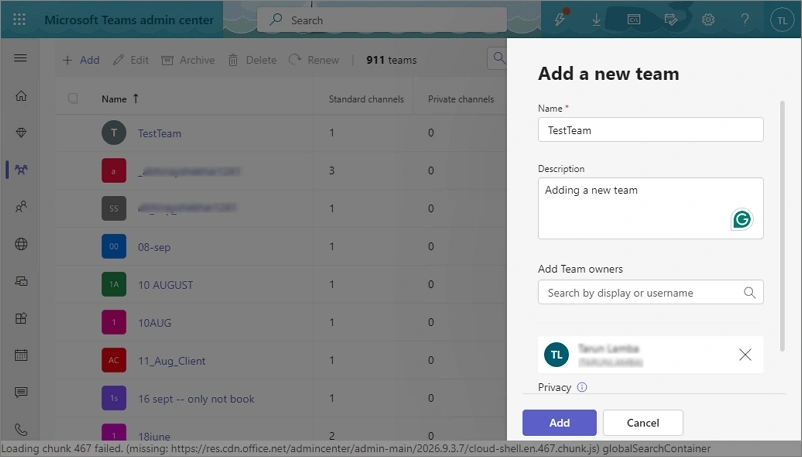
Hence, the process to create team in Microsoft Teams is easy. A new team in Microsoft Teams will be created.
Edit Team Details in Microsoft Teams
You can change the details of an existing team from the Manage teams page. Here are the steps to follow:
- In Microsoft, go to Teams > Manage teams.
- Select the team and tap on Edit.
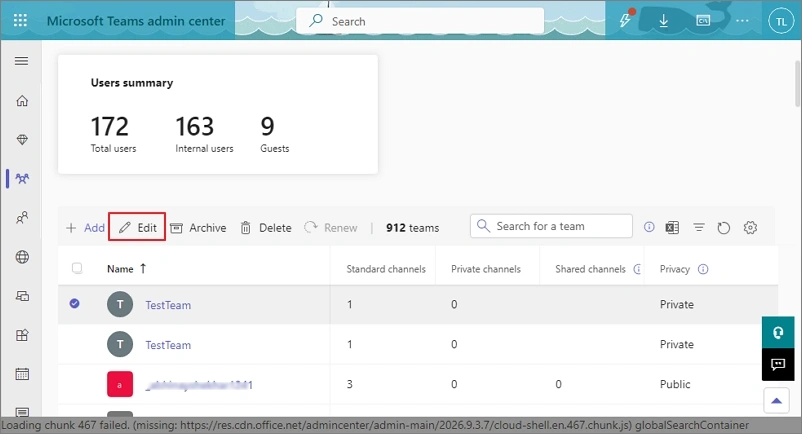
- Change the required settings, be it name, description, permissions, or other settings. Click Apply.
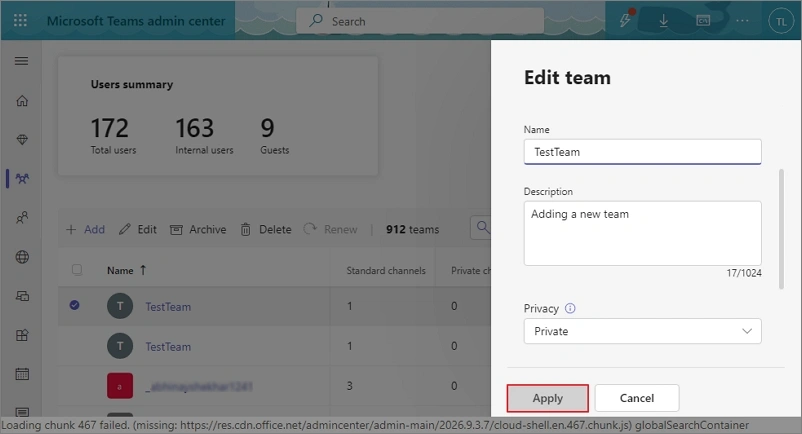
Note: You can edit Team name, Description, Privacy, Member permissions, Guest permissions, and other settings.
Manage Team Owners and Members in Microsoft Teams
Team membership is one of the most important parts of managing Microsoft Teams. To manage members or owners in Microsoft Teams, follow these steps:
- From the Microsoft Teams admin center, open Teams > Manage teams.
- Click on the required team, go to the Members tab.
- Add or remove users or owners using the respective options as needed.
- Also, assign or change owner roles as well as user permissions where appropriate.
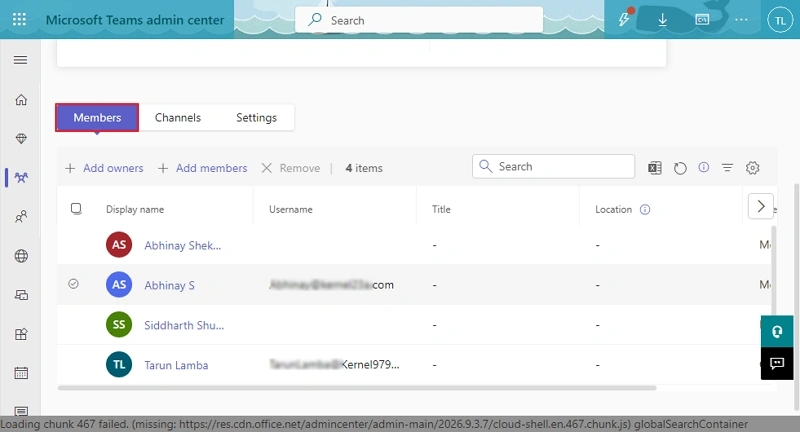
Note: Microsoft identifies owners and members as the primary user roles within a team. Owners have additional administrative capabilities, including managing team membership and a few team settings. A common administration problem occurs when a team has only one owner and that person leaves the organization, changes roles, or becomes unavailable. So, keep more than one owner for important teams.
Manage Team Channels in Microsoft Teams
Channels help organize conversations and collaboration within a team. From the Microsoft Teams admin center, admins can review channels and add or remove channels and manage channel membership. How is how to manage team channels in Microsoft Teams:
- Open Teams > Manage teams.
- Click on the required team, go to the Channel tab.
- Tap on +Add to add a new channel or select any channel to edit and/or delete.
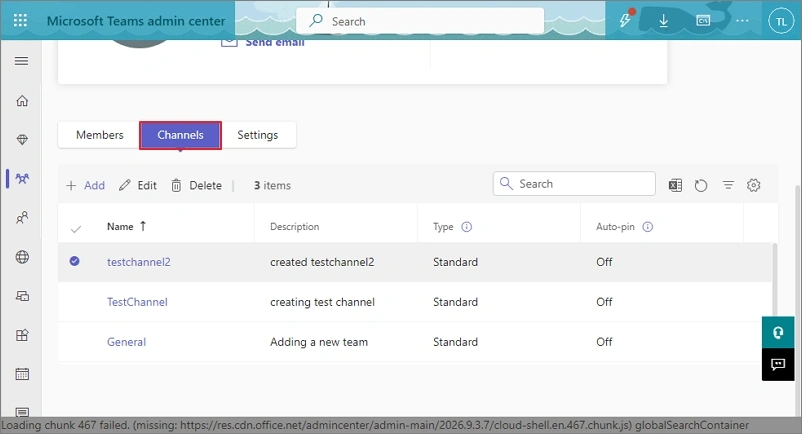
When managing channels, pay particular attention to Private channels, Shared channels, Channel owners and members, Unused channels, Sensitive information, and External collaboration. Do remember that a general channel cannot be removed.
Manage Team Permissions and Settings in Microsoft Teams
Admins can also control how members and guests interact with the team. Microsoft Teams admin center allows you to configure options related to member permissions, mention, guest permissions, and fun settings. To manage team permissions and settings, follow the steps below:
- Open Teams > Manage teams.
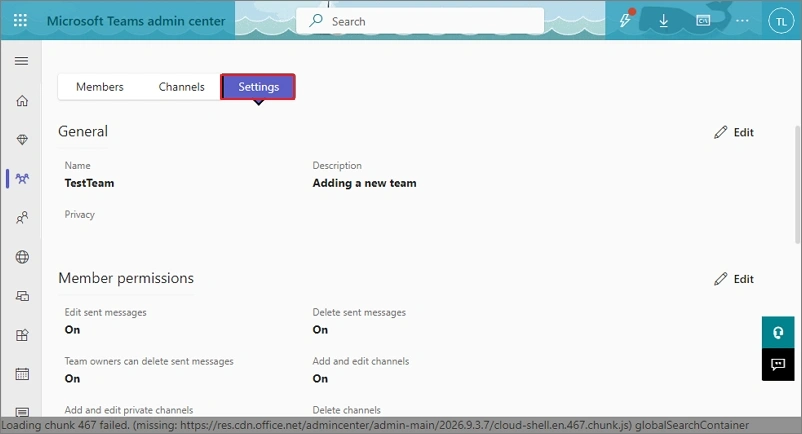
- Click on the required team, then go to the Settings tab.
- Now you can edit general settings, review and manage permissions, mentions, and fun settings.
How to Archive a Team in Microsoft Teams
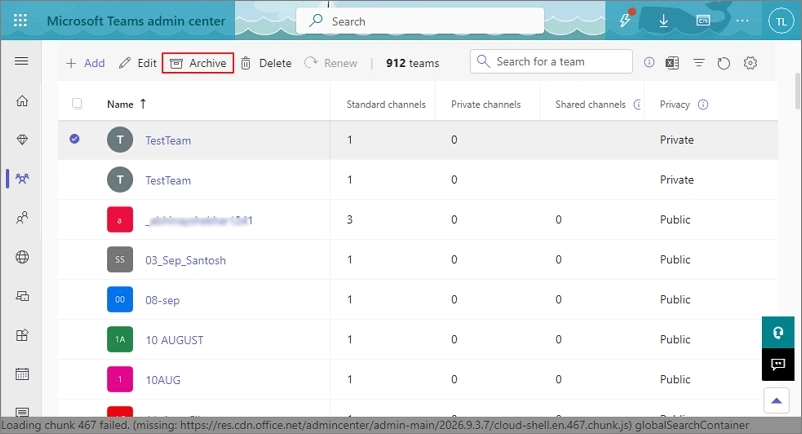
Deleting teams is not the best option; you can archive the team instead. Archiving puts the team into a read-only state within Teams, where users can retain access to existing content. Follow the steps below to archive a team:
- In Microsoft Teams admin center, go to Teams > Manage teams.
- Select the required team from the list, tap Archive, and confirm the action.
Archive vs. delete
Archive: Use when the team in Microsoft Teams is no longer active, but its information may still be needed in the future.
Delete: Use when the team is no longer required, and your organization’s retention and governance requirements have been considered.
How to Restore a Deleted Team in Microsoft Teams
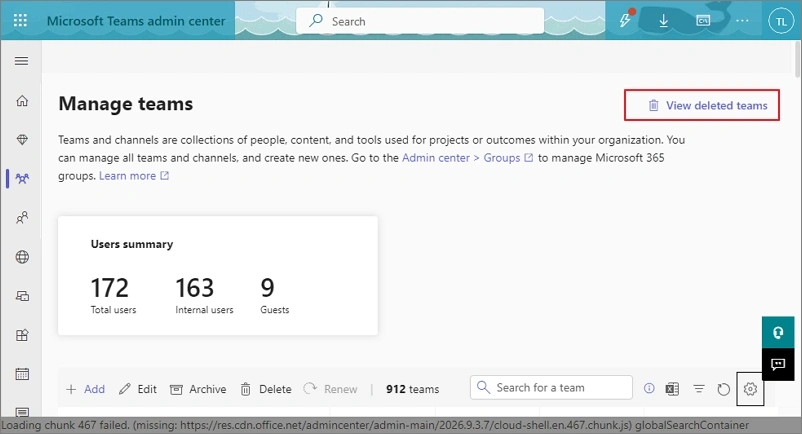
While managing teams in Microsoft Teams, accidental deletion can happen. No worries, there is a recovery option for deleted teams through the Microsoft Teams admin center. Here are the steps to restore a deleted team:
- Open Teams > Manage teams.
- Tap on View deleted teams available at the top.
- Select the team you want back and tap on Restore.
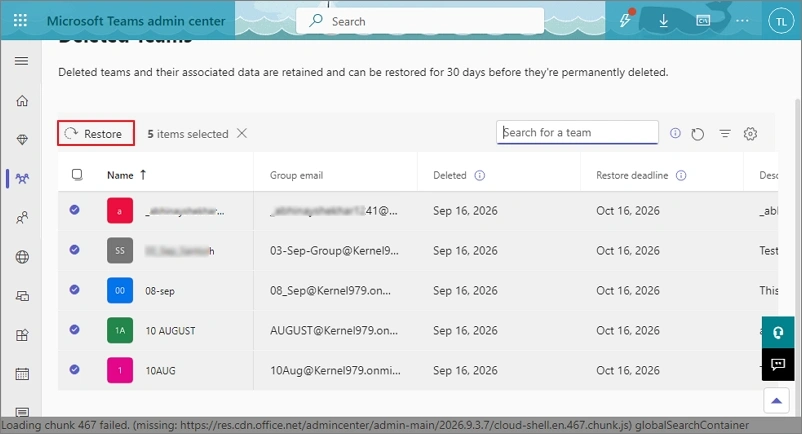
Note: Refresh the Manage teams page if the restored team does not appear. Admins can select multiple deleted teams and restore them at once.
How to Renew an Expiring Team in Microsoft Teams
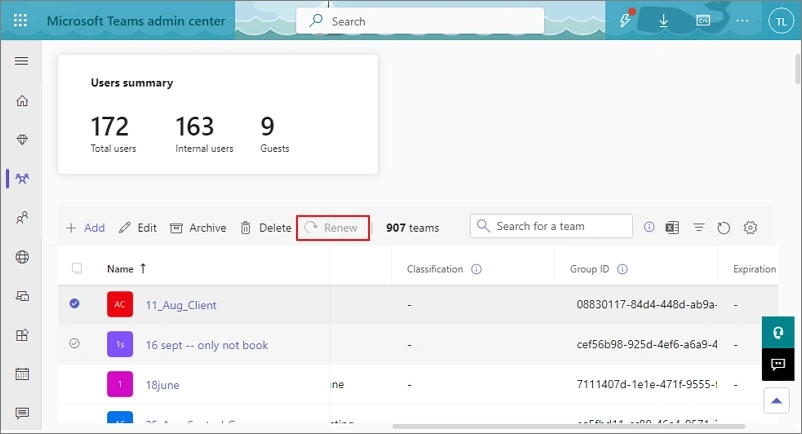
If a team is approaching its expiration date, admins can identify it via the red expiration icon next to it on the Manage teams page. To renew an expiring team, follow these steps:
- From the Manage Teams in Microsoft Teams admin center, select your team and tap Renew.
- Select Renew now, or just check the team’s expiration date.
How to Manage Teams with Microsoft Teams PowerShell
To manage multiple teams or perform repetitive administrative tasks, admins find PowerShell useful. First, install the current Microsoft Teams PowerShell module and connect to your tenant. The complete PowerShell guide to manage teams in Microsoft Teams is as follows:
Connect to Microsoft Teams:
Install-Module MicrosoftTeams -Force -AllowClobber
Then connect using the command below:
Connect-MicrosoftTeams
Now, after authentication, you can manage Teams from PowerShell.
- List all teams
- Create a new team
- Change team settings
- Add a team member
- Remove a team member
- View team members
- Create a channel
- View team channels
- Remove a channel
- Archive a team
- To unarchive the team:
- Delete a team
To filter teams by visibility:
Find archived teams:
Search by team name:
Get-Team can also retrieve teams associated with a particular user.
Use Set-Team to update team properties:
For example, to update the description:
Set-Team supports updating the team’s display name, description, and other team-specific settings.
To add the user as an owner:
This removes the user from the team and its underlying Microsoft 365 group.
To see only owners:
For a private channel:
Use this carefully because removing a channel can affect the team’s existing collaboration data.
Impotant: Remove-Team removes the specified Team and its associated Microsoft 365 group, so use it only after confirming that the team and its data are no longer required.
Microsoft Teams Admin Center vs. PowerShell | When to Opt Which
The Microsoft Teams admin center is convenient for admins as it provides a graphical UI for managing teams. At the same time, PowerShell becomes more useful when the organization needs automation or to manage large numbers of users and teams.
| Use the Microsoft Teams admin center when you need to: |
|
| Consider PowerShell when you need to: |
|
Conclusion: For larger environments, admins often use the Microsoft Teams admin center for day-to-day management and PowerShell for automation.
Final Takeaway
We hope that now you have completely understood how to manage teams in Microsoft Teams admin center and PowerShell as well. You can manage the complete team lifecycle, from creation and membership management to archiving, deletion, restoration, and renewal.
If the requirement is not simply to manage Teams but to move Teams data between Microsoft 365 environments, a dedicated tool, Kernel Microsoft Teams Migration tool, can be used for the migration process. With it, the migration of your Team’s entire data, including chats, channels, files, tabs, calls, activities, meetings, notes, planners, members, and permissions, between Office 365 tenants becomes easy. For more insights on the tool, get the free trial today.
Frequently Asked Question
A: Go to Teams, then Manage teams in Microsoft Teams admin center to manage teams.
A: When a team is archived, it is placed into read-only mode within Microsoft Teams.
A: Yes. Microsoft supports Teams administration through both the Teams admin center and the Teams PowerShell module.
A: Yes. A deleted team can be restored while it remains within the applicable recovery period.