
An Exchange mailbox contains all the valuable information of yours, like email content, sender, receiver email address, signature, and most importantly, attachments. You can easily send any attachments (digital documents), like images, docs, PDFs, HTML, and many more. However, these attachments increase the email size, which affects your mailbox size.
It is important to manage the mailbox size to avoid repercussions that hinder constructive workflow. To manage Exchange mailboxes, most IT administrators prefer to extract Exchange mailbox attachments.
However, extracting attachments one by one does not sound practical or time saving for organization. That’s why they prefer an automated tool to extract attachments from a specific Exchange mailbox into the local storage of the system.
Why extract attachments from a specific Exchange Mailbox?
Here are some prominent reasons that define the true value of extracting attachments from your Exchange mailbox:
- Large attachment files consume server space and extracting them helps you to free up space in the server.
- Smaller database (.edb) sizes improve Exchange server performance.
- Lower storage uses reduce your hosting or cloud infrastructure expenses.
- Secures your critical business attachments outside the Exchange server environment.
- Backup your old invoices, reports, or legal files from Exchange mailbox.
What are the pre-requisites?
Before we learn how to extract attachments from specific Exchange mailbox, it’s important to be aware of the prerequisites involved in the process.
- Make sure you have a healthy Exchange database EDB file.
- Your MS Outlook must be configured with the Exchange account.
- You need to disable Use Cached Exchange Mode in your MS Outlook.
How to extract attachments from specific Exchange mailbox?
Kernel for Exchange Server is one of the best choices for IT experts and business organizations to extract attachments from their Exchange mailboxes. It offers multiple features, like extraction and migration of Exchange data from Offline EDB File, Live Exchange, Outlook Profile, and Office 365 to an existing or new PST file, Live Exchange, Outlook Profile, and Office 365.
The tool offers a simple and secure way to extract attachments from Exchange mailbox. Additionally, it saves all your extracted attachments into your desired location on your PC.

Steps to extract EDB mailbox attachments from selected EDB mailbox.
Let’s understand how to extract Attachments from Specific Exchange mailbox with this step-by-step guide:
- Download, install, and launch the tool.
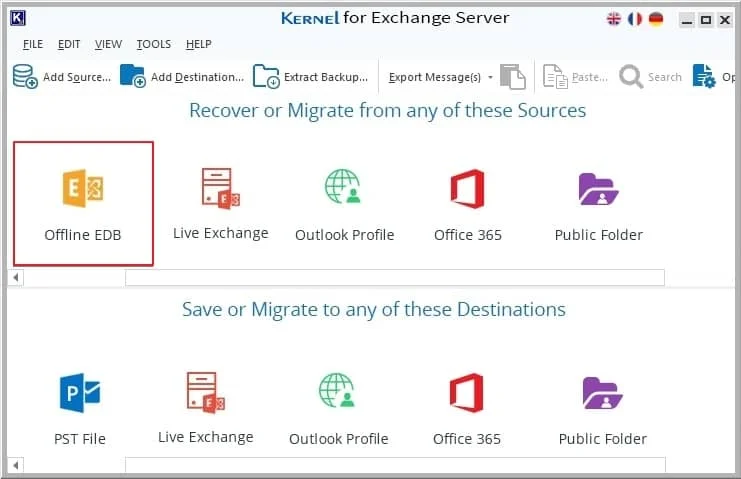
- Click on Offline EDB to select Exchange Database File.
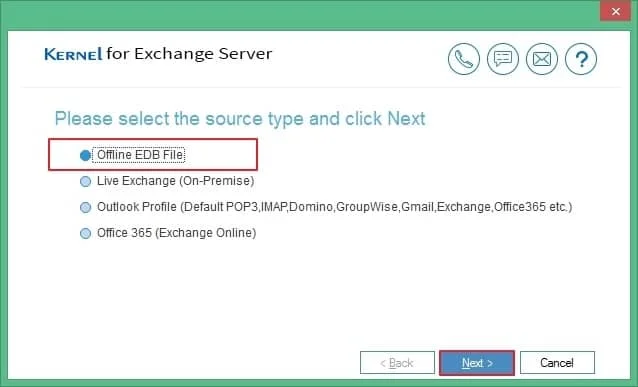
- Again, in the select source type section, select the Offline EDB option and click on Next.
- In the following window, click on three dots and select EDB files from your local computer. Click Next.
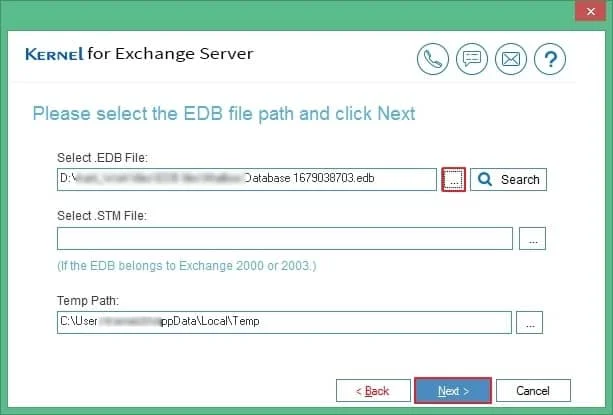
Note: If the exact location is not known, you can use the Search option to find the file in the specified drive. - Now, choose any of the scanning options as per your need to scan your added EDB file. Click Next.
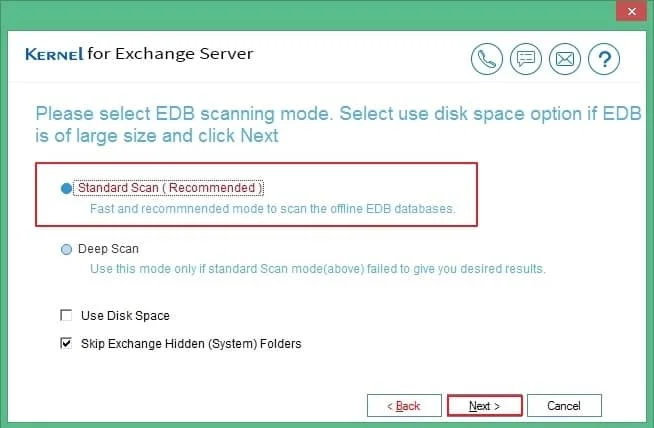
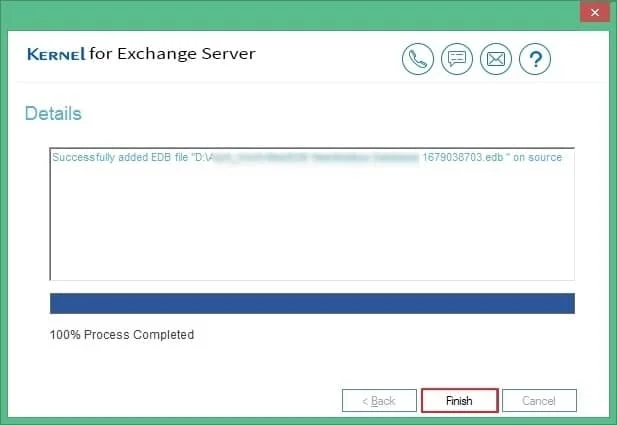
- The software will start adding EDB file and show “Successfully added EDB file” message. Click Finish.
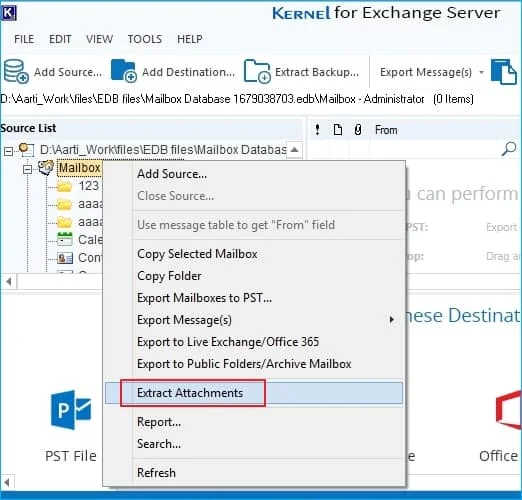
- You can view all your mailbox folders in the original hierarchy. Select any specific mailbox, right-click on it, and click on Extract Attachments.
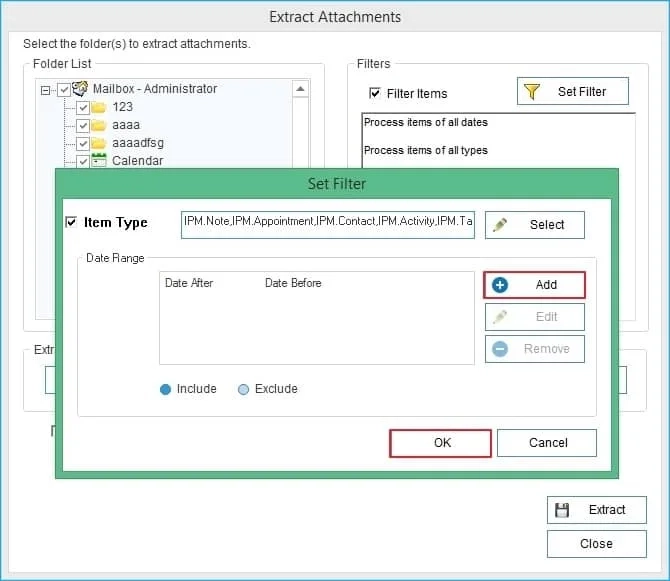
- In the following window, select mailbox folders, click on Set Filters for selective attachments extraction.
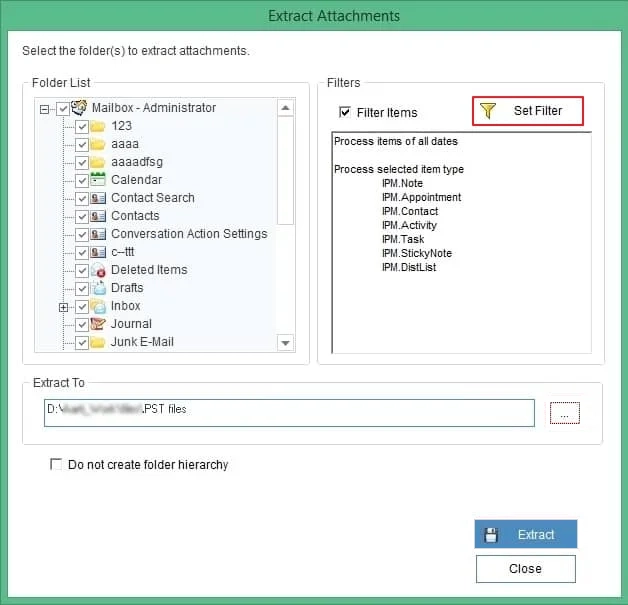
- Select Item Type or Date Filter accordingly and click OK.
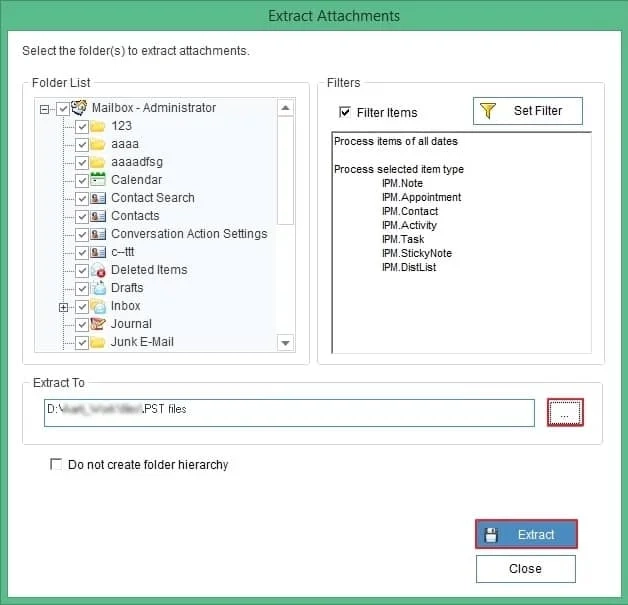
- After applying filters, click on Three dots in Extract To option to select a specific attachment saving location. Finally, click Extract.
- All the desired attachments from the mailbox are successfully extracted to the PST file at the defined location. Click OK.
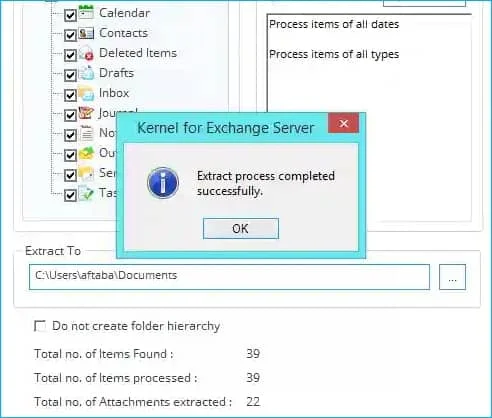
As you saw, it is quite easy to extract the required attachments from your EDB mailboxes using the recommended tool. The tool doesn’t require any Exchange Server installation to perform the operation. You can also use the Exchange Server Recovery tool to backup your mailbox contents from EDB to PST or take them directly to Outlook, Live Exchange, or Office 365.
Conclusion
Though extracting data from corrupt or healthy EDB files is possible using manual attachments saving option. But it is quite long and tough because you need to save each attachment one-by-one. However, Kernel for Exchange Server offers effortless extraction of attachments from Exchange mailbox. It also supports easy EDB to PST conversion for data backup, migration, and recovery of mailbox items from damaged/deleted EDB files.
Frequently Asked Questions
Question: Can I extract attachments from a specific Exchange mailbox manually?
Answer: Yes, you can easily extract attachments from a specific Exchange mailbox by saving attachments one-by-one from your mailbox. It is a difficult approach because you need to open each mail, which will take a lot of time.
Question: Does the tool maintain attachment quality and maintain after extraction?
Answer: Yes. The Kernel for Exchange Server allows you to extract attachments from your EDB files in raw format in original quality, as they were present in the original Exchange Server.